Video Equipment Rental: A Complete Step-by-Step Guide
- Video equipment rental follows a simple path: quote, confirm, set up an account (first-timers only), pay, then collect or receive delivery.
- Setting up an account is a one-time step. Once it's done, every future hire is just quote, confirm, rental.
- Individual and company accounts need slightly different documents: ID and proof of address for individuals, company details and proof of company address for businesses.
- You'll need your own hired-in equipment insurance before gear leaves the building. This is standard across the industry, not a Sugarland-specific hurdle.
- Delivery and collection are both available, with typical windows the day before and the morning after your shoot.
If you've never hired video equipment before, the process can feel like a bit of a mystery.
What do you actually need to provide? Is there a deposit? Do you need your own insurance?
This guide walks through video equipment rental step by step, from your first enquiry to handing the kit back, so there's no guesswork involved.
We've been doing this since 1997, and one thing that hasn't changed is how many people come to us not quite sure what to ask for. That's fine.
Part of the job is equipment, studio space and crew all under one roof, so you're not juggling three separate suppliers to pull a shoot together.
Why Rent Video Equipment Instead of Buying It?
Most productions rent because it lets them match the gear to the job instead of being stuck with whatever they already own.
A documentary needs a different setup to a commercial or a music video, and renting means you're never forcing the wrong camera onto a shoot just because it's the one sitting in your cupboard.
Cost is the other half of it. A working cinematographer can end up renting around 90% of what ends up on set, since top-tier cinema camera packages can run into six figures to buy outright.
Even the entry-level end of the market has shifted fast, with the gap narrowing between what a basic setup costs to buy versus hire, but broadcast, fashion and high-end commercial work still leans heavily on rental houses for anything beyond the basics.
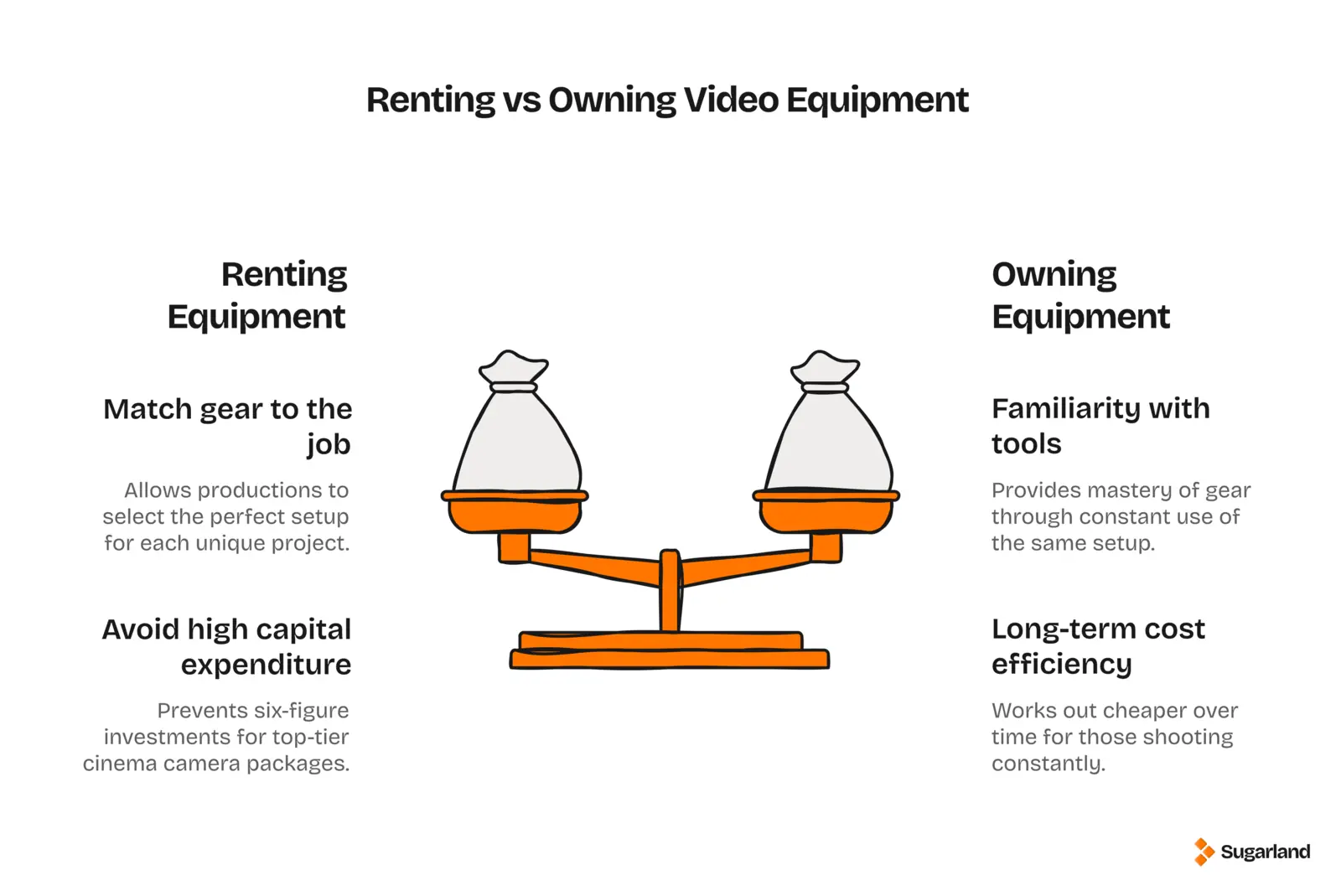
Hiring isn't automatically right for everyone. If you're shooting constantly with the same setup, owning your core kit can work out cheaper over time and means you know your tools inside out. It's worth weighing rental against ownership based on how often you actually shoot, not just the day rate.
How Does Video Equipment Rental Work, Step by Step?
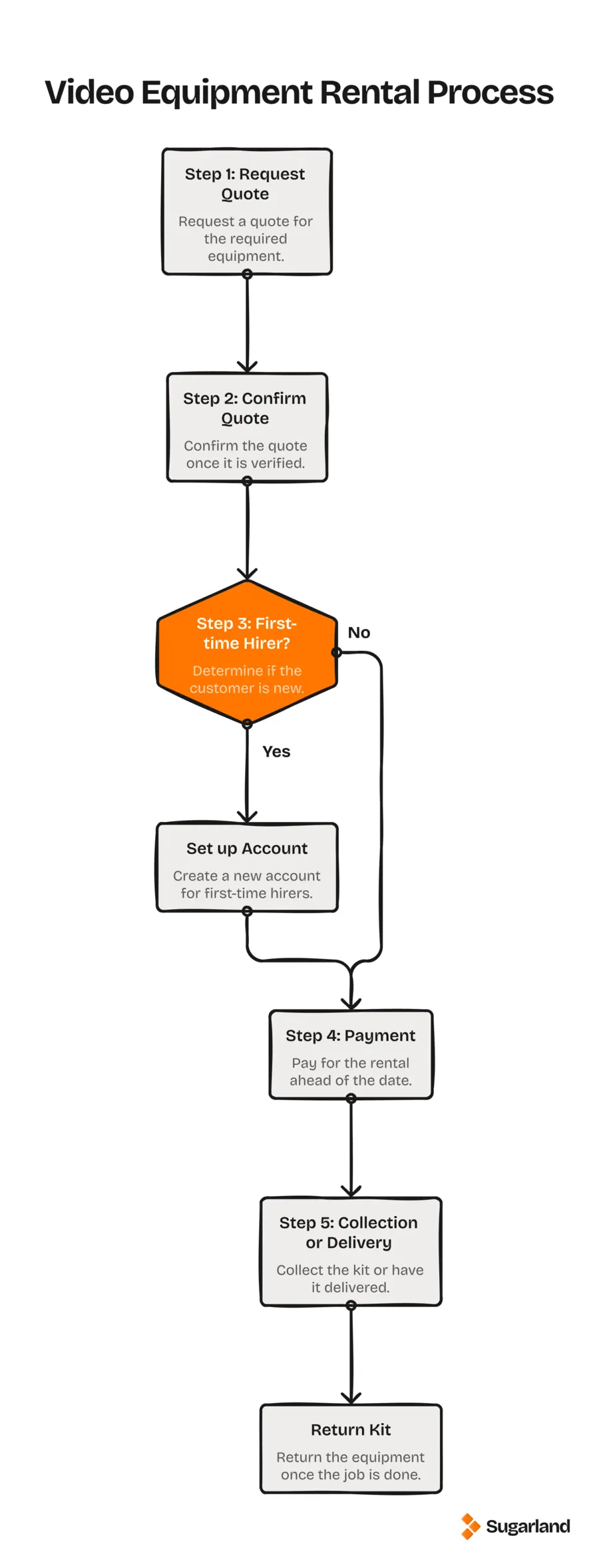
The process breaks down into five stages:
- Request a quote for what you need
- Confirm the quote once it looks right
- Set up an account (first-time hirers only)
- Pay ahead of your rental date
- Collect your kit or have it delivered, then return it once the job's done
Here's each one in detail.
Requesting a Quote and Getting It Confirmed
Everything starts with a quote. You get in touch, either through our online quote form, by phone, or by email, and tell us what you need for the shoot.
We send a quote back covering everything on your list. If it looks right, you confirm it and we move things forward.
If you're not sure exactly what you need yet, that's normal too, we'll talk through the shoot with you and recommend what'll actually do the job.
What Do You Need to Set Up an Account?
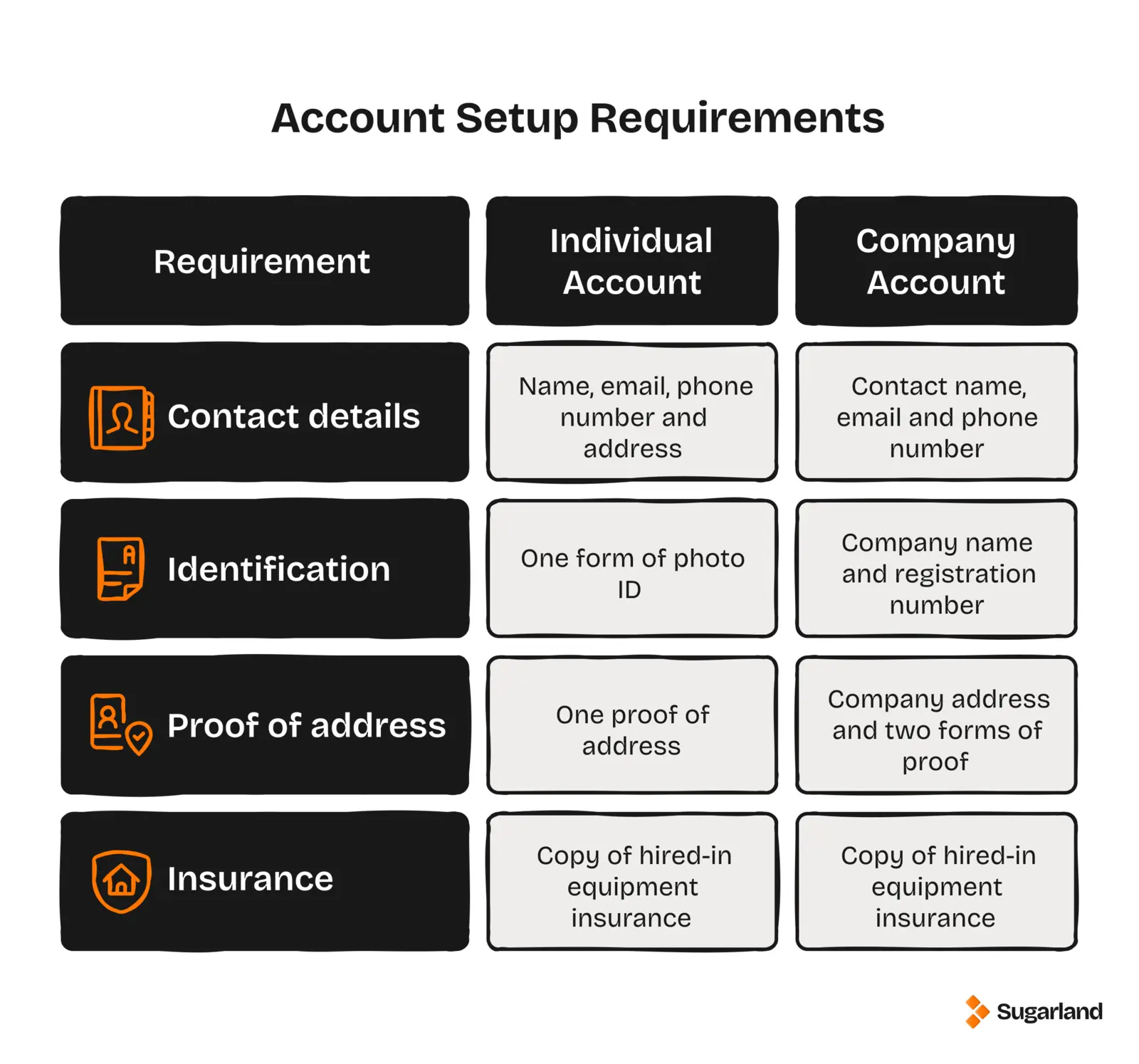
If it's your first time hiring with us, you'll need to set up an account. What's required depends on whether you're hiring as an individual or a company.
Individual account:
- Name, email, phone number and address
- One form of photo ID
- One proof of address
- A copy of your hired-in equipment insurance
Company account:
- Contact name, email and phone number
- Company name and registration number
- Company address
- Two forms of proof of company address
- A copy of your hired-in equipment insurance
This is a one-time step. You can set up your account ahead of your first hire if you want to get it out of the way early.
Once it's verified, you don't go through it again on future hires, it's just quote, confirm, rental from that point on.
Asking for ID and proof of address isn't unique to equipment hire.
It's standard practice for verifying who a business is dealing with, the same kind of check you'd hit opening a business bank account.
Requirements vary supplier to supplier though, some rental houses ask for multiple trade references on top of ID and address checks, so it's worth confirming what a company needs before you're mid-booking.
Why Do You Need Hired-In Equipment Insurance to Hire Gear?
You need hired-in equipment insurance because it covers the gear itself while it's in your care, separate from any wider production insurance your shoot might need.
Once you take possession of hired kit, it's treated as your responsibility for insurance purposes, even though you don't own it, so a policy specific to that equipment is what protects you if something goes wrong.
This isn't the same as general production insurance (public liability, workers' comp and so on), which covers your shoot as a whole and which you'll likely need regardless of where you hire from. Hired-in equipment insurance is narrower: it's about the kit itself, and it's expected practice before any rental house releases gear to you.
To be clear on how this works with us: Sugarland carries its own business insurance, but that doesn't cover damage to equipment while it's out with a hirer.
You're required to hold your own hired-in equipment insurance policy for that.
It's worth checking your policy covers the full replacement value of what you're hiring, not just a portion of it, so there are no surprises if a claim comes up.
Making Sure Everything You Hire Actually Works Together
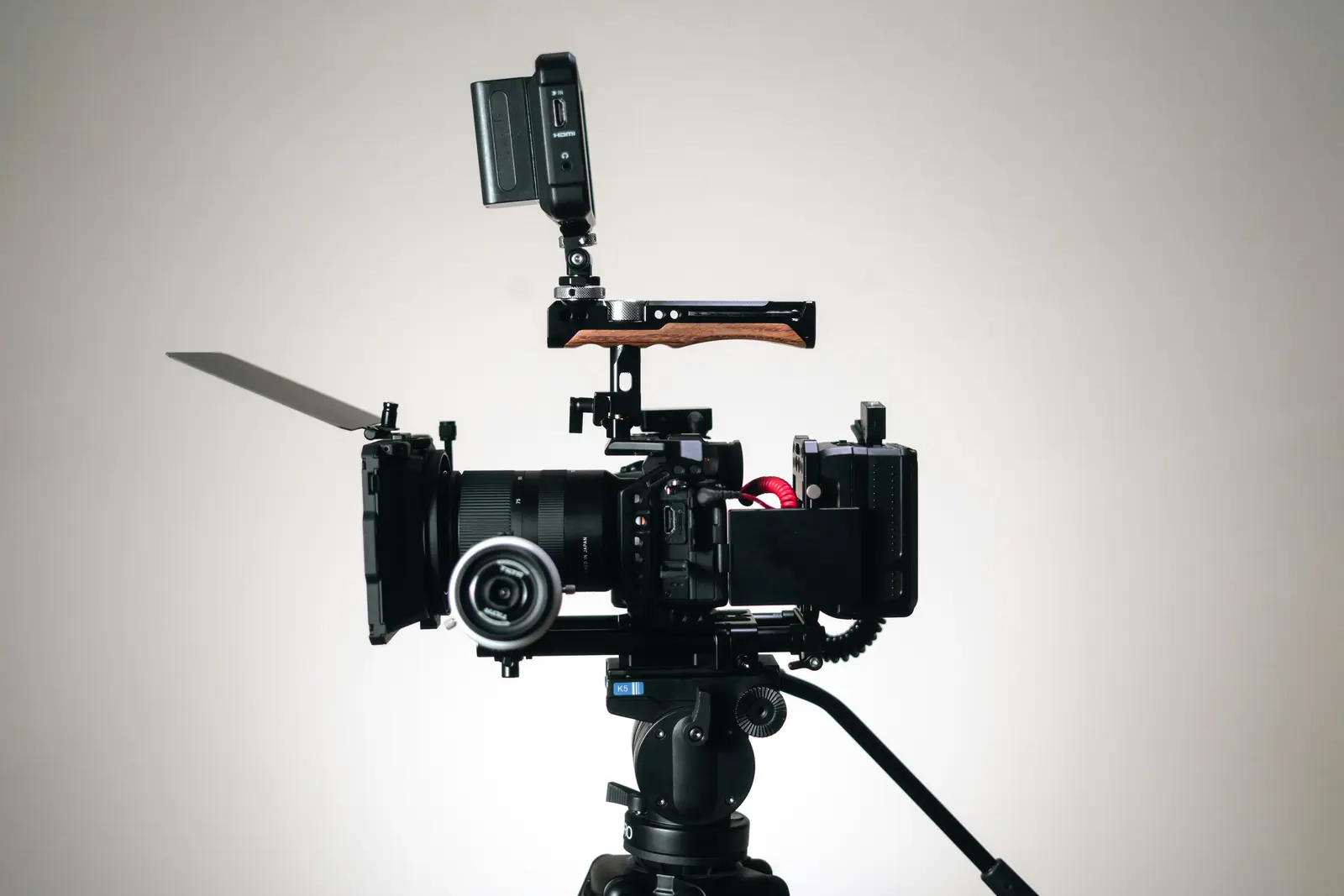
One thing we flag early, usually during the quoting stage, is compatibility.
If you've asked for a lens that needs a specific mount adapter, or a camera that needs an extra cable or battery type to actually function on set, we'll spot that and add it to your list before you confirm.
This matters more than it sounds.
A multi-camera setup can multiply fast: a tripod and lens per camera, plus lighting and audio on top, and it's easy to miss one small piece that makes the whole rig work.
Walking through compatibility at the quoting stage means you're not discovering a gap the morning of your shoot.
How Does Payment Work When You Hire Video Equipment?
Payment is typically taken before the rental for your first few hires, while your account gets established.
As you become a regular customer, payment terms are agreed with you directly.
Either way, you'll always know what's expected before you book, since it's confirmed as part of your quote.
How Does Delivery and Collection Work?
Both delivery and collection are available, and kit can usually move in and out of your shoot slightly ahead of when you actually need it:
- Weekday jobs: collection or delivery the afternoon before, return or pickup the following morning
- Weekend jobs: kit goes out Friday afternoon, comes back Monday morning
Turnaround can sometimes be tighter than that for urgent requests, often within a few hours depending on the item, but this depends on availability and how much prep the kit needs (batteries charged, gear checked) so it's never guaranteed.
If you're up against a tight deadline, it's always worth asking rather than assuming.
Does It Get Easier After Your First Hire?
Yes. Once your account is set up, every hire after that is just quote, confirm, rental, no repeat paperwork, no starting from scratch.
That first-time process exists to get the checks done once, not to slow you down every time you book.
We talk a lot of first-timers through this exact process, and the nerves usually come from not knowing what to expect rather than the process itself being complicated.
Once you've been through it once, it's genuinely straightforward from then on.
Ready to Hire Your Video Equipment?
If you know what you need, or even if you're still working it out, get in touch for a quote and we'll take it from there.
Let’s plan your next shoot
Get your equipment, studio and crew all in one place.