What Is a Camera Dolly? Types, Shots and When to Use One
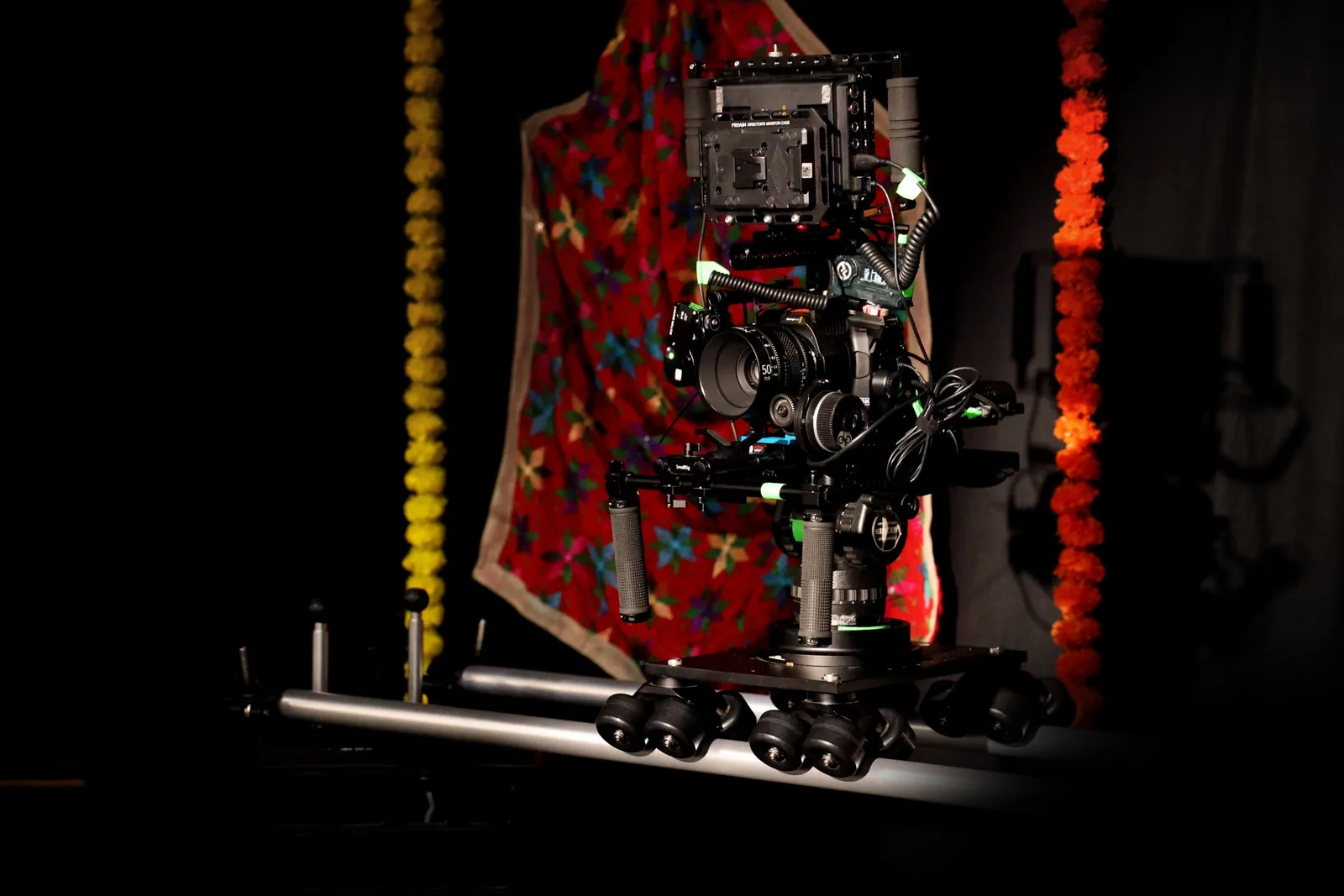
- A camera dolly is a wheeled platform that moves the camera smoothly along track or a flat floor, so you get controlled, repeatable movement.
- The 3 main types are tripod dollies, lightweight track dollies and platform dollies, plus doorway dollies and sliders for tight spaces.
- Use a dolly for precise moves you need to repeat take after take. Use a gimbal when the camera needs to follow action off a fixed path.
- For anything beyond a simple move, hire a dolly grip to lay the track, push the move and keep the operator safe.
Handheld has its place. When a shot needs to feel deliberate, though, you need the camera to glide rather than wobble, and that's where a camera dolly comes in.
We've put dollies on all kinds of productions over the years, from studio shoots to dramas to fashion shows.
This guide covers what a dolly is, the types worth knowing, the shots they create, and how to work out whether your shoot needs one.
What Is a Camera Dolly?
A camera dolly is a wheeled platform that carries the camera, and often the operator, smoothly along a track or across a prepared floor.
The camera sits on a head mounted to the dolly, so the operator can still pan and tilt while the whole rig travels.
That's the key difference from a tripod: the camera's position changes, not only the direction it's pointing.
The idea isn't new. In Cabiria, released in 1914, director Giovanni Pastrone used tracking dolly shots before anyone had a name for them, and D.W. Griffith borrowed the technique for Intolerance 2 years later.
What Is a Camera Dolly Used For?
A camera dolly is used to create smooth, controlled camera movement that you can repeat exactly on every take.
That repeatability is the big one. When the director wants another take, the dolly hits the same marks at the same speed, so continuity holds and the edit cuts together cleanly.
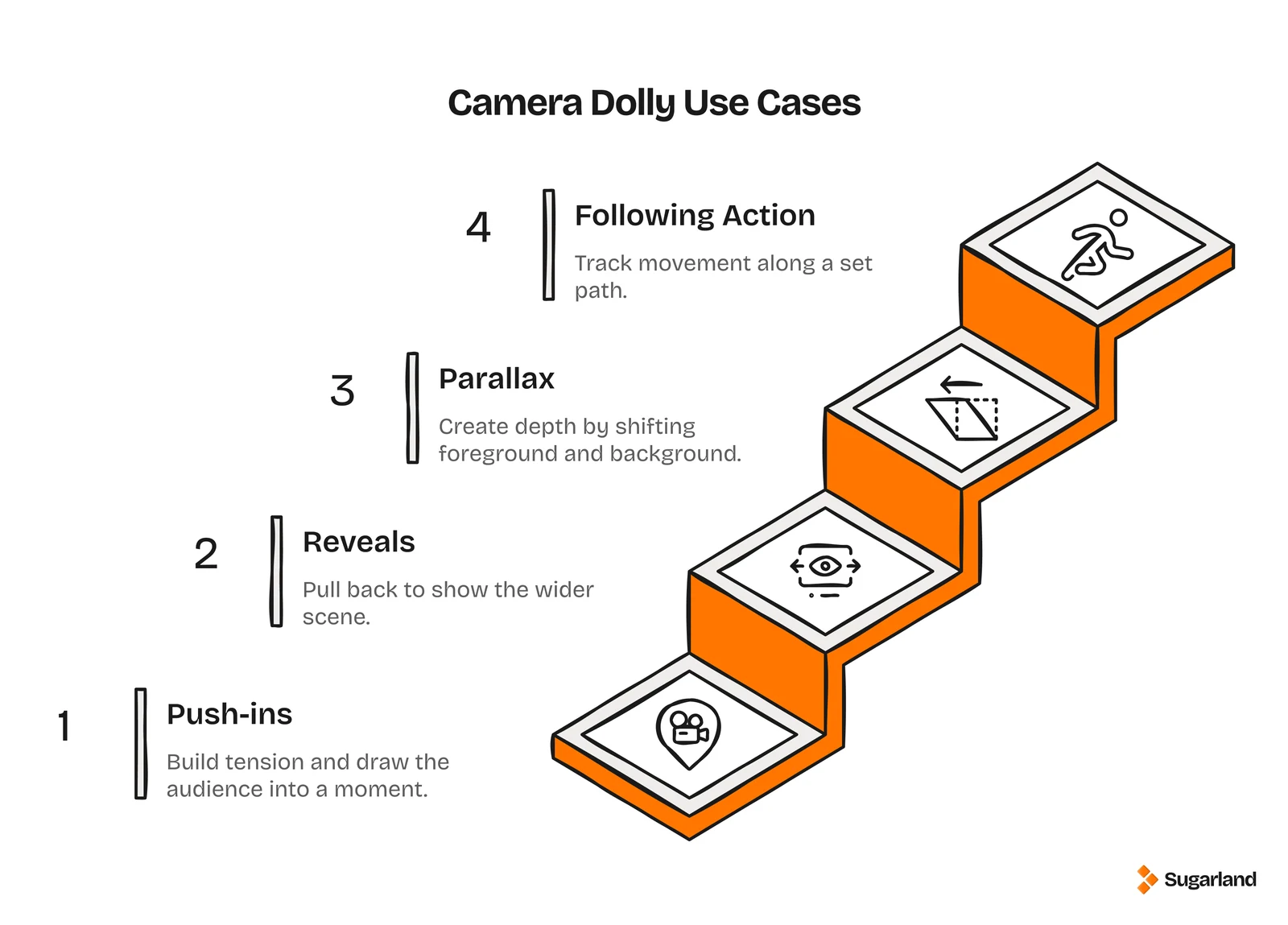
Dollies are typically used for:
- Push-ins that build tension or draw the audience into a moment
- Reveals that pull back to show the wider scene
- Parallax, where foreground and background shift against each other and give the frame real depth
- Following action along a set path, like a walk-and-talk
Dollies come out on lots of the shoots in our studio. A controlled space and a smooth floor are exactly where a dolly earns its keep.
What Are the Different Types of Camera Dolly?
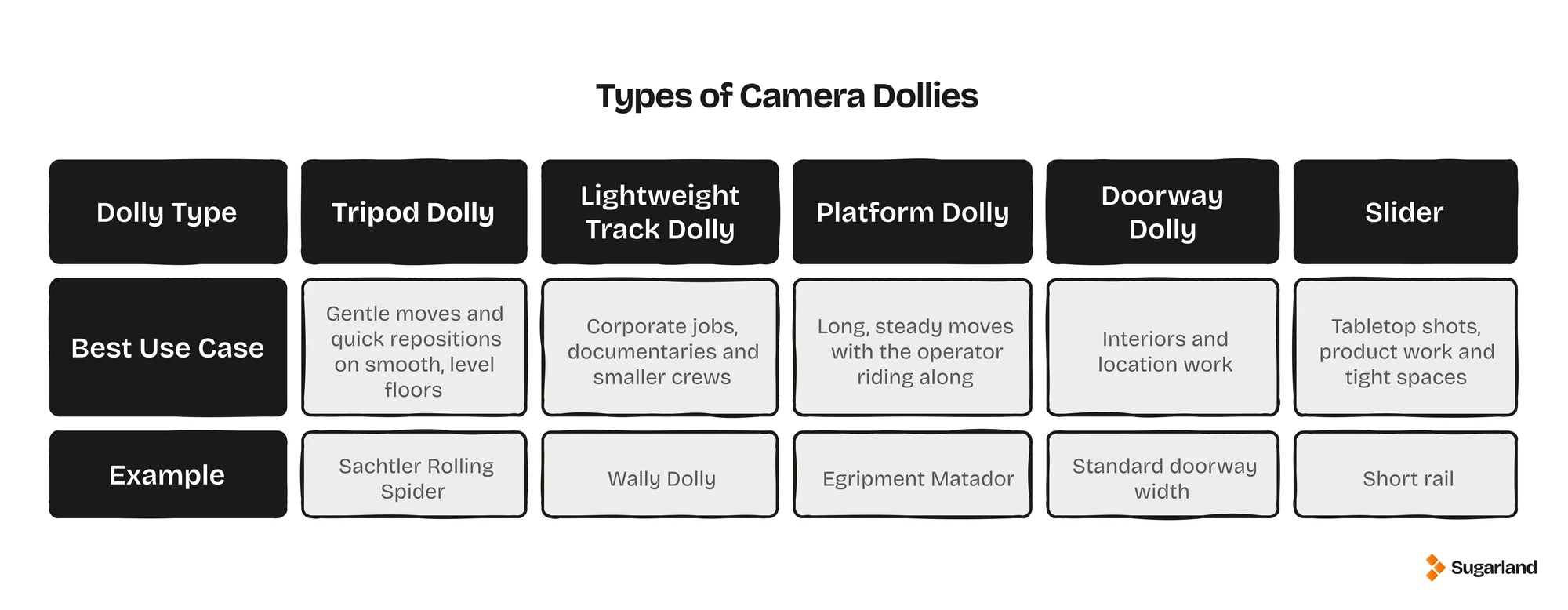
The main types of camera dolly are tripod dollies, lightweight track dollies and platform dollies, with doorway dollies and sliders covering tighter spaces.
Which one you need depends on 3 things: how heavy your camera package is, what surface you're working on, and how complex the move is.
Tripod Dolly
A tripod dolly is a set of wheels that clips onto your tripod legs. The Sachtler Rolling Spider is a classic example.
It's the simplest way to add movement. It works best for gentle moves and quick repositions on smooth, level floors.
Quick tip: A tripod dolly is great for repositioning between setups. For a move that's actually in the shot, check the floor first. Every bump shows up on screen.
Lightweight Track Dolly
A lightweight track dolly runs on its own short sections of track that you lay out on the floor. Because it sits on rails, the move stays straight and smooth even on surfaces that aren't perfect.
The Wally Dolly is a good example. It's quick to set up and easy to carry in, so it suits corporate jobs, documentaries and smaller crews who want dolly moves without a full grip setup.
Platform Dolly
A platform dolly is the heavyweight option. It's a flat deck big enough to carry the camera, the operator and often a seat or jib arm.
The Egripment Matador is a workhorse here. It's rated to a 250kg maximum load, weighs 37kg, steers from either end, and runs on track, pneumatic or hard rubber wheels.
Sideboards widen the deck when you need more room.
Our Matador dolly gets used on lots of productions, dramas included. When a scene needs long, steady moves with the operator riding along, this is the type of dolly you want.
Doorway Dollies and Sliders
Doorway dollies are narrow enough to roll through a standard doorway, which makes them useful for interiors and location work.
Sliders are the smallest option: a short rail that the camera glides along. They're ideal for tabletop shots, product work and subtle movement in tight spaces.
Track, Curves and Dance Floor
Dolly track comes in straight and curved sections. Professional track is built to a standard track width of 62cm, so dollies and track from different setups can work together.
On a smooth studio floor, grips sometimes lay a "dance floor" instead of track. It's a level surface the dolly can roll across in any direction. There's more on that in the dolly grip section below.
Types of Dolly Shots
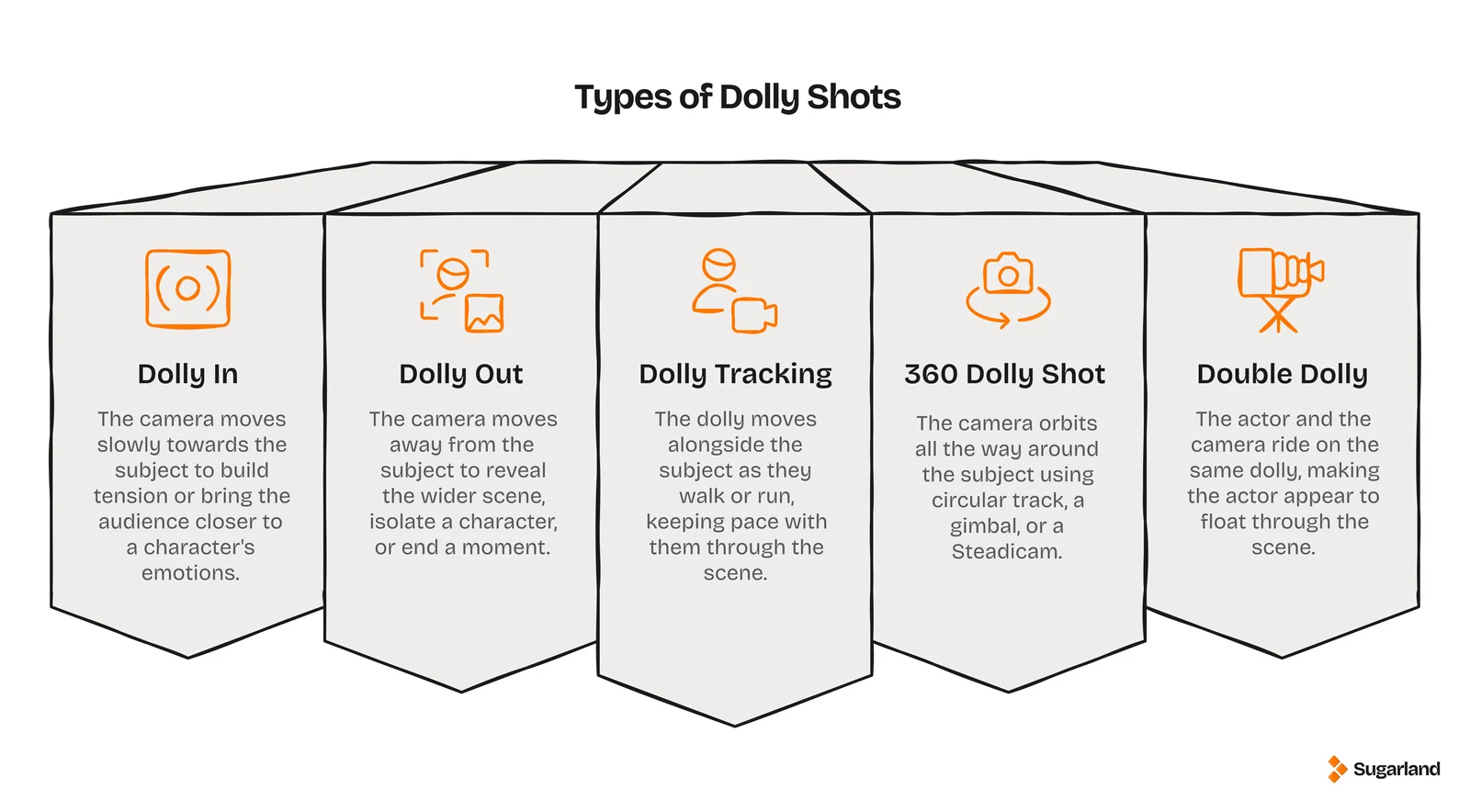
Once the dolly is in place, there are a handful of main dolly shots worth knowing.
Dolly In (Push In)
The camera moves slowly towards the subject. It's the classic way to build tension or bring the audience closer to a character's emotions.
Dolly Out (Pull Out)
The camera moves away from the subject. It can reveal the wider scene, isolate a character, or end a moment on a note of distance.
Dolly Tracking Shot
The dolly moves alongside the subject as they walk or run, keeping pace with them through the scene.
360 Dolly Shot
The camera orbits all the way around the subject. You can do this with circular track, although a gimbal or Steadicam is often the easier route.
The Double Dolly (Spike Lee Shot)
The actor and the camera ride on the same dolly. The actor appears to float through the scene while the world drifts past behind them. It's unsettling in exactly the right way.
What's the Difference Between a Dolly Shot and a Tracking Shot?
A dolly shot traditionally moves towards or away from the subject, while a tracking shot moves alongside it.
That's the original film vocabulary, at least. In practice the terms overlap now. A dolly can move in any direction, and tracking shots are often done on gimbals, Steadicams or vehicles.
The simple version: every dolly shot is a camera movement on a dolly. A tracking shot is any shot that follows a subject, however you rig it.
What's the Difference Between a Dolly and a Zoom?
A dolly physically moves the camera through space, while a zoom only changes the focal length of the lens.
That difference matters on screen. When you dolly in, the relationship between foreground and background changes, so the scene feels deeper. When you zoom in, the image simply gets bigger and the perspective stays flat.
The Dolly Zoom
Combine the 2 and you get one of cinema's most famous effects.
Hitchcock's Vertigo made it famous in 1958: the camera moves on a dolly while the lens zooms in the opposite direction, so the subject stays the same size while the background warps around them.
It comes in 2 versions, dolly in while zooming out, or dolly out while zooming in. Thanks to Spielberg, it's also known as the Jaws effect.
Worth knowing: A dolly zoom only works if the dolly speed and the zoom are perfectly in sync. Plan for rehearsals, and ideally a zoom lens with smooth, controllable movement.
Should You Use a Dolly or a Gimbal?
Use a dolly when you need precise, repeatable moves along a planned path. Use a gimbal when the camera needs to follow action that doesn't stick to one line.
A gimbal uses motors that counter unwanted movement, which makes it brilliant for following a subject through a space.
There's a catch, though. Gimbals stabilise rotation, not the bounce and drift of the person holding them, and carrying a heavy camera on one over long takes is hard work.
Here's how they compare in practice:
- Dolly: precise, repeatable, smooth on every take. Needs setup time, track or a good floor, and usually a grip.
- Gimbal: fast to move, follows unpredictable action, works on rough ground. Less exact from take to take, and tiring with heavier cameras
.webp)
On fashion shows, we've used either a dolly or a gimbal, depending on what the show needs.
Neither one is always right. It comes down to the shot, the space and how much setup time you've got.
Do You Need a Dolly Grip?
For anything more than a simple single-operator move, yes, you'll want a dolly grip.
A dolly grip doesn't just push the dolly. Their job covers any camera movement the shot needs: picking the right tool, laying and levelling the track or dance floor, and setting up the dolly for each shot.
On UK high-end TV and film, the dolly grip reports to the key grip.
According to the industry skills checklist, the role covers laying both simple and complex track and making sure camera operators stay safe while they work.
That last part is easy to overlook. The operator's eye is in the viewfinder, so someone else needs to be watching where the dolly is going.
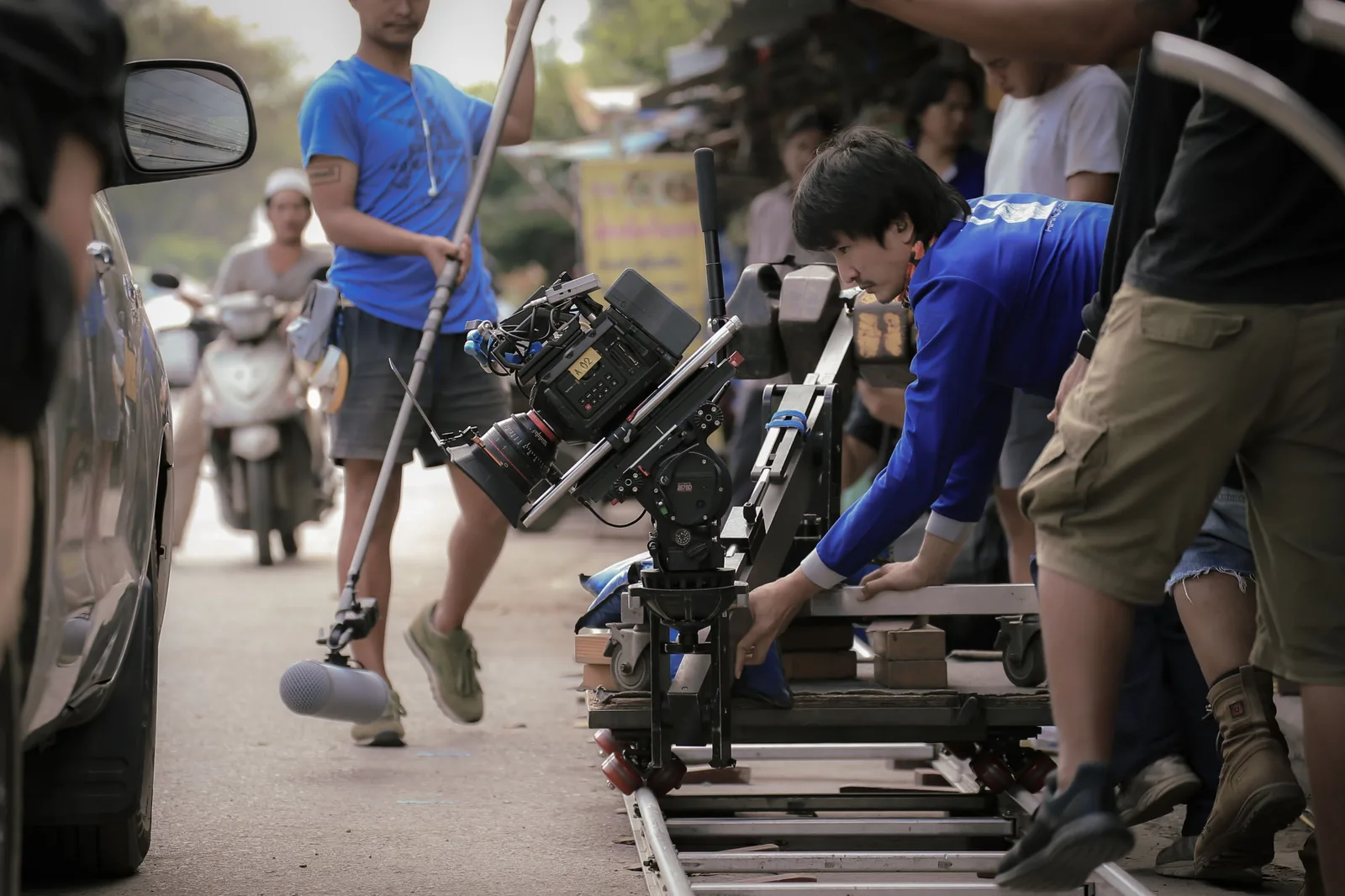
We supply experienced grips through our crew hire service. Crew and kit are quoted separately, so you can hire the dolly, the grip, or both.
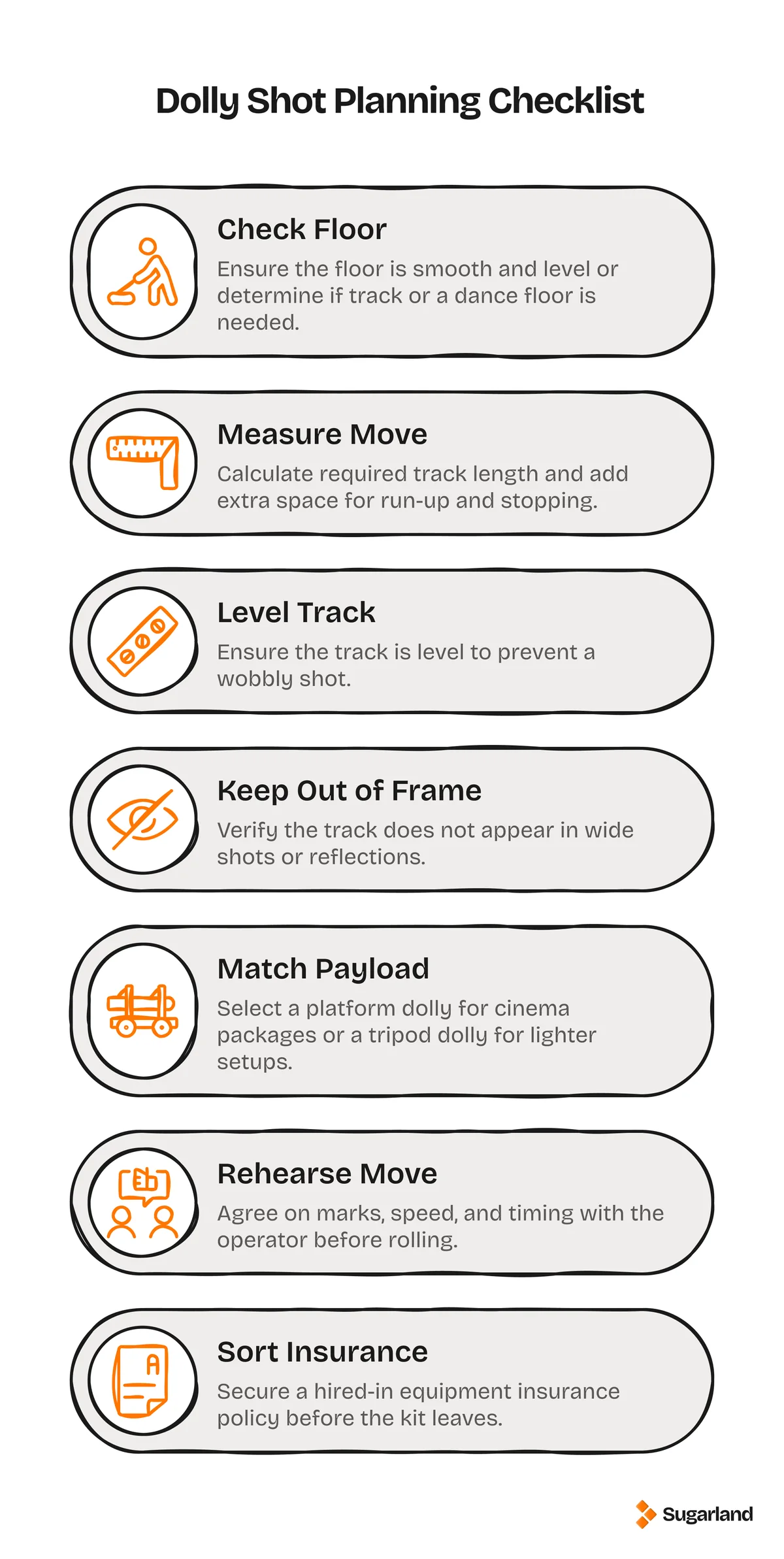
Planning a Dolly Shot: Quick Checklist
Before you book a dolly, run through these:
- Check the floor. Smooth and level, or will you need track or a dance floor?
- Measure the move. Work out how much track the shot needs, then add a little extra for run-up and stopping.
- Level the track. Uneven track means a wobbly shot, however good the dolly is.
- Keep it out of frame. Check the track doesn't creep into wide shots or reflections.
- Match the dolly to the payload. A full cinema package with an operator riding along needs a platform dolly, not a tripod dolly.
- Rehearse with the operator. Agree marks, speed and timing before you roll.
- Sort your insurance. Hirers need their own hired-in equipment insurance policy, so get that in place before the kit goes out.
Quick tip: If you're unsure which dolly suits the shot, describe the move to us rather than picking from a list.
It's much easier to recommend the right setup when we know what the camera needs to do.
Hiring a Camera Dolly in London
A good dolly move can lift a whole production, but only if the kit, the crew and the space work together.
That's why we keep it under one roof. You can hire the dolly, a grip to run it and a studio to shoot in, all through one point of contact.
If you need a dolly we don't stock ourselves, we'll source it for you, so you're still only dealing with us.
We deliver and collect across London, subject to availability. Tell us about your shoot and we'll put the right setup together. Request a quote to get started.
Let’s plan your next shoot
Get your equipment, studio and crew all in one place.