Aputure 1200D Pro vs 1200X: A Complete Comparison
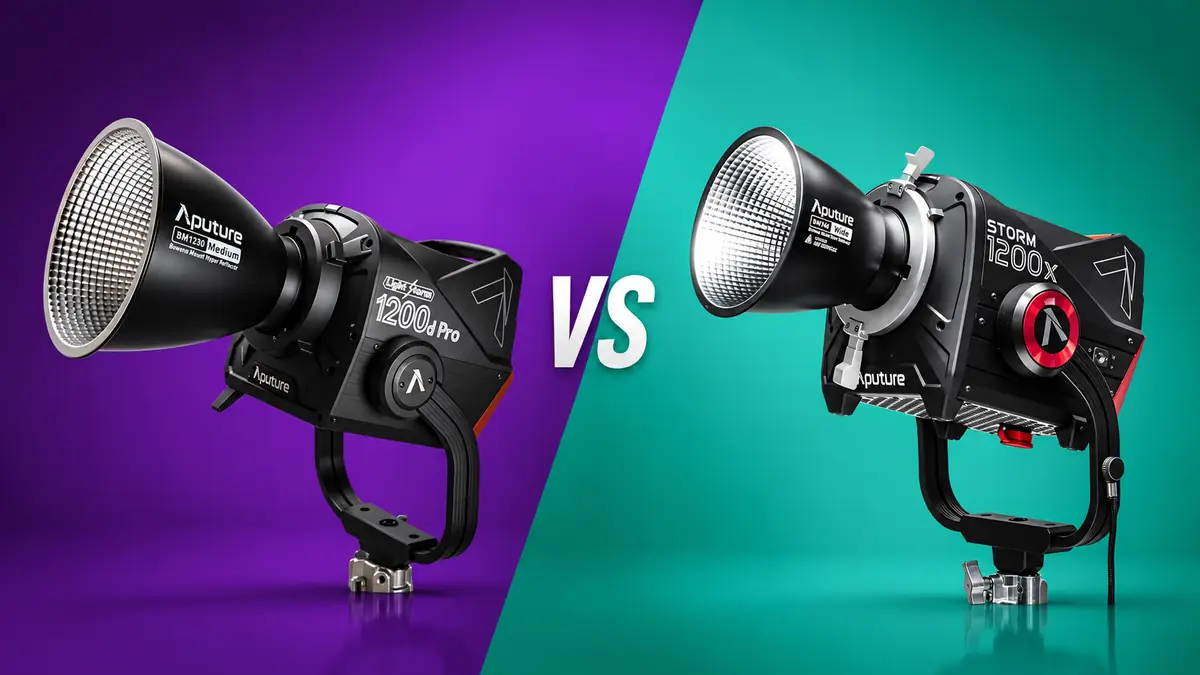
- The Aputure 1200D Pro is daylight-only (fixed 5600K). The Storm 1200X is bi-colour, tuneable from 2500K to 10,000K.
- Both draw a maximum of around 1440W, so plan for a generator or a dedicated circuit whichever one you book.
- The 1200X carries a full IP65 weatherproof rating. The 1200D Pro is weather-resistant to IP54, solid for damp conditions but not built to the same standard.
- Both use a Bowens-style mount, so Domes, Lanterns and Fresnels cross over between the two.
- The 1200X is the slightly heavier of the two at around 9.5kg for the lamp head, versus 8.95kg for the 1200D Pro. Use heavy-duty stands with either.
If you've already compared the 1200D vs 600D and decided you need the bigger output, the next question is which of Aputure's two 1200W fixtures actually suits your shoot.
Aputure has since moved on to the 1200X as their newer flagship, and the 1200D Pro is no longer in production, but it's a well-proven light and we keep it in stock.
They look similar on paper. In practice, the choice comes down to colour temperature, weather exposure and how much you're willing to carry.
What's the Difference Between the Aputure 1200D Pro and 1200X?
The main difference is colour: the 1200D Pro is a fixed daylight COB light at 5600K, while the 1200X is a bi-colour fixture that tunes across a much wider range.
Everything else about them is close.
Both sit around 1200W of output, both draw a maximum of roughly 1440W, and both use a Bowens-style modifier mount, according to Aputure's own spec pages for the 1200d Pro and the Storm 1200x.
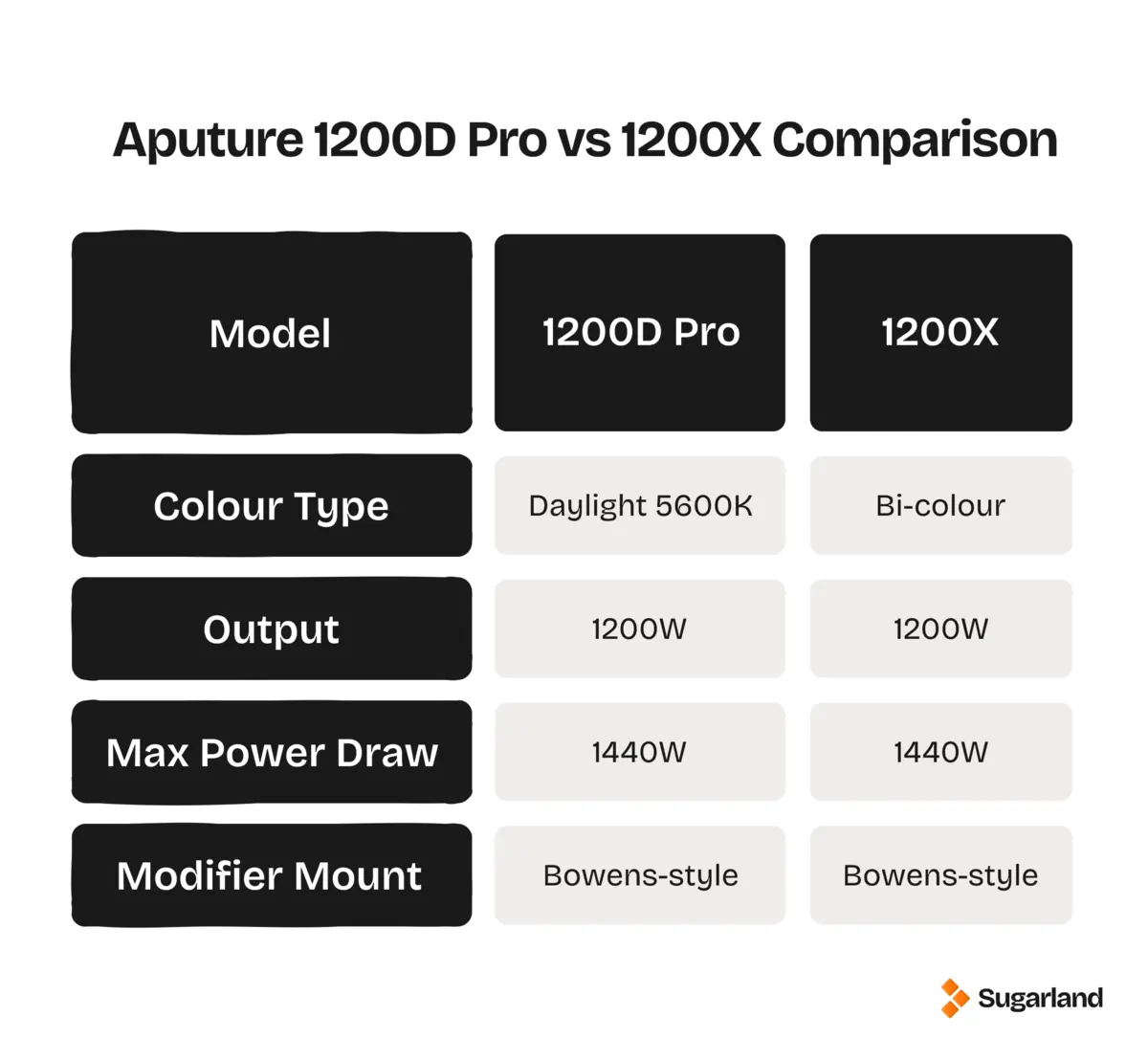
They're built for the same job (replacing an HMI on a demanding shoot) but aimed at slightly different lighting setups.
Daylight vs Bi-Colour: Which Colour Temperature Do You Need?
If your whole set is lit at daylight, the 1200D Pro's fixed 5600K output is the simpler tool. It's rated at CRI 96 and TLCI 98, giving accurate skin tones straight out of the box, no tuning required.
That makes it a strong fit for exteriors, green screen work, or anything matching bright window light.
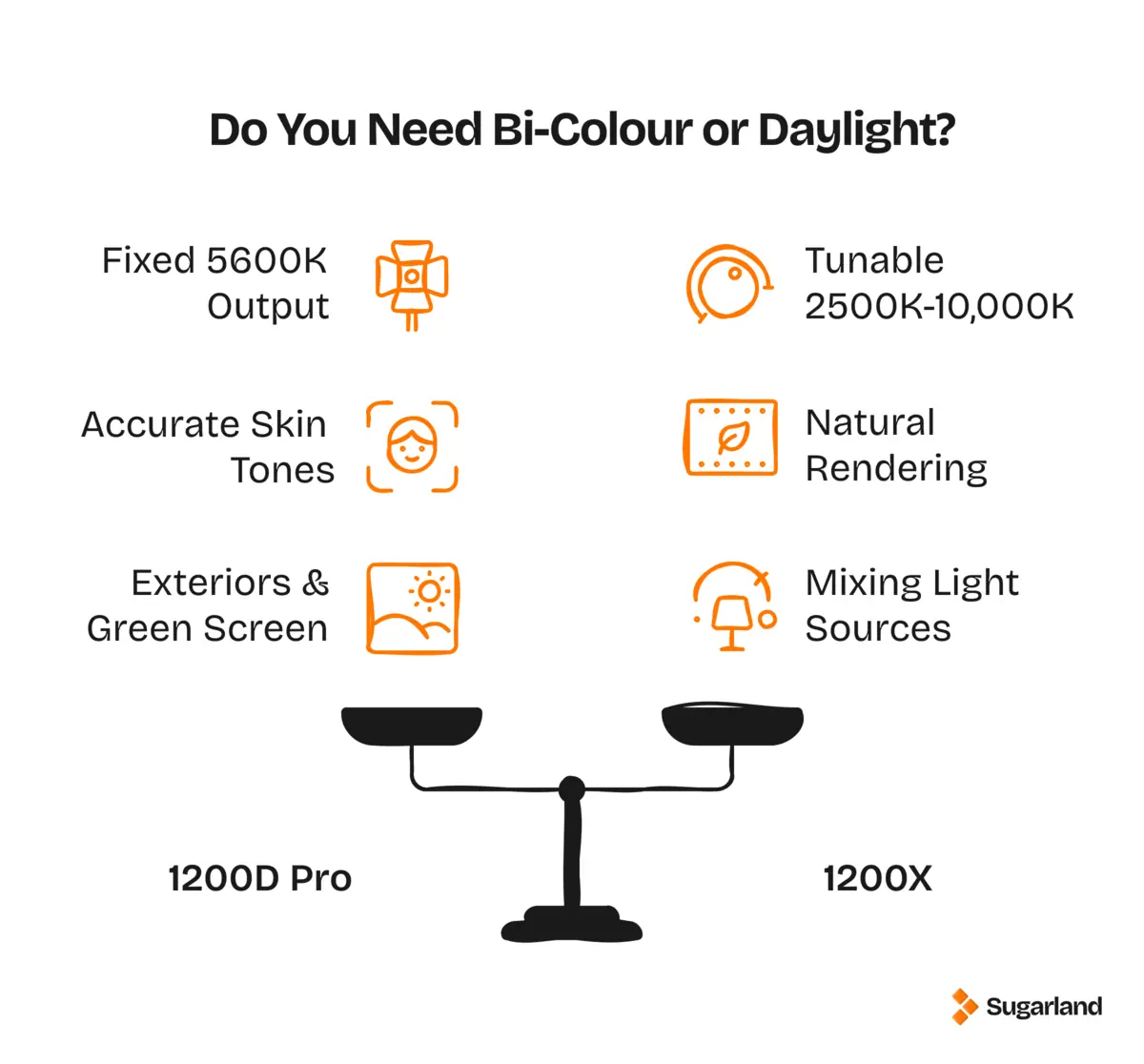
The 1200X earns its keep when your lighting isn't all one colour. It tunes from 2500K to 10,000K, and Aputure's newer BLAIR chipset adds an indigo diode to help skin tones and fabrics render more naturally across that whole range, rather than just at the two ends.
If you're mixing tungsten practicals with daylight fill, or moving between an interior and an exterior on the same job, the 1200X saves you swapping fixtures.
Output and Power Draw: How Do They Compare?
Both fixtures draw a similar maximum, around 1440W, so the generator or circuit planning is roughly the same either way.
Aputure states the 1200D Pro can put out over 83,100 lux at 3 metres with its narrow reflector, which is squarely in HMI-replacement territory.
The 1200X's headline lux figures vary depending on which reflector you use, but the output is comparable, just spread across a wider colour range rather than fixed at one point.
Neither of these is a light you plug into a standard 13A socket without checking your circuit first.
If you're heading somewhere without easy mains access, tell us when you book and we can talk through generator or battery options.
Weight and Handling on Set
The 1200X is the heavier of the two. Its lamp head and yoke come in at around 9.5kg, compared to the 1200D Pro's 8.95kg head.
Neither is a light you'll want to run off a light-duty stand. One independent hands-on review even points solo shooters or anyone with limited vehicle space toward Aputure's smaller 600-series fixtures instead, which is worth bearing in mind if portability matters more to you than raw output.
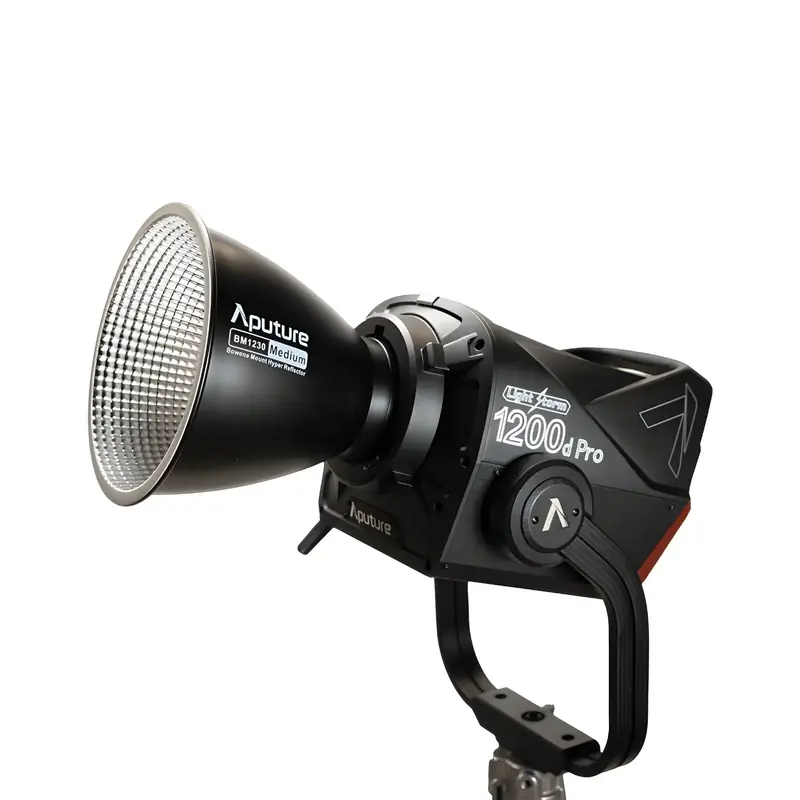
We always send both of these out with heavy-duty stands and sandbags as standard.
Once you add a softbox, light dome or fresnel on the front, the load on the yoke goes up fast, and it's not worth cutting corners on support gear for a fixture this size.
Do They Use the Same Modifiers?
Yes. Both the 1200D Pro and the 1200X take Bowens-style modifiers, so light domes, lanterns, fresnels and softboxes cross over between them.
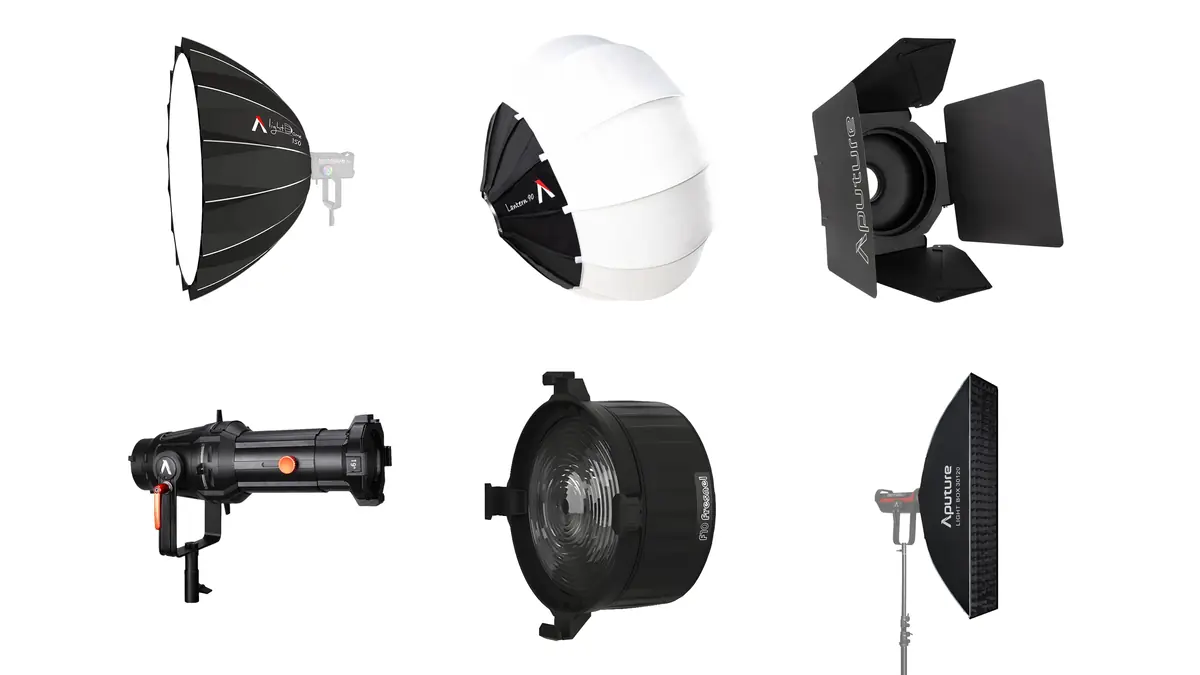
The 1200X uses Aputure's newer ProLock Bowens mount, designed to hold heavier modifiers without drift, but it's still built to work with standard Bowens Mount accessories.
If you've already got a kit list built around bowens modifiers for one of these lights, you don't need to rebuild it to switch to the other.
What Happens If an Aputure Light Gets Caught in the Rain?
One recent job put this to the test. The 1200X was out on location for a shoot where fairly heavy rain hadn't been factored into the plan.
The kit ended up genuinely wet, but the light kept running throughout without missing a beat.
Once the job wrapped, we let it dry out overnight and tested it again the next morning before it went back into stock. It came back exactly as it should.
The kit got soaked, but the 1200X didn't miss a beat. We dried it out overnight and it tested exactly as it should the next morning.
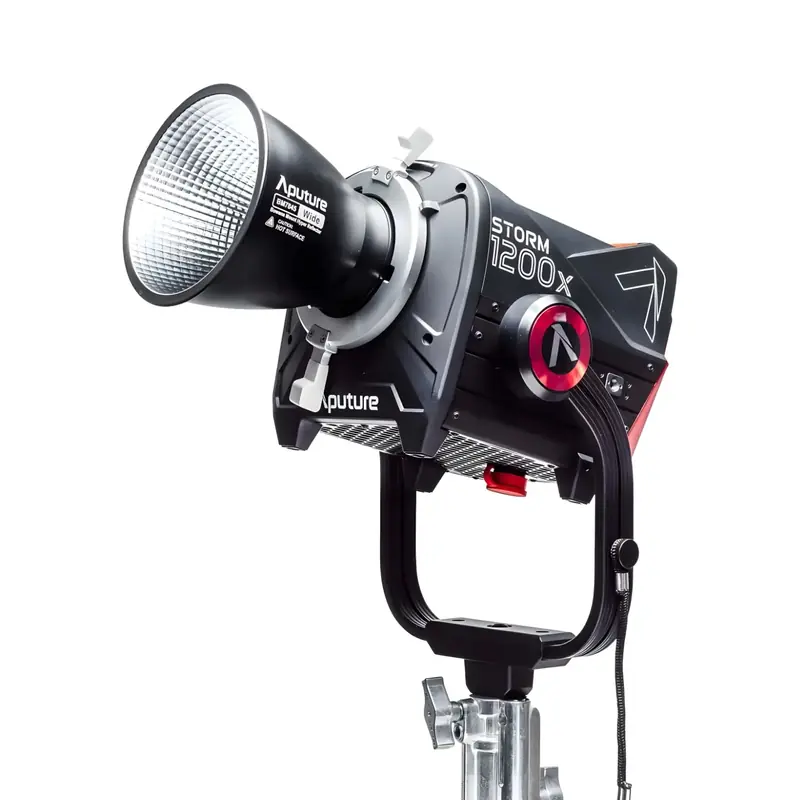
That held up because the 1200X is built to a full IP65 rating across the lamp head, control box and cabling, not just the head.
The 1200D Pro is weather-resistant to IP54, which is fine for damp conditions and light exposure, but it isn't built to the same standard.
If there's a real chance your shoot ends up outdoors in the rain, the 1200X is the safer booking.
Which One Should You Hire for Your Shoot?
Book the 1200D Pro for daylight-only work. Book the 1200X for anything mixed, moving between locations, or exposed to weather.
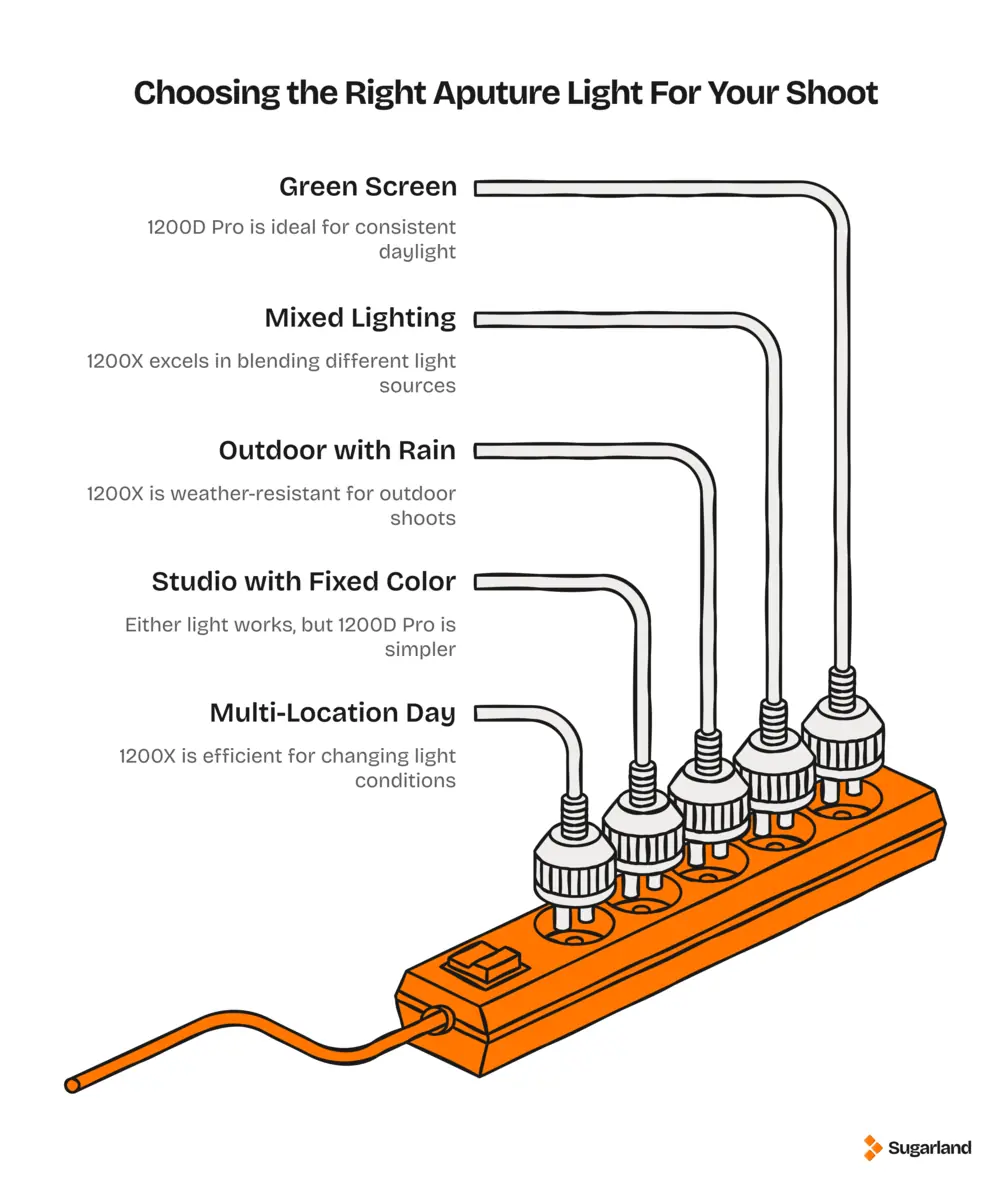
A few common scenarios:
- Green screen or daylight exteriors: 1200D Pro
- Fashion or commercial shoots blending tungsten practicals with daylight fill: 1200X
- Anything outdoors with a real chance of rain: 1200X
- Studio work where colour temperature is locked and fixed: either, though the 1200D Pro is the simpler option
- Multi-location day with changing light conditions: 1200X, so you're not carrying two fixtures for one job
Booking the 1200D Pro or 1200X
Both are available to hire alongside the rest of our Aputure equipment. Check the 1200D Pro and Storm 1200X product pages for current day rates and full kit contents.
If you're not sure which of these two suits your shoot, request a quote and tell us what you're shooting. We'll talk you through it.
Aputure 1200D Pro vs 1200X FAQs
Is the Aputure 1200X waterproof? The 1200X carries a full IP65 rating across the lamp head, control box and cabling, meaning it's built to withstand genuinely wet conditions on location.
How heavy is the Aputure 1200X? The 1200X's lamp head and yoke weigh around 9.5kg, making it slightly heavier than the 1200D Pro's 8.95kg head.
What's the actual difference between the 1200D and 1200X? The core difference is colour temperature: the 1200D Pro is fixed daylight at 5600K, while the 1200X is bi-colour and tunes from 2500K to 10,000K. Output and power draw are broadly similar between the two.
Can I use the same stands and modifiers for both? Yes, both take Bowens-style modifiers, so Domes, Lanterns and Fresnels generally cross over. Given the weight of both fixtures, we'd always recommend a heavy-duty stand rather than a light-duty one.
Let’s plan your next shoot
Get your equipment, studio and crew all in one place.