Gold Mount vs V-Mount: Which Battery Do You Need?
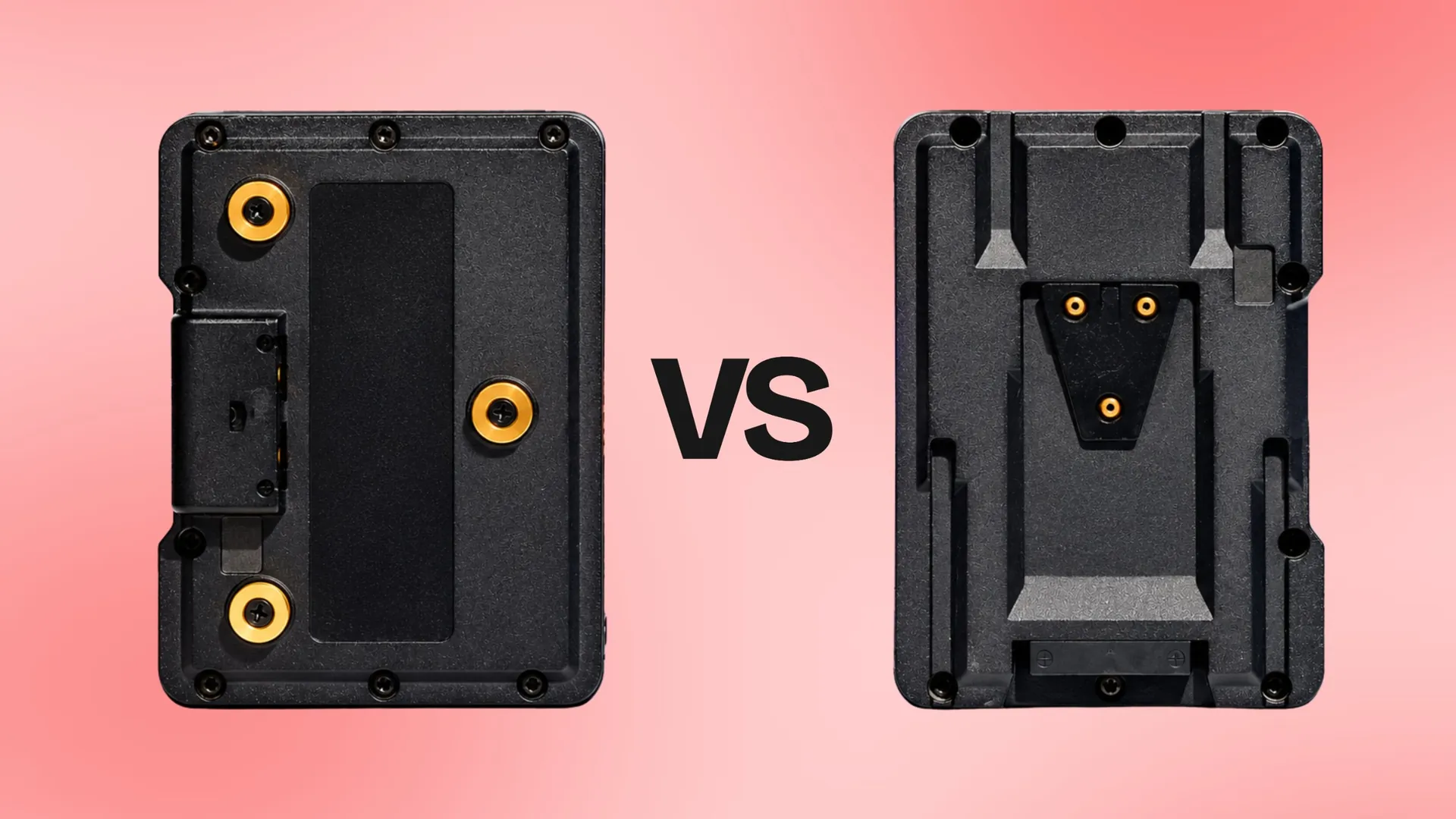
- Gold mount and V-mount batteries do the same job, but they lock on differently, so 1 won't fit the other's plate without an adapter.
- Gold mount is the pro standard in the US. V-mount is the standard here in the UK.
- Check the plate on your camera first, then plan your batteries around shoot length and anything else that needs power.
- Spare batteries over 100Wh need airline approval to fly. The 98Wh Helix Max sits under that line, while the 145Wh IDX Imicro-150 doesn't.
- B-Mount is a newer 24V option backed by ARRI, but V-mount is still what UK crews run.
If you're weighing up gold mount vs V-mount batteries, the short answer is that they do the same job with a different click.
Both power pro cameras, monitors and lights. They just lock onto the camera in different ways.
Where you shoot matters more than you'd think. In the US, gold mount is everywhere.
In the UK, V-mount is the standard, and it's what we stock at Sugarland.
Here's how the 2 compare, which 1 your shoot needs, and how many batteries to bring.
What Is a Gold Mount Battery?
A gold mount battery locks onto the camera with 3 metal studs that drop into keyhole slots on the plate, held by a spring-loaded latch.
It became the US pro standard, especially on Steadicam and car rigs where a secure lock counts.
V-mount, originally a Sony design, took over most of the rest of the world.
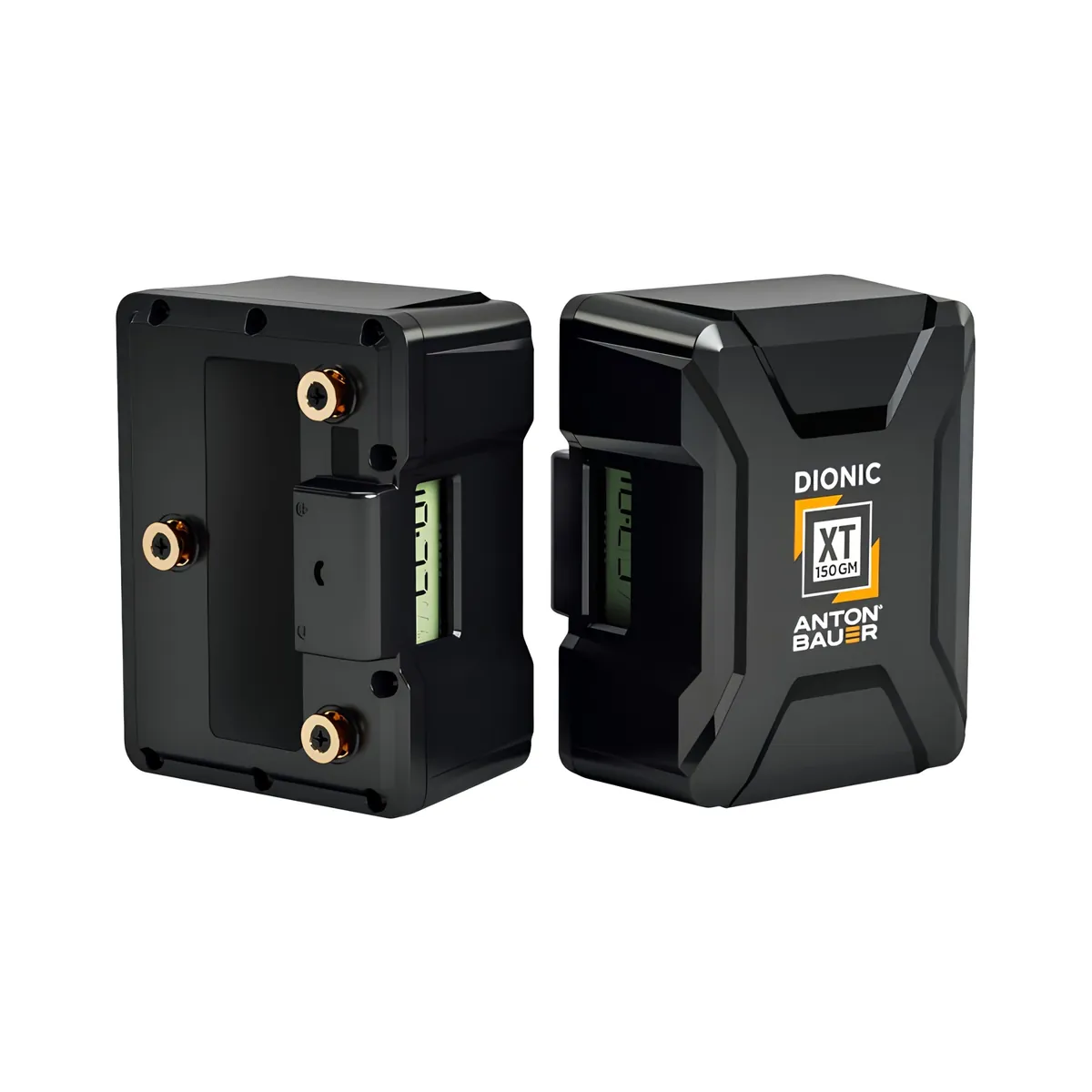
The system comes from Anton Bauer, which started in 1970 when a cameraman and an electrical engineer teamed up to build a better battery.
The company describes Gold Mount as the first flexible battery mounting system.
Gold mount has moved on since then. There's now a higher-voltage 26V Gold Mount Plus range for bigger rigs.
What Is a V-Mount Battery?
A V-mount battery slides onto the camera plate along a V-shaped wedge and clicks into place.
Most V-mounts also carry D-tap outputs, a 4-pin connector that's become the standard way to power film accessories straight off the battery.
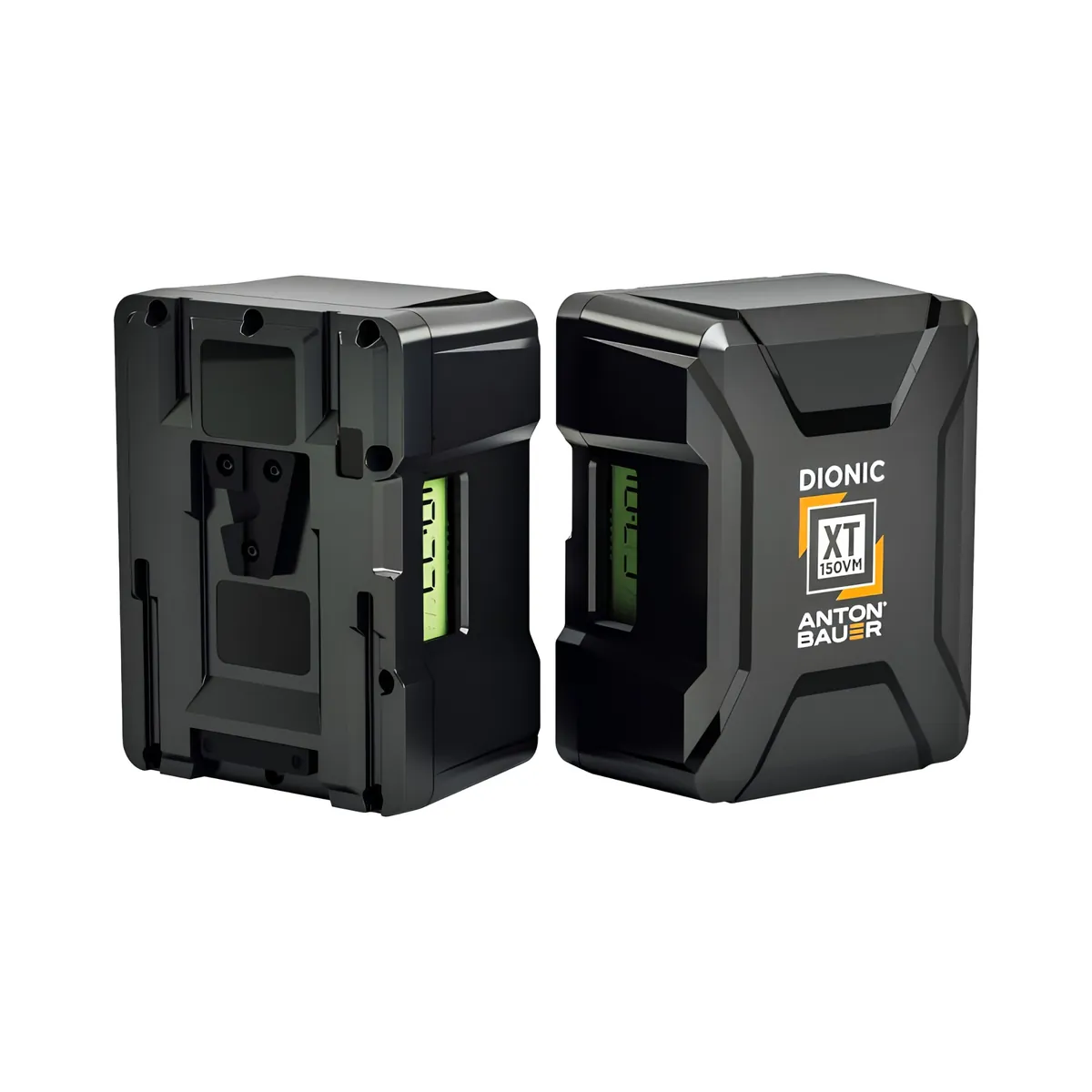
That's the real strength of V-mount. 1 battery can run the camera and the kit around it, so it works as a power source for the whole rig, not just the body.
Gold Mount vs V-Mount: What's the Actual Difference?
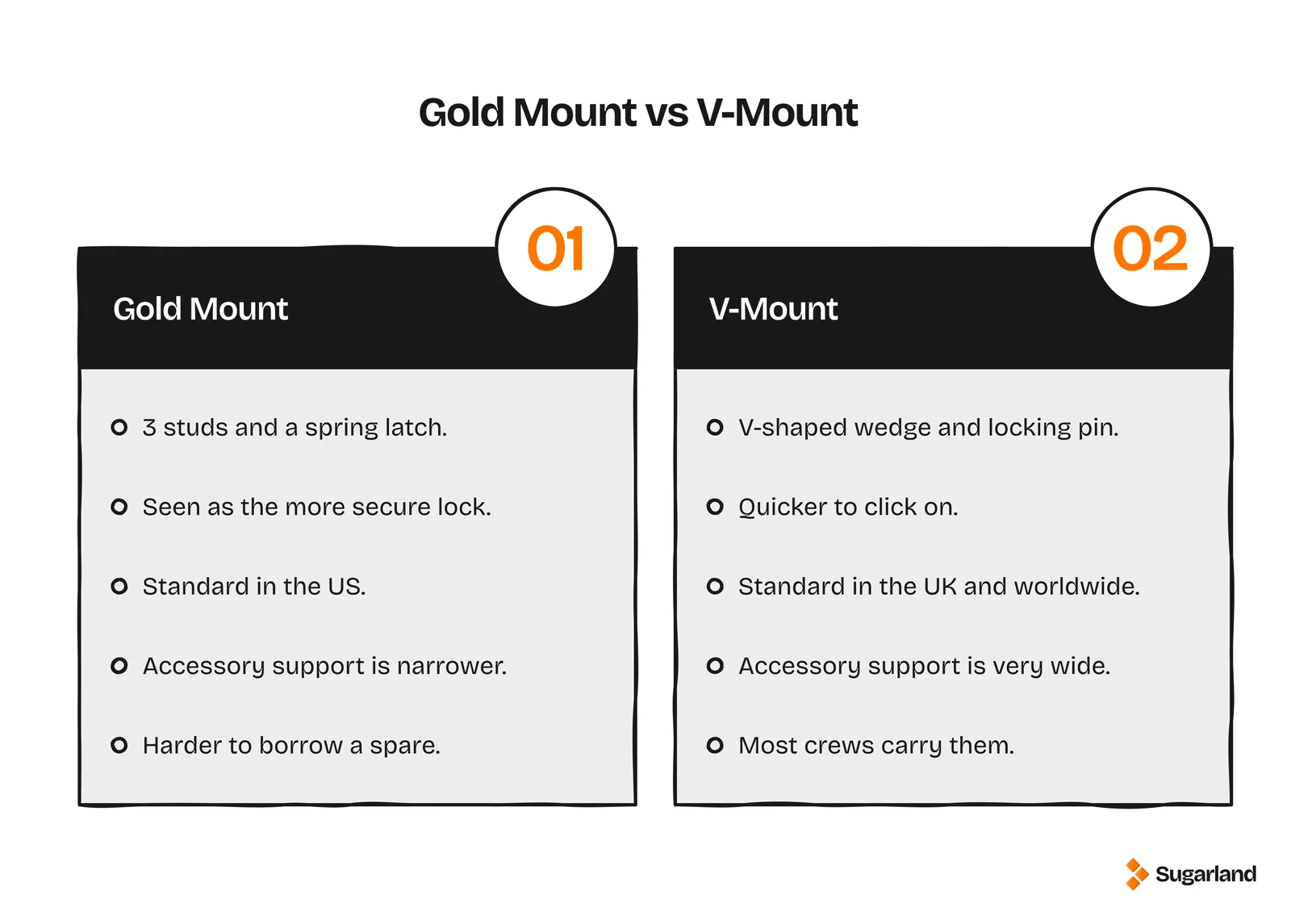
The main difference is the locking system, followed closely by where each one is standard. Here's how they line up.
Gold mount
- Locking: 3 studs and a spring latch
- Lock feel: often seen as the more secure lock
- Where it's standard: US
- Accessory support: narrower
- Borrowing a spare on a UK set: harder
V-mount
- Locking: V-shaped wedge and locking pin
- Lock feel: quicker to click on, but a worn plate can loosen
- Where it's standard: UK and most of the world
- Accessory support: very wide, covering monitors, lights and plates
- Borrowing a spare on a UK set: easy, most crews carry them
To switch between the 2, you'll need an adapter plate.
Neither is better on paper. The right choice is whichever mount your camera and accessories take.
Why V-Mount Is the Standard in the UK
Walk onto almost any UK set and you'll see V-mounts. In all my time at Sugarland, nobody has asked us for gold mount.
Every crew we work with runs V-mount, so that's what we stock.
It snowballs. The more crews use 1 system, the easier it is to borrow a spare battery or find a plate that fits, so everyone sticks with it.
I'll be honest, V-mounts are very good. In my experience they last all day, and because we can send out as many kits as a shoot needs, power is rarely the thing that stops a production.
Our go-to brand for years has been IDX. We've relied on it for so long it's become the default in our kit room.
How to Choose the Right Battery Mount for Your Shoot
Work through these 4 steps before you book.
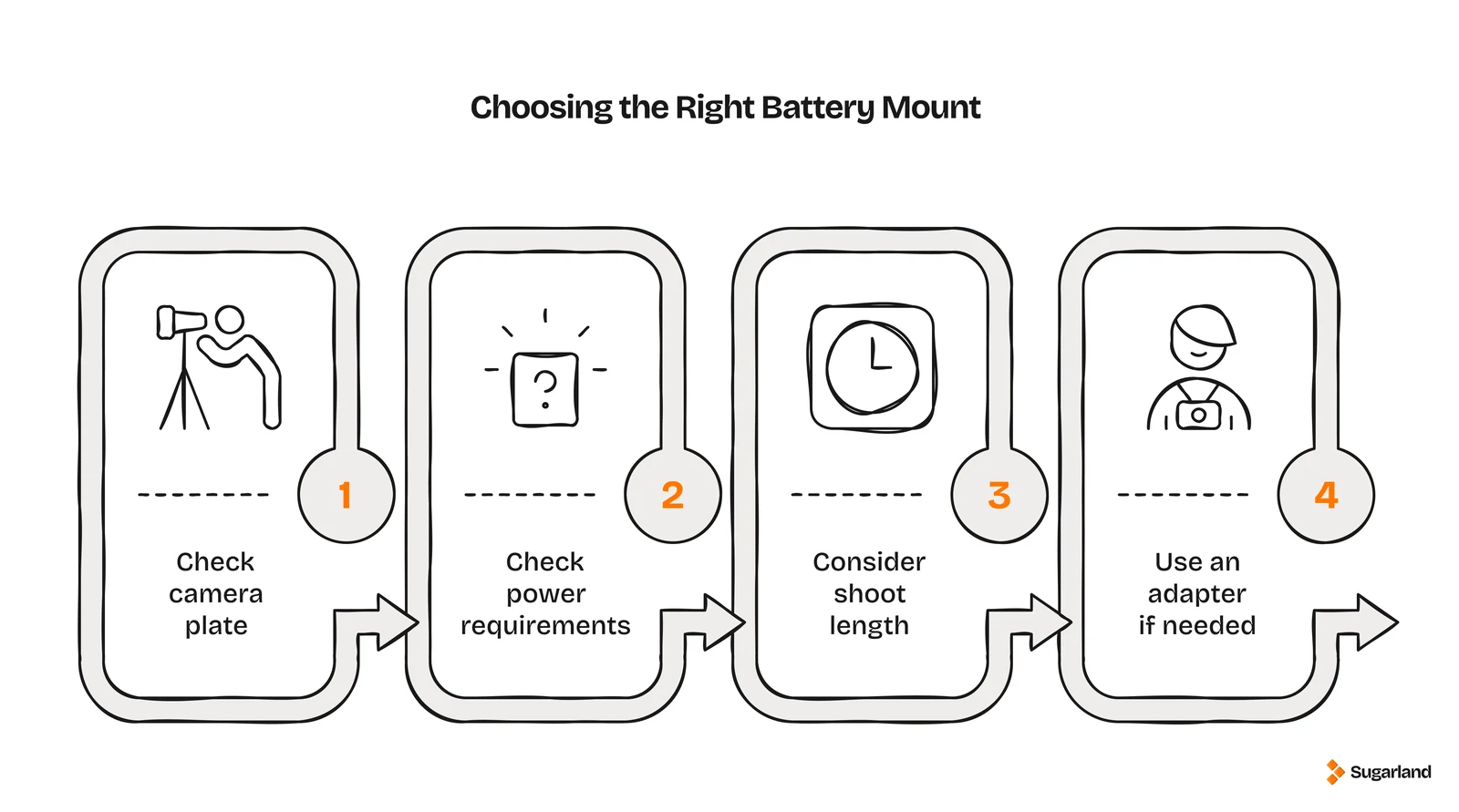
- Check the plate on your camera. Look at the back of the body or the cage. 3 studs means gold mount. A V-shaped slot means V-mount.
- Check what else needs power. Monitors, wireless video and LED panels all draw from somewhere. If they take D-tap, a V-mount can cover them too.
- Think about shoot length. On smaller bodies like the FX3, some people stick to the camera's own batteries for short jobs. For anything longer, V-mounts are the go-to.
- Bringing gold mount kit? Use an adapter plate, or ask us to cross-hire. If we don't stock something, we'll source it, so you still only deal with 1 supplier.
The most common mistake I see is forgetting external batteries altogether. When a kit list comes in without them, we usually spot it straight away and suggest adding a V-mount kit.
Batteries are a separate line item, not bundled with camera bodies, so make sure they're on your list. Running through a hire checklist before you book catches this early.
How Many V-Mount Batteries Do You Need for a Shoot Day?
A kit of 4 to 5 V-mount batteries with a charger covers most shoot days, and bigger productions simply add more kits. That's how we send them out as standard.
Every kit comes with its own charger. While 1 battery runs the camera, the spares charge, so you can keep rotating all day without stopping.
These are the 2 kits we send out:
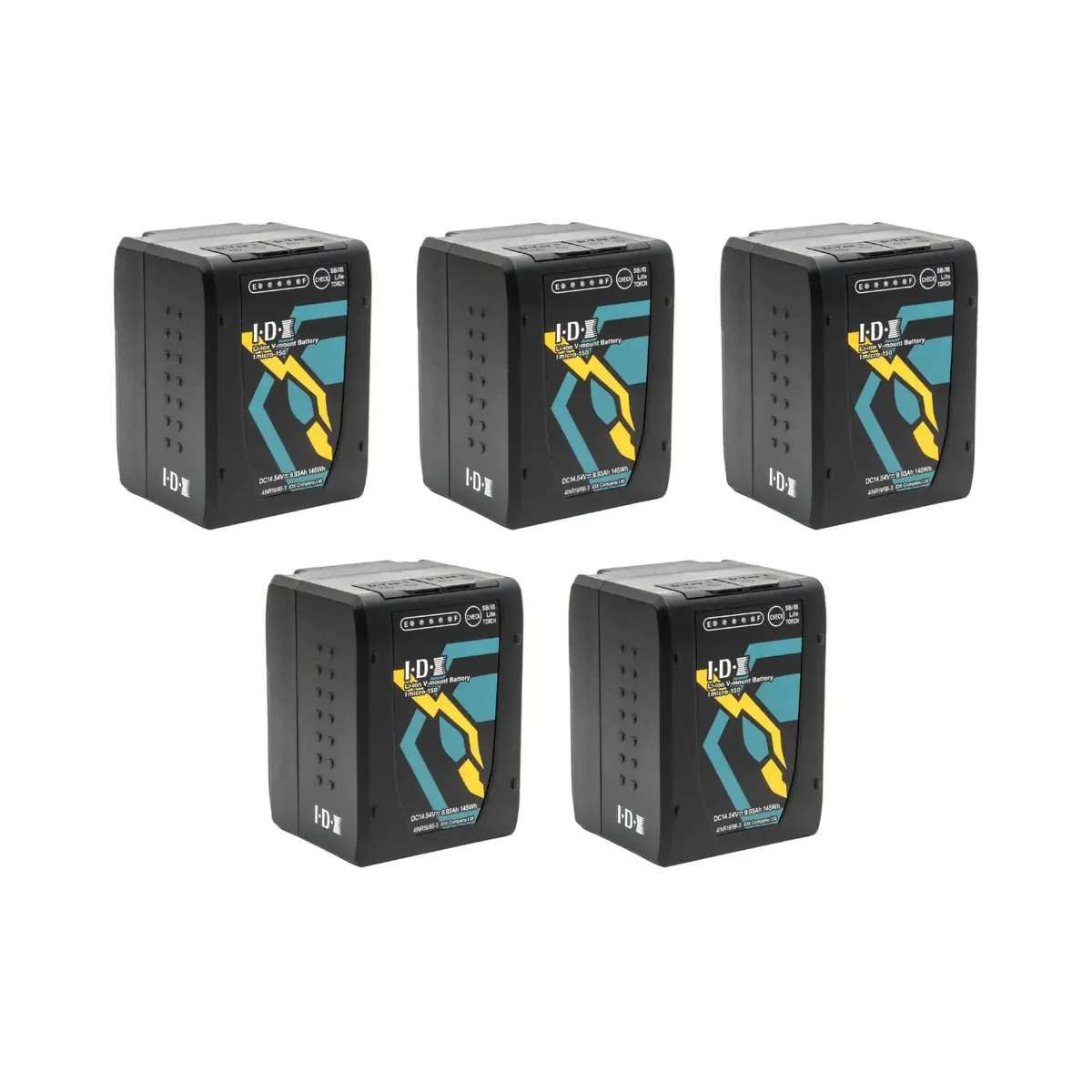
- IDX Imicro-150 kit: 5 batteries. Each is 145Wh with two D-tap outputs, so 1 battery can feed the camera and an accessory at the same time. It's the kit we send out most.
- Helix Max kit: 4 batteries. Each Core SWX Helix Max is 98Wh with dual 14V/28V output, so it can run higher-voltage kit as well as standard cameras.
Powering Lights and Monitors Without Wall Power
No mains on location? V-mounts can run far more than the camera.
A lot of lighting and monitoring kit comes with V-mount plates or adapters, and some kits include D-tap cables. Plug the D-tap from the battery into the kit and you're powered.
If you're shooting away from wall power, budget V-mount kits for the lights and monitors as well as the camera.
Is B-Mount Replacing Gold Mount and V-Mount?
Not on the shoots we supply. B-Mount is an open 24V battery standard developed by bebob and endorsed by ARRI, built for power-hungry modern cameras and lights.
ARRI says it offers up to 3 times the power potential of traditional 12V systems.
Several battery brands, including IDX and Core SWX, now make B-Mount products too. It's worth knowing about, especially on high-end ARRI setups, but V-mount is still what UK crews run day to day.
Can You Fly With V-Mount Batteries?
Yes, but spare batteries must go in your hand luggage, and anything over 100Wh needs airline approval first.
The CAA is clear that power banks and spare batteries belong in your cabin bag, never the hold.
For spares between 100Wh and 160Wh, British Airways asks for a battery approval form at least 7 days before departure.
You'll also need a UN38.3 test certificate from the manufacturer, and you can carry a maximum of 2.
That creates a real difference between our 2 kits:
- IDX Imicro-150 (145Wh): sits in the approval band.
- Helix Max (98Wh): sits below the approval threshold, so it's the easier kit to travel with.
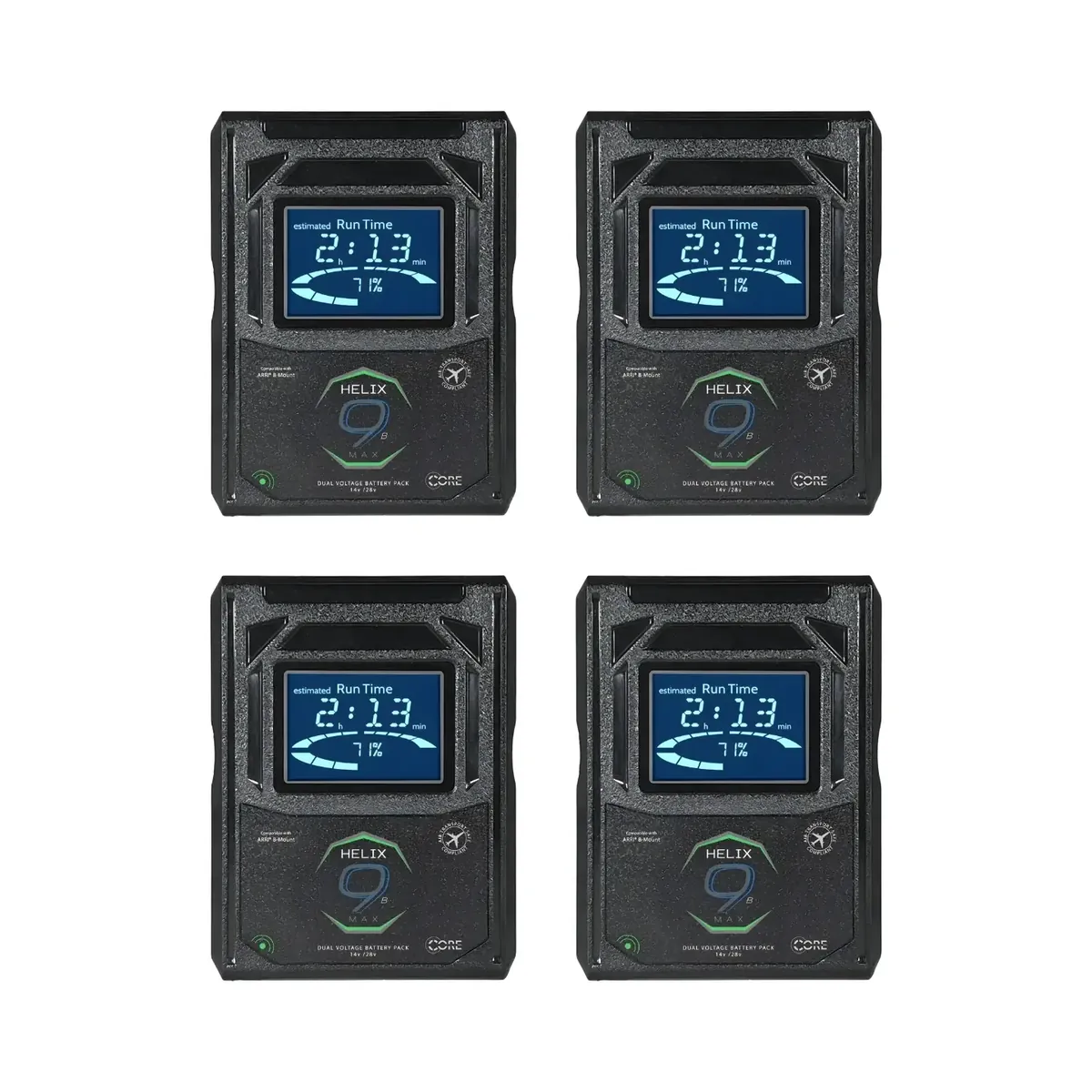
Flying with your kit? Ask for the Helix Max kit. At 98Wh it sits under the airline approval threshold, which saves you a form and a week of waiting.
Rules vary by airline, so check with yours before you fly.
Getting the Right Batteries in Your Kit
Gold mount vs V-mount comes down to what your camera takes, and in the UK that's almost always V-mount.
Get the mount right, then plan enough batteries to keep swapping all day.
Send us your kit list and we'll check the power side for you. If batteries are missing, we'll flag it before the shoot.
For urgent jobs we can often turn kit around within a few hours, subject to availability.
Ready to plan your shoot? Request a quote and we'll sort the rest.
Let’s plan your next shoot
Get your equipment, studio and crew all in one place.