What Is the Best Lens for the Sony FX6?
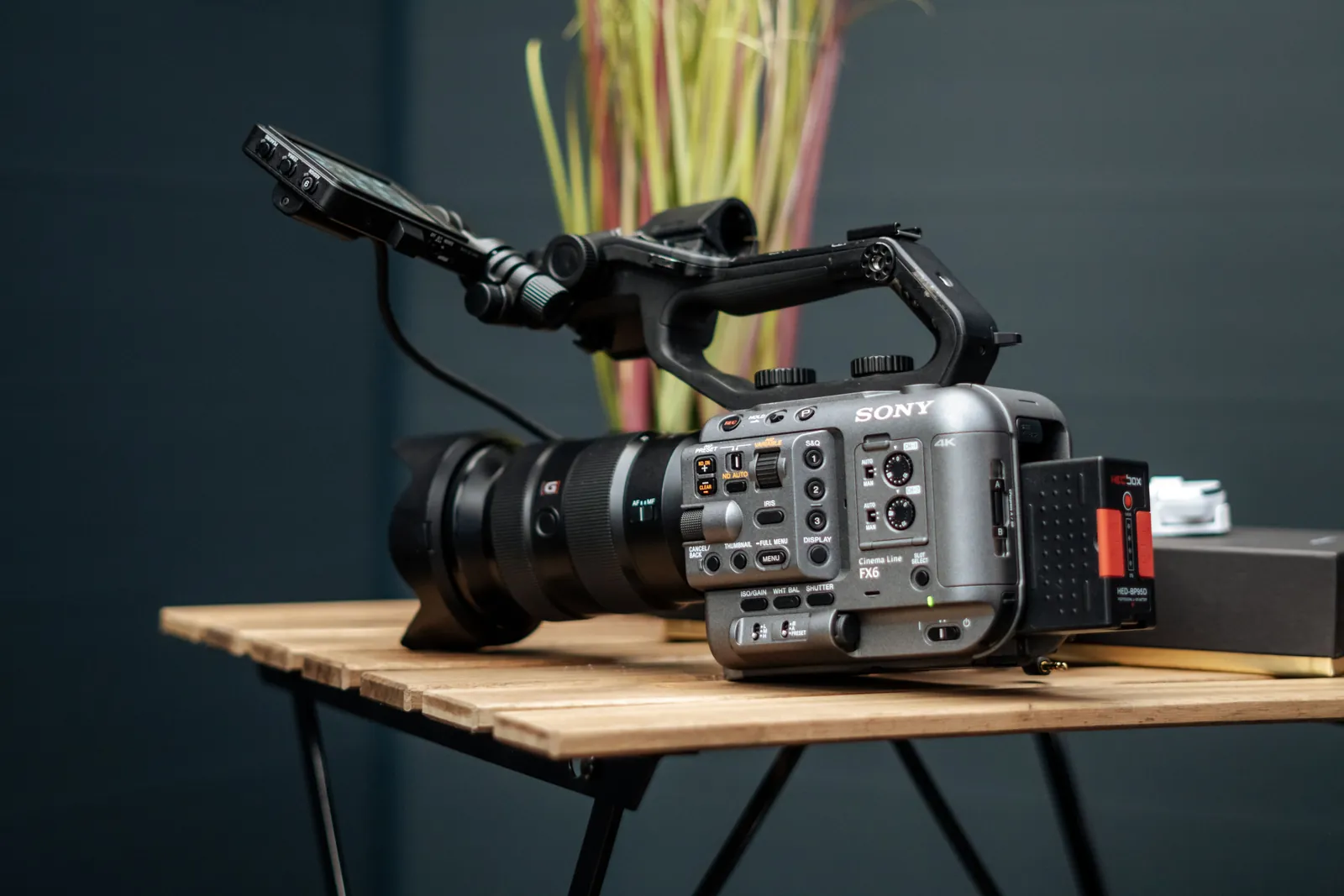
- The Sony FX6 is a full-frame E-mount camera, so native E-mount lenses are the default choice for most shoots.
- A G Master zoom lens set, like the 24-70mm, covers most situations without a lens change.
- For a more cinematic look, G Master primes or PL mount primes like the Zeiss CP3s (via an E-to-PL adapter) give you more control over depth of field.
- Focal length changes the feel of a shot: wide lenses open up space, telephoto lenses compress it.
- The right lens depends on the shoot in front of you, not a single "best" answer.
If you've searched "what is the best lens for the Sony FX6," you've probably found a dozen lists ranking lenses against each other.
The truth is there isn't one best lens. There's a best lens for what you're filming that day.
We get asked this question constantly, and the answer always starts with the same question back: what are you shooting, and how much control do you need over the look?
Once you know that, the lens choice gets a lot easier.
What Makes a Lens "Best" for the Sony FX6?
There's no single best lens for the FX6, it depends entirely on what you're shooting.
What doesn't change is the starting point: the FX6 is a full-frame E-mount cinema camera, which is compatible with a wide range of Sony lenses out of the box.
That full-frame sensor matters for lens choice too. Full-frame E-mount lenses give you the field of view they're designed for.
Fit a Super 35mm lens instead and you'll be shooting in a cropped mode, losing some of that full-frame look you bought the camera for in the first place.
For more on what the camera itself brings to the table, our FX6's key features guide covers the sensor, autofocus and recording formats in full.
Why Is Sony E-Mount the Default Choice for the FX6?
Native E-mount lenses give the FX6 full autofocus without an adapter, which is why they're our default recommendation.
The FX6's Fast Hybrid AF system, with phase detection AF, works with more than 50 native E-mount lenses, giving you reliable focus tracking without fighting the gear.
Worth knowing before you book: the FX6 uses a standard bayonet E-mount rather than the locking mount found on the FX9.
That's a deliberate design choice, since it makes swapping lenses easier for handheld work. It does mean heavier cine lenses benefit from extra support rather than relying on the mount alone.
If you're weighing up your options, our full lens hire range covers E-mount, PL-mount and EF-mount glass, all quoted separately from the camera body.
What's the Best All-Round Lens for the FX6?
The best all-round choice is a G Master zoom like the 24-70mm, which covers most situations without you having to change glass mid-shoot.
This is where we point most clients by default, and for good reason.
In our experience, the GM zoom set is the safest starting point when a client isn't sure exactly what the shoot will demand.
It's built to handle everything from a wide establishing shot to a tighter frame without a lens change, which matters when you're working fast on set or don't have a second body ready to go.
Zoom lenses trade a small amount of optical purity for flexibility. For a huge range of commercial, corporate and broadcast work, that trade is worth it.
When Should You Use Primes Instead of Zooms on the FX6?
Reach for primes, or something like the Zeiss CP3s, when a shoot needs a more cinematic, controlled look.
Prime lenses tend to have wider maximum apertures than zooms, which gives you a shallower depth of field and more separation between your subject and the background.
Traditional shooters chasing a true cinematic look tend to favour primes for exactly this reason.
Our G Master 3-Way Prime Lens Set covers the most-used focal lengths for this kind of work.
If you want to go further, our Zeiss CP3 set (£200/day +VAT) is PL-mount cine glass.
Since the FX6's native mount is E-mount, you'll need a mount adapter to run PL lenses on it, such as our Vocas E-PL Mount Adapter.
It's a popular route for productions that want that classic cine rendering without losing the FX6's autofocus-friendly workflow for the rest of the kit.
Real Example: Choosing Lenses for a Live Performance
A client recently came to us with a two-camera live performance setup: one camera positioned right in front of the stage, one further back with more distance to cover.
For the close camera, we recommended the 16-35mm f/2.8 G Master.
At that focal length you keep the wide-angle energy of the stage and crowd in frame, which matters when the camera's close enough that a tighter lens would lose the atmosphere.
For the further camera, we suggested the 70-200mm f/2.8 G Master II.
That gave the operator enough reach to punch into the performer for a tighter shot when they wanted it, while still being able to zoom back out and take in the crowd from distance.
This is a good example of why wide-angle lenses suit large-venue and live event coverage at one camera position, while a longer zoom earns its place at another.
Same shoot, two very different jobs for the lens.
How Does Focal Length Change Your Shot?
Wide lenses open up a scene, telephoto lenses compress it.
A wide-angle lens exaggerates the sense of space and distance between foreground and background, which is why it can make a small room or stage feel bigger than it is.
A telephoto lens has the opposite effect, flattening that distance and pulling the background visually closer to your subject.
It's worth knowing that this compression effect comes from how far you stand from your subject, not the focal length on its own.
A longer lens needs more camera-to-subject distance to hold the same framing, and it's that extra distance that compresses the apparent depth of the shot.
Two lenses at the same framing but different focal lengths will look different because of where the camera physically had to stand.
Prime vs Zoom: Which Should You Hire?
Hire primes when you have time to set up each shot deliberately and want the strongest possible cinematic look.
Hire zooms when you need to move fast and can't predict exactly how a scene will unfold.
Primes tend to suit live event work where speed of framing matters less than the specific look you're chasing for a hero shot.
Zooms suit almost everything else: run-and-gun coverage, multi-camera setups, and any shoot where you won't get a second take.
Most productions we work with end up using both across a single job. Primes for the shots that carry the story, zooms for the coverage that keeps everything moving.
Quick Reference: Matching Lens to Shoot Type
Choosing the Right Lens Starts With the Shoot, Not the Spec Sheet
There isn't a single best lens for the Sony FX6. There's a best lens for the job you're doing this week, and that changes from one shoot to the next.
If you're still weighing up options, talk us through the shoot and we'll recommend a lens (or a set) that fits. Request a quote and we'll take it from there.
Let’s plan your next shoot
Get your equipment, studio and crew all in one place.