Cine Lenses vs Normal Lenses: How Are They Different?
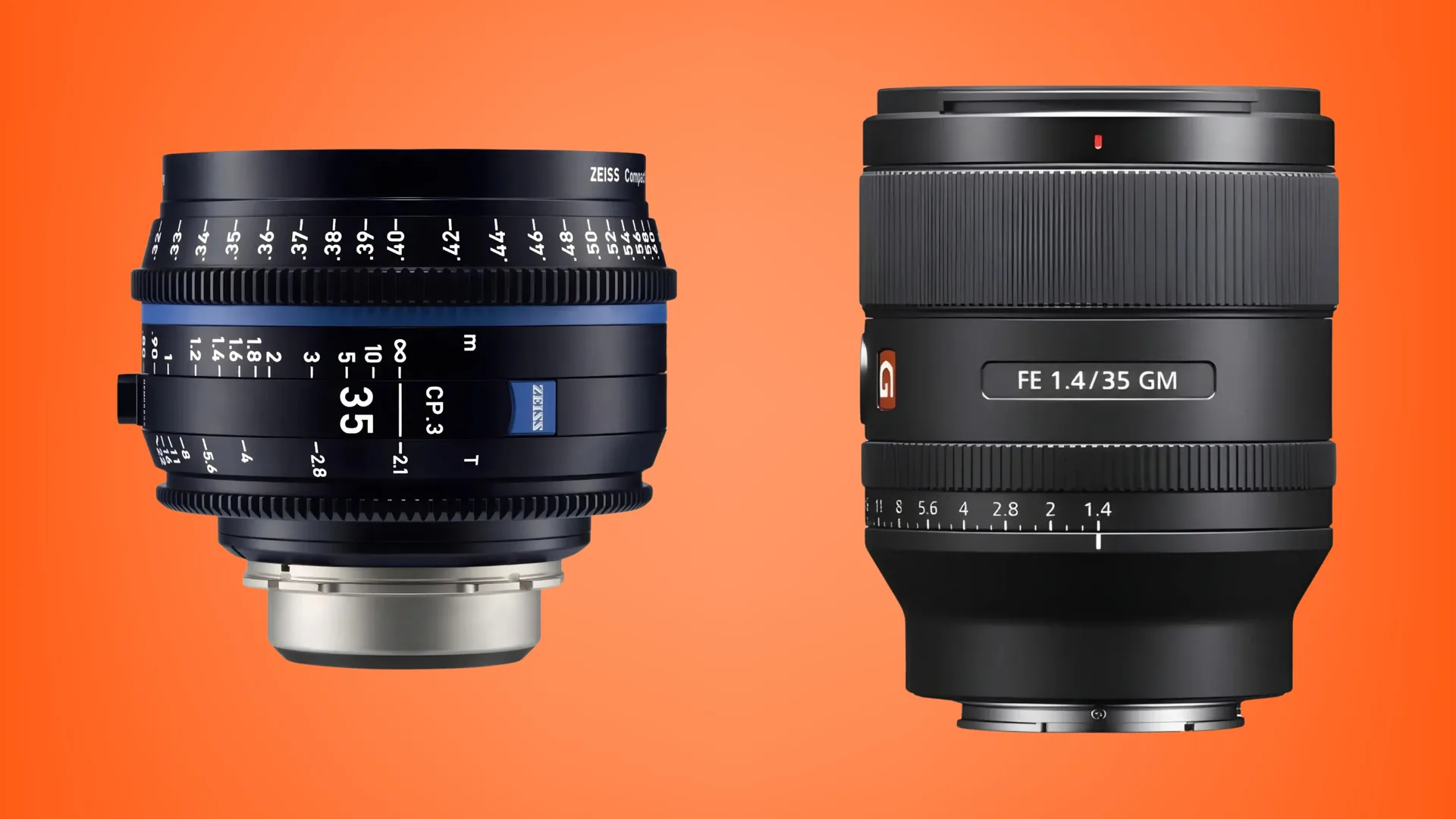
- Cine lenses are built for repeatable manual control: long focus throw, geared rings, T-stops, minimal breathing and matched sets.
- Normal lenses like Sony G Masters are often the better call for autofocus-led, solo or gimbal work.
- Most cine lenses are manual focus by design, but autofocus cine glass is starting to arrive.
- The best cine zoom depends on the shoot. For fashion runways, Canon's CN servo zooms on the Sony FX9 are our go-to.
- Top-end cine glass costs serious money, which is why most productions hire it and match the lens to the job.
How are cine lenses different from the normal lens on your camera?
On paper, a cine prime often has no autofocus, no stabilisation and a much bigger price tag.
The difference is control. Here's what makes a cine lens, when a normal lens is the smarter pick, and how we use both on the same shoot.
How Are Cine Lenses Different From Normal Lenses?
Cine lenses are built for precise, repeatable manual control across a whole shoot, while normal lenses are built for fast autofocus and stills.
That's what a cine lens does: it keeps the camera team consistent from take to take, lens to lens and day to day.
Every difference below comes back to that.
Long Focus Throw With Hard Stops
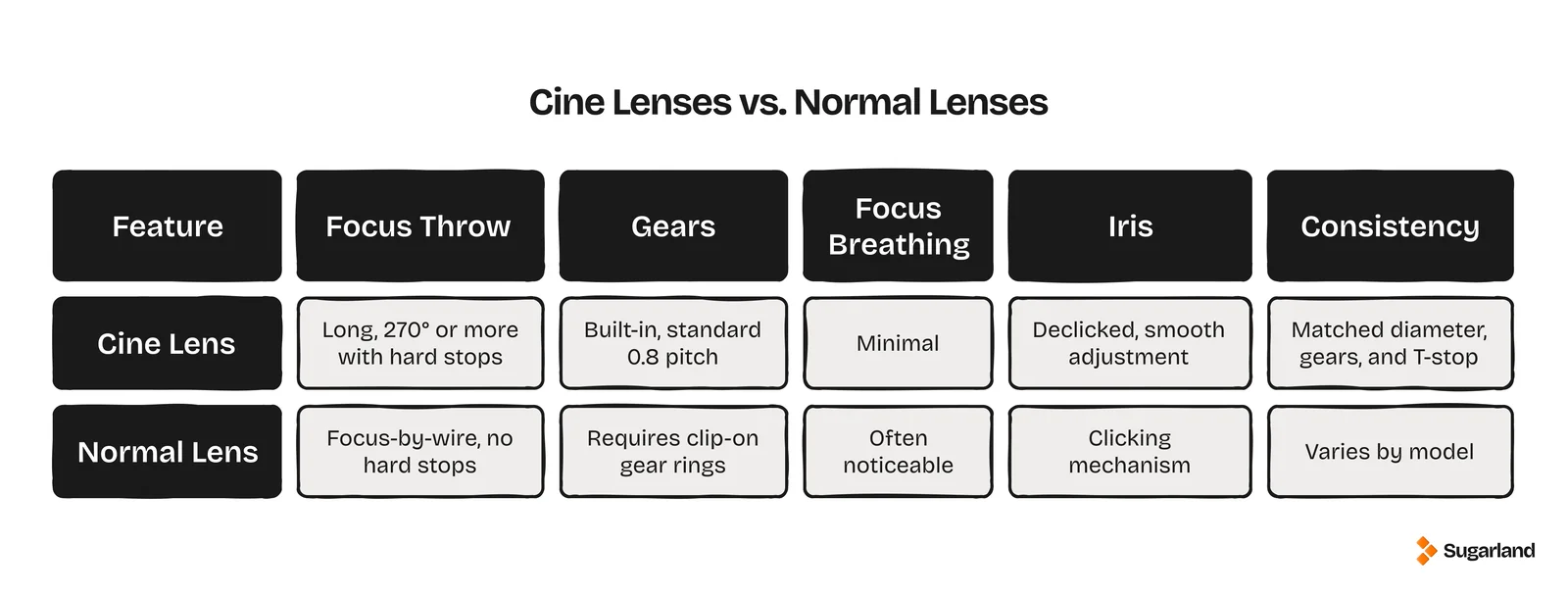
A cine lens focus ring often turns 270° or more from close focus to infinity. That long focus throw lets a focus puller hit marks precisely.
Many normal lenses use focus-by-wire rings with no hard stops. The same turn won't always land on the same mark.
Built-In Gears
Focus and iris rings come geared, usually to a standard 0.8 pitch. A follow focus or lens motor fits straight on.
On a normal lens you'd add clip-on gear rings. That's one more thing to slip on a long day.
Minimal Focus Breathing
Focus breathing is the slight zoom in or out you see when focus shifts. In a photo you never notice it.
In a slow focus pull on camera, it's distracting. Good cine lenses are designed to keep it to a minimum.
Declicked Iris
The iris ring turns smoothly, with no clicks. You can adjust exposure mid-take without a visible jump or a noise on the audio.
Matched Sets
Cine primes in a set share the same front diameter, gear positions and often the same maximum T-stop.
Swap a 35mm for an 85mm and the matte box, follow focus and exposure all stay put. On a busy set, that saves real time.
Why Are Cine Lenses Rated in T-Stops Instead of F-Stops?
Cine lenses use T-stops because they measure how much light actually reaches the sensor, not just the size of the aperture.
Set every lens to the same T-stop and you get the same exposure.
F-stops are a theoretical figure. Glass absorbs and reflects some light, and that varies from lens to lens.
In one test, 2 lenses both marked f/1.4 actually measured T1.5 and T1.7.
For a single photo, that gap is easy to fix. Across a scene cut from several lenses over several days, it shows.
Our aperture guide goes deeper on T-stops and sweet spots.
When a Normal Lens Is the Better Call
Cine lenses aren't automatically better. They're better for a certain kind of shoot.
I'll steer clients towards normal lenses like Sony G Masters when they're shooting multi-camera or solo and need autofocus, especially without a focus puller.
Modern autofocus on an FX body is a genuine advantage there, not a compromise.
The gap has closed in other ways too. Sony's FX3 firmware added breathing compensation with compatible lenses, which reduces the framing shift during focus changes.
G Masters output a beautiful image. Cine lenses just have a certain look, and when a shoot has the crew to use them properly, that's what you're paying for.
How Cine Lenses Are Different on Set: A Runway Example
Our fashion runway jobs show both types working side by side. A typical setup looks like this:
- Main cameras: Sony FX9s on tripods, fitted with Canon CN servo zooms via a Vocas E-PL adapter.
- Gimbal camera: a Sony FX3 with a G Master lens.
- Occasional extra: another FX body with a G Master, when the show needs it.
The CN lenses are Super 35 zooms, so the FX9 runs in its Super 35 mode.
Operators pan, tilt, zoom and pull focus all at once, often on tight detail shots of the garments.
Sometimes there's a focus puller, but many of these operators are extremely talented, and some shoot runway shows almost exclusively.
The gimbal camera is different. A heavy servo zoom has no place on a gimbal, and autofocus earns its keep when the operator is on the move.
That split is the whole cine vs normal debate in a single shoot. It's the setup we used on our Erdem runway show.
Do Any Cine Lenses Have Autofocus?
A few do, but most cine lenses are manual focus by design. The whole point is that a person controls focus precisely.
There are exceptions:
- The newer RF-mount version of the Canon CN7 supports Dual Pixel AF on Canon Cinema EOS cameras.
- Sigma has launched its AF Cine Line, its first autofocus cine zooms.
- Sirui now makes full-frame autofocus anamorphics in its Astra series.
In practice, our clients rarely ask for autofocus on cine glass.
When someone hires our cine lenses, they ask for a follow focus or a focus demand like the Canon FPD-400D (if shooting on Canon CN lenses).
Do Cine Lenses Have Zoom?
Yes, cine zooms are common, and the good ones are parfocal, meaning they hold focus as you zoom.
That matters when an operator is zooming live, like on a runway.
Primes still dominate narrative work because they're faster, smaller and come in matched sets. Zooms win when there's no time to change lenses.
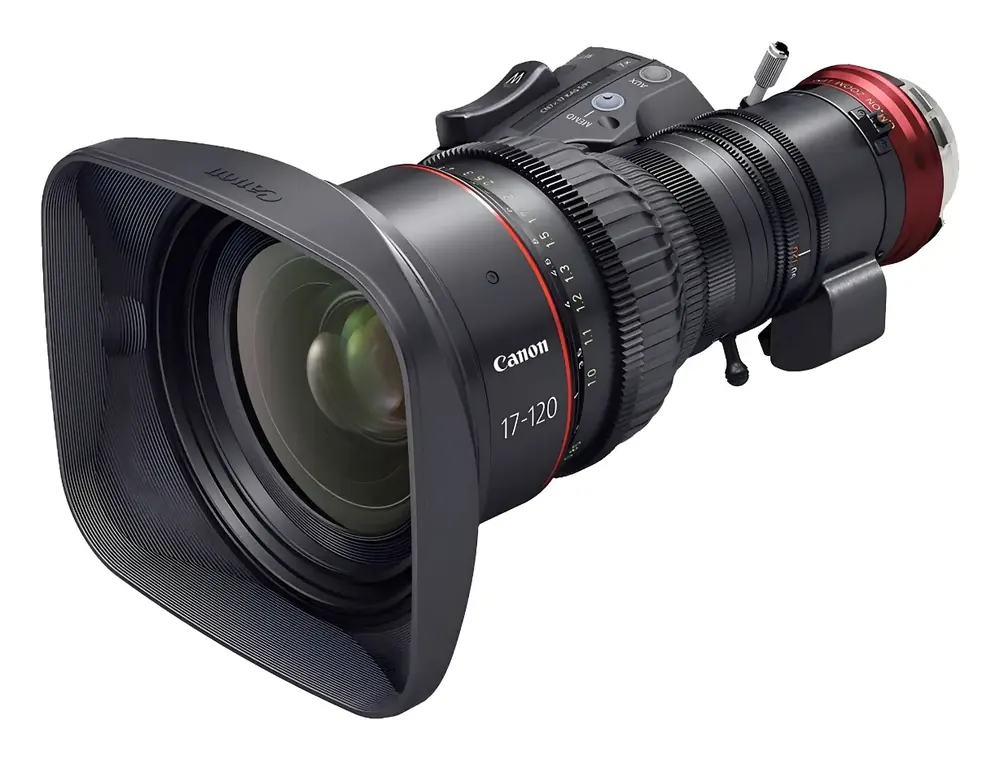
Some cine zooms are fully manual. Others, like Canon's CN range, add a servo drive for motorised zoom, focus and iris, giving you broadcast-style handling with cinema optics.
What Is the Best Zoom Cine Lens?
The best zoom cine lens is the one that fits your camera, sensor and shoot. There's no single winner, but here's how the zooms we stock compare:
- Canon CN7 17-120mm T2.95-3.9: Super 35. Our pick for runways, events and documentary.
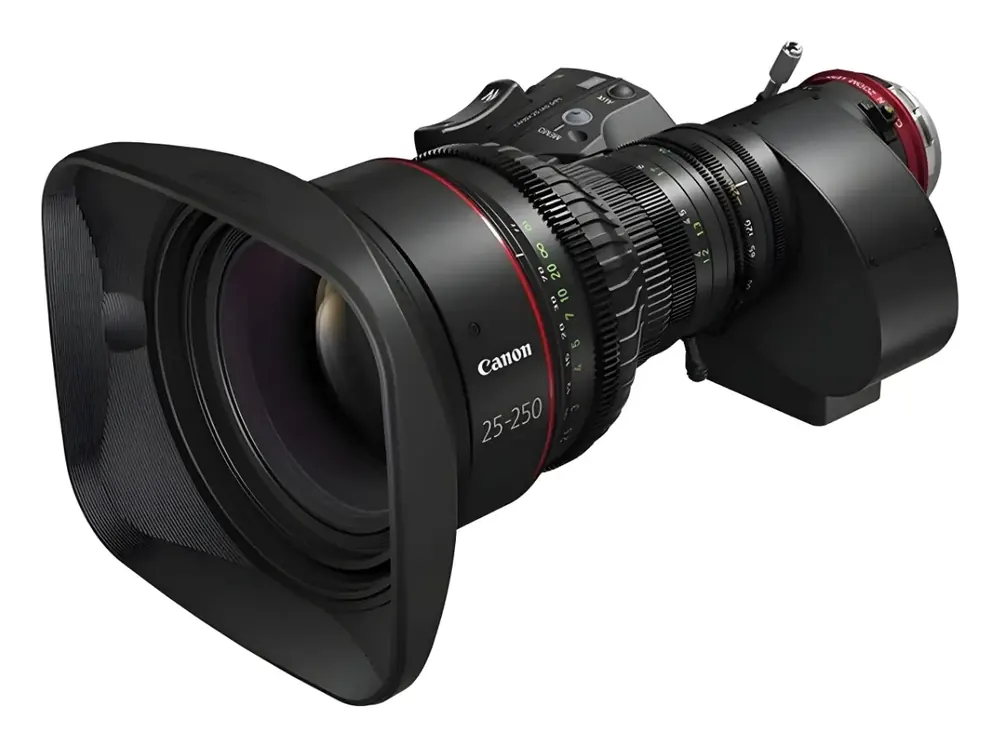
- Canon CN10 25-250mm T2.95-3.95: Super 35, or full frame with its extender. Built for runways, live events and long-lens coverage.
- Angenieux Optimo Style 30-76mm T2.8: Super 35. Suits narrative, commercials and handheld work.
- DZOFILM Pictor 14-30mm T2.8: Super 35. Good for wide shots and tight spaces.
Our most popular cine zooms are the Canon CN lenses.
The CN10's built-in 1.5x extender takes it to 37.5-375mm and covers full frame, which helps when you need the whole sensor.
Worth knowing before you hire: both CNs are Super 35 lenses.
On a full-frame body like the FX9, you'll shoot in Super 35 mode unless the CN10's extender is engaged.
What Are the Best Cine Lenses?
The best cine lenses are the ones that match your camera, sensor size and the look you're after.
A full-frame music video and a Super 35 corporate interview need different glass.
Here are a few of the PL mount lenses we stock, by what they suit:
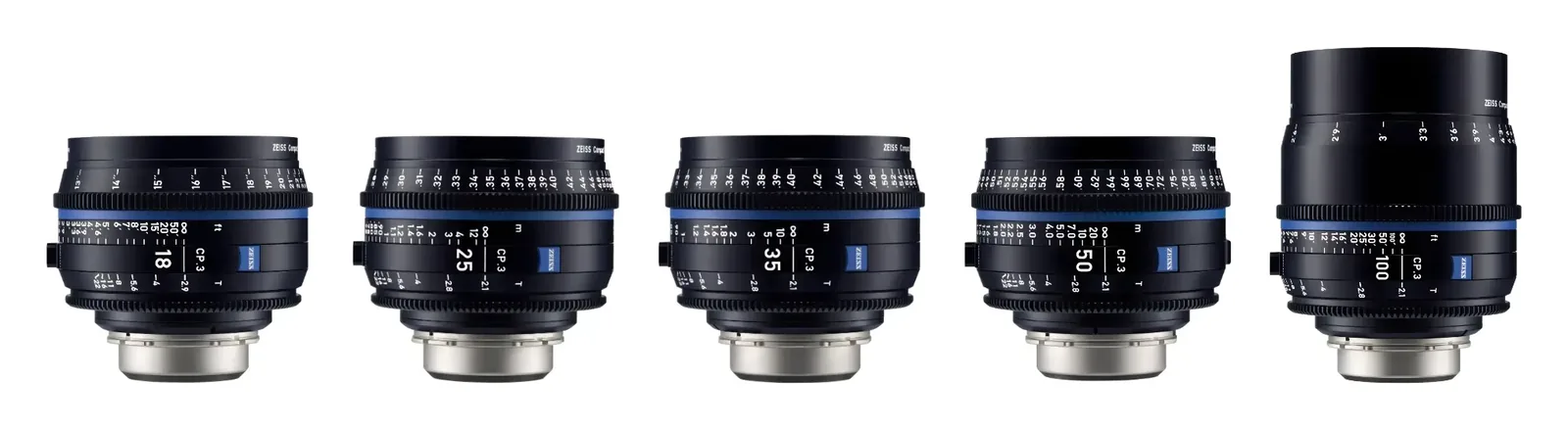
- Zeiss CP3 Primes: a full-frame matched set with the clean, crisp Zeiss look. A dependable all-rounder.
- DZOFILM Vespid Primes: full-frame primes built as a matched set, including a 90mm macro for detail and product shots.
- Sigma FF High Speed primes: fast full-frame primes, mostly T1.5, for low light and shallow depth of field.
- ARRI/Zeiss Ultra Prime 10mm and Laowa 12mm Zero-D: ultra-wide options, with the Laowa designed for near-zero distortion.
- Blazar Remus 33mm: a 1.5x anamorphic for widescreen flares and oval bokeh on a full-frame sensor.
Torn between sets? Tell us the camera and the look, and we'll help you narrow it down.
What Is the Most Expensive Cine Lens?
There's no single most expensive cinema lens, but top-end glass easily runs into 6 figures. Some of the most famous lenses can't be bought at all.
A 4-lens Zeiss Supreme Prime Radiance set sold for $110,880 (roughly £83,000).
Even a workhorse broadcast zoom adds up: Canon's CN10 had an estimated launch price of $29,999 (roughly £22,000).
Then there's Panavision, whose lenses are rental only. Money can't buy them, only a booking.
GBP figures are approximate conversions at the time of writing.
Buy or Hire: Match the Glass to the Shoot
The decision comes down to how often you'd actually use the lenses:
- Buy if you use the same cine lenses on every shoot and they'll earn their cost back.
- Hire if you want to pick the glass for each job's look and feel.
It's the same logic as hiring a camera or a lighting package: the shoot decides the kit, not what's sitting on your shelf.
Not sure which lens suits your production? Tell us the camera, the shoot and the look you're after, and request a quote.
Let’s plan your next shoot
Get your equipment, studio and crew all in one place.