Will Filmmaking Be Replaced By AI?
- No, AI is not replacing filmmaking. It's replacing specific tasks (roto, cleanup, previs) inside a process that still needs human direction, judgment and craft.
- Actors and writers have already fought for and won real contract protections around AI, showing the industry doesn't see this as inevitable.
- Audiences have pushed back hard against AI-made content, including getting an AI short pulled from AMC cinemas after backlash.
- Big-budget directors are still choosing real locations, real actors and practical effects over shortcuts, even in 2026.
- Whatever AI does in post-production, someone still has to shoot the source footage, which means real kit, real studio space and a real crew.
If you've spent any time on a film set or a comment thread, you've heard the question.
Will AI take over filmmaking?
Will directors, camera operators and editors still have jobs in five years? It's a fair thing to worry about, and it's not a simple yes or no answer.
The honest picture is more useful than the panic.
AI is genuinely changing parts of the filmmaking process. It's just not doing what the headlines suggest.
Will Filmmaking Be Replaced By AI?
No, not in any wholesale sense. AI is replacing specific tasks inside the filmmaking process, not the process itself.
The technology is very good at repetitive, pattern-based work: rotoscoping, cleanup, storyboard drafts, colour grading passes.
It's much weaker at the parts of filmmaking that actually make a production worth watching: pacing, tone, performance direction, knowing when a shot feels wrong even if you can't say why.
Those judgement calls still sit with people, and that's unlikely to change soon.
What Is AI Actually Doing on Film Sets Right Now?
AI is mostly working behind the scenes, speeding up jobs that used to eat hours of manual labour.
On the VFX side, machine-learning tools now handle a lot of the roto, cleanup and match-move work that used to be done by hand, freeing artists to focus on the creative problem-solving instead of the repetitive groundwork, according to one VFX studio leader.
Entry-level roles built around purely mechanical execution, the kind of jobs that used to be someone's way into the industry, are the ones shrinking fastest, while demand for artists who can direct the look of a shot and make artistic calls is going up alongside production budgets.
That's the pattern across the board. AI is a productivity tool for the unglamorous parts of the job, not a replacement for the people making creative decisions.
Why Actors and Writers Fought Back Against AI
Performers didn't wait to find out how this would play out. SAG-AFTRA pushed hard for AI protections in recent contract negotiations, and won real ground.
The union's agreements now require consent and compensation before a studio can create or reuse a digital replica of a performer, whether that's a face swap, voice clone or full-body double.
Union leadership has also secured contract terms limiting the use of members' work to train AI systems in the first place, something previously unachievable in earlier negotiations.
None of this reads like an industry that's quietly accepted AI as inevitable.
It reads like one actively drawing lines around where the technology is and isn't allowed to go, and backing that up in writing.
Do Audiences Actually Want AI-Made Films?
Not really, based on the evidence so far. When AI-generated content has been put in front of general audiences without much warning, the reaction has often been sharp.
An AI-generated short film that won a festival prize, with a national theatrical run as part of the award, was pulled from AMC cinemas in early 2026 after news of the screening sparked significant online backlash.
AMC itself hadn't programmed the film directly, but the reaction was strong enough that the run was scrapped anyway.
That's not a fringe reaction. It suggests a real gap between what AI can technically produce and what audiences are actually willing to accept, at least for now.
Why Directors Like Nolan Are Doubling Down on Practical Filmmaking
While some productions lean into AI and virtual production, some of the industry's biggest names are doing the opposite.
Christopher Nolan shot his 2026 film The Odyssey on real ships and entirely on IMAX film, continuing a long-standing preference for practical locations and effects over digital shortcuts.
His own approach to a scene is simple: if it's set in a diner, shoot in a real diner rather than dressing a set to look like one.
It's worth being careful with the "practical effects are winning" narrative, though.
Some of 2026's biggest practical-filmmaking success stories also carried enormous production and marketing budgets, so it's not a simple case of scrappy, low-cost craftsmanship beating expensive CG.
What does seem to hold up is that strong direction, not the presence or absence of AI, is what's actually driving results at the box office.
Where We Used AI Without Losing the Real Thing
We've seen this play out first-hand, not as a threat, but as a genuinely useful part of a production.
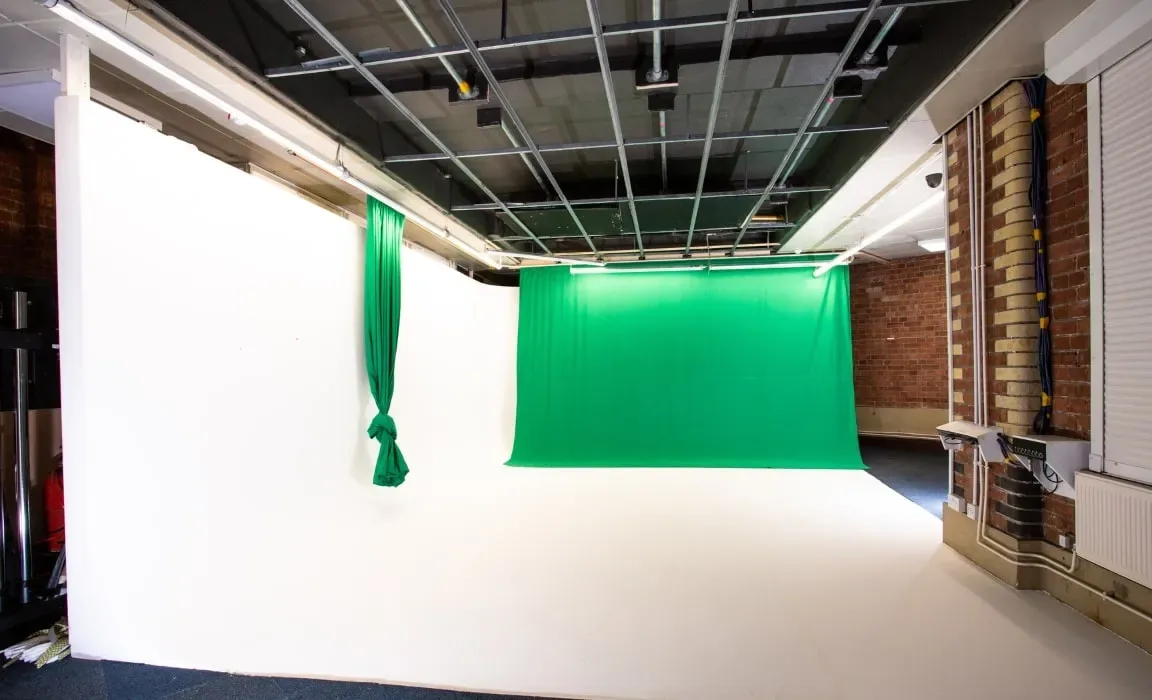
In 2025, a client came to us to shoot a feature film blending AI-generated elements with real actors. We painted our Infinity Cove studio green specifically for the shoot, so the client could film real actors against the green screen before generating backgrounds and props with AI in post-production. The result was a significant budget saving, and it looked genuinely real.
We can't name the film here since it hasn't been released yet, but you can read more about how the studio was set up for it on our Infinity Cove explainer.
What stood out wasn't the AI. It was that the whole thing still depended on real actors, a real studio space and a crew who knew how to light and shoot for what would happen in post.
AI added the backgrounds. It didn't remove the need for any of the rest.
Will VFX Jobs Disappear Because of AI?
No, but the shape of the industry is shifting. The overall VFX market is still growing, projected to roughly double from $12 billion in 2025 to $24 billion by 2032, even as AI takes over more of the repetitive work.
The jobs most exposed are the ones built on mechanical, rule-based tasks like rotoscoping and paint work, and that disruption is landing hardest in lower-cost labour markets where a lot of that work is currently done, rather than wiping out roles across the board.
For artists doing creative, judgement-led work, demand is holding up or growing, not shrinking.
What This Means for Your Next Production
Whatever AI does to a shot once it's in post-production, someone still has to capture the footage in the first place.
That means a camera, lighting, a location or studio, and a crew who know how to work it.
That's true whether you're shooting a fashion show, a music video or a feature blending real actors with AI backgrounds like the one above.
AI can help with the finishing touches. It can't stand in for equipment hire, a studio space, or crew hire on the day.
If you're planning a shoot and want to talk through what you'll actually need on set, whatever role AI plays in your post-production, request a quote and we'll help you work out the kit list.
The Bottom Line
AI isn't replacing filmmaking. It's automating the repetitive parts of it while the industry actively negotiates, resists and in some cases embraces it, all at the same time.
Audiences are still deciding how much AI they'll accept in what they watch, unions are writing protections into contracts, and some of the biggest directors working today are shooting on real film in real locations.
The craft is changing shape. It isn't disappearing.
Let’s plan your next shoot
Get your equipment, studio and crew all in one place.