Full Frame vs Crop Sensor: Which Is Better for Your Shoot?
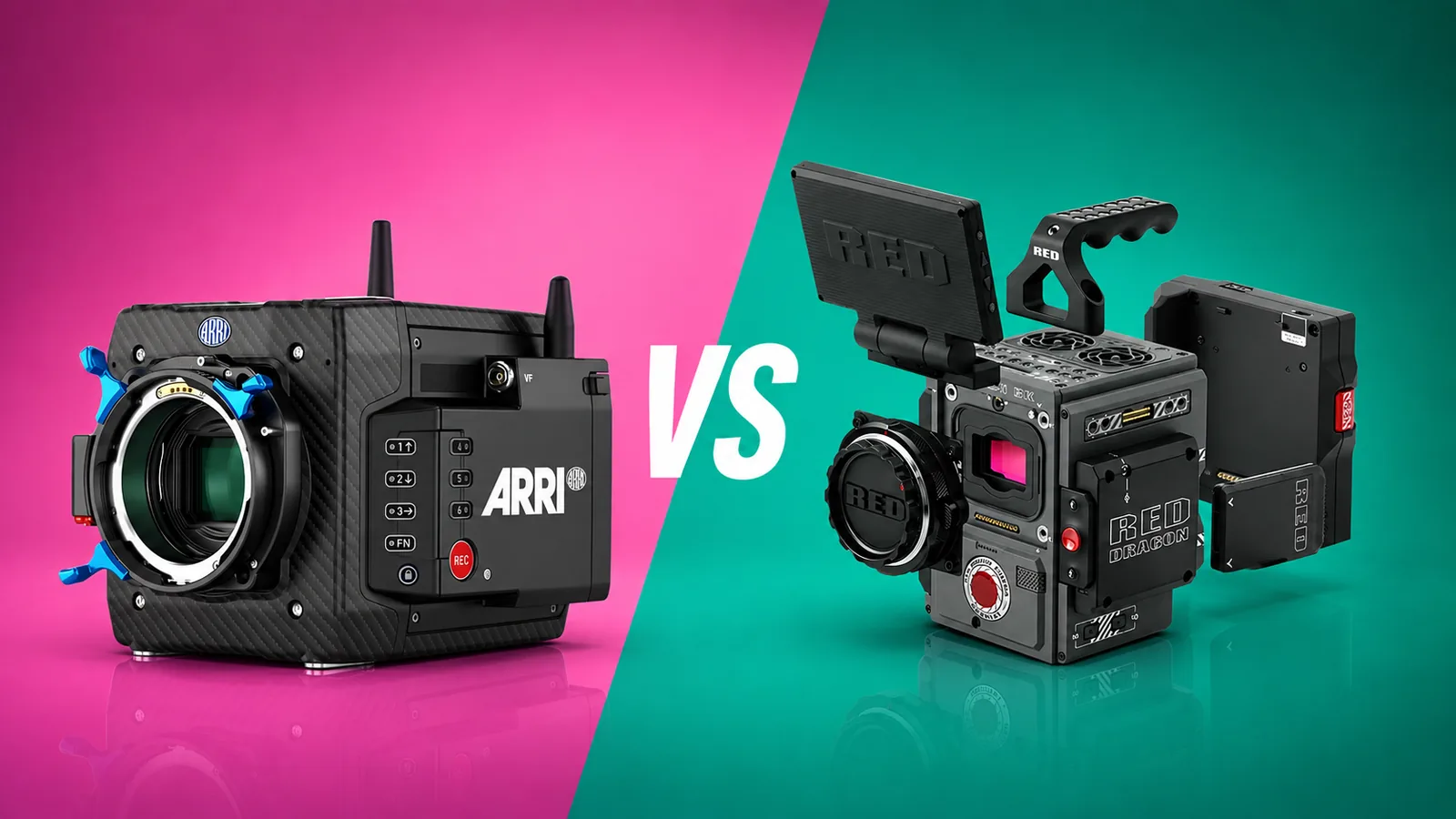
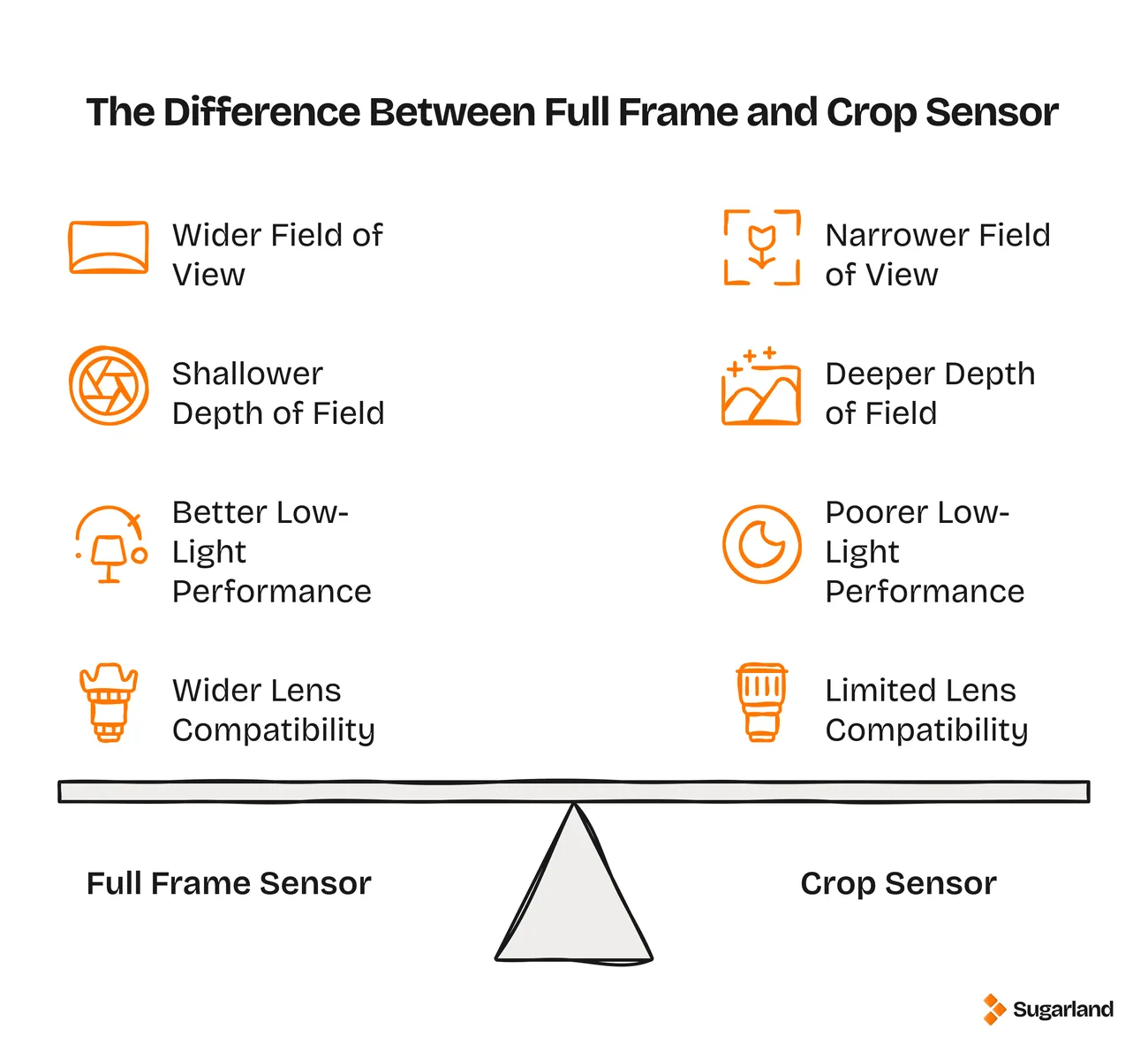
- Full frame and crop sensors are physically different sizes, and that difference changes field of view, depth of field and low-light performance.
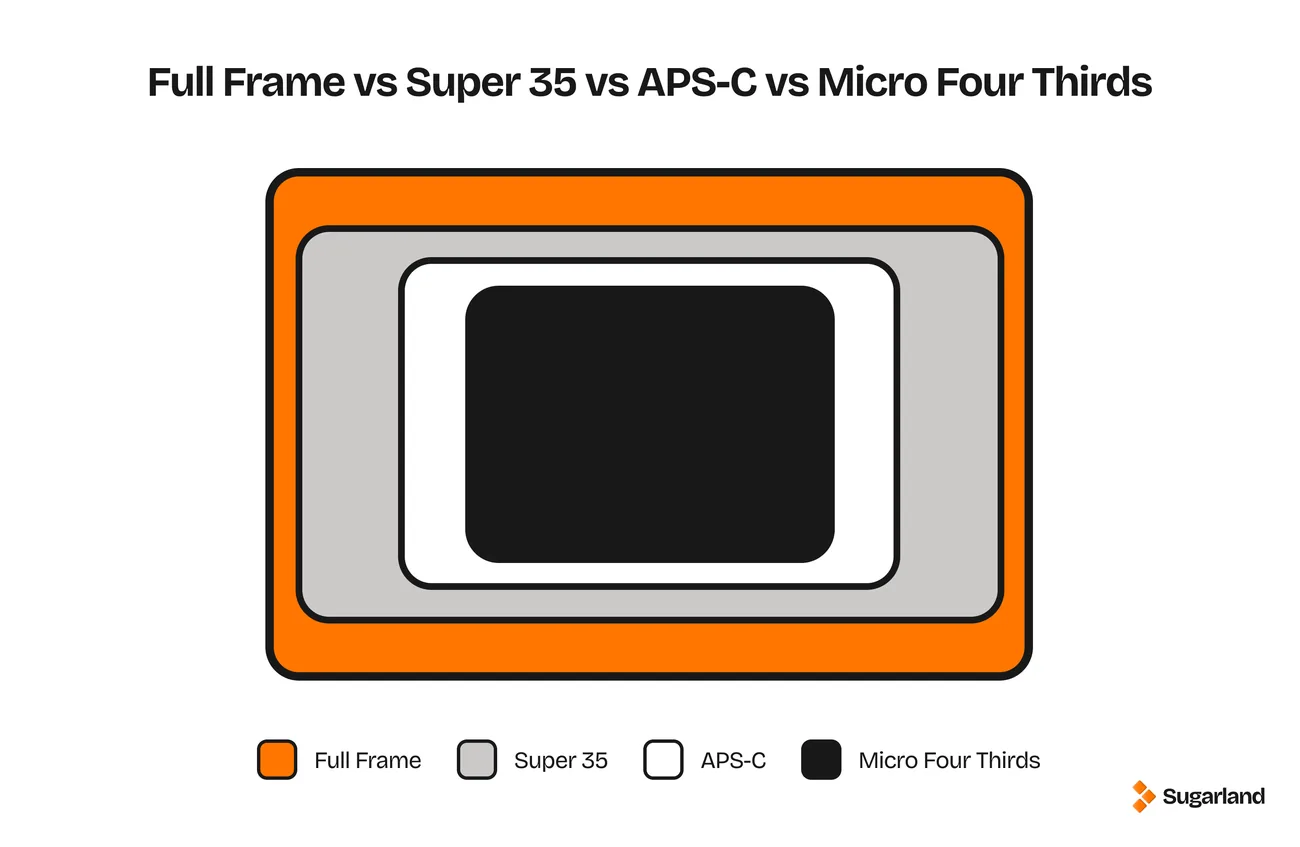
- "Crop sensor" isn't one format. It covers Super 35, APS-C and Micro Four Thirds, each with its own crop factor.
- Neither format is objectively better. Full frame suits shallow depth of field and low light. Crop suits reach, weight and lens choice.
- Match your lens format to your camera body to avoid vignetting, or work out the equivalent focal length if you're mixing formats.
- Sensor choice matters less than most people assume. Full frame covers most shoot types comfortably, which is why it's the bulk of what we stock.
Full frame vs crop sensor is one of the most common questions we get asked at the counter, and it usually comes loaded with an assumption: that one format is simply better than the other.
It isn't.
Both show up on professional sets every day, often on the same production.
The right call depends on what you're shooting, not which sensor sounds more impressive on a spec sheet.
This guide breaks down what full frame and crop sensor actually mean, how they affect your image, and how to choose between them for your specific shoot.
What Is the Difference Between Full Frame and Crop Sensor?
A full frame sensor measures roughly 36mm x 24mm, the same dimensions as a frame of 35mm still photography film.
Cinema 35mm film is actually a narrower format, closer to Super 35, so the shared "35mm" name causes genuine confusion on set.
We've covered 35mm vs full-frame in more depth if you want the full breakdown.
A crop sensor is physically smaller, so it captures a narrower slice of the image circle a lens projects.
Put the same lens on a full frame body and a crop body, and the crop sensor sees less of the scene.
That's the "crop" in crop sensor: nothing is being enlarged or zoomed, the sensor is just smaller and cropping into the middle of the image.
This single physical difference is the root of everything else in this guide. Sensor size affects:
- Field of view, how much of the scene the sensor actually captures
- Depth of field, how much of the shot stays in focus
- Low-light performance, how clean the image looks at higher ISOs
- Lens compatibility, which lenses will cover the sensor properly
What Are the Different Types of Crop Sensor?
Crop sensor isn't a single format. It's an umbrella term for any sensor smaller than full frame, and there are 3 you'll come across most on a production:
- Super 35. The cinema standard for decades, originally a film format from the 1950s revived in the early 1980s. Most cinema lenses, especially vintage glass, were built around it.
- APS-C. The crop format you'll see most on stills-leaning hybrid cameras, with a crop factor of roughly 1.5x to 1.6x depending on the manufacturer.
- Micro Four Thirds. Smaller again, with a crop factor of around 2x, giving the tightest field of view and the most compact bodies and lenses of the 3.
If you're weighing up a Super 35 body for your shoot, our Super 35mm cameras page has the current range.
Is Full Frame Really Better Than Crop?
No. Full frame isn't better, it's different, and the "better" question is the wrong one to be asking.
The real question isn't which format wins, it's which one suits the story you're telling.
Full frame gives you a shallower depth of field and stronger low-light performance. Crop gives you a lighter kit, more telephoto reach from the same lens, and a far bigger catalogue of cinema lenses that were built for it in the first place.
Choosing full frame also means committing to lenses with a large enough image circle to cover the bigger sensor, which narrows your options compared to the decades of Super 35 glass already in circulation.
Most working productions don't pick a side once and stick to it forever. They pick per project, sometimes per scene.
Full Frame vs Crop Sensor: Depth of Field and Low Light
At an equivalent field of view and aperture, full frame produces a shallower depth of field and cleaner low-light results.
Crop sensor produces greater depth of field at the same aperture, meaning more of your frame stays in focus.
This comes down to focal length. To match the field of view of a lens on a crop body, you need a longer focal length on full frame, and longer focal lengths produce less depth of field at the same aperture.
- Choose full frame for: portrait and beauty work, shallow-focus product shots, low-light interiors
- Choose crop for: fast-moving handheld work where deeper focus means fewer missed shots and easier focus pulling
Which Is Better, APS-C or Full-Frame, for Your Lenses?
Match your lens format to your camera body. Crop lenses pair with crop sensor bodies, full frame lenses pair with full frame bodies.
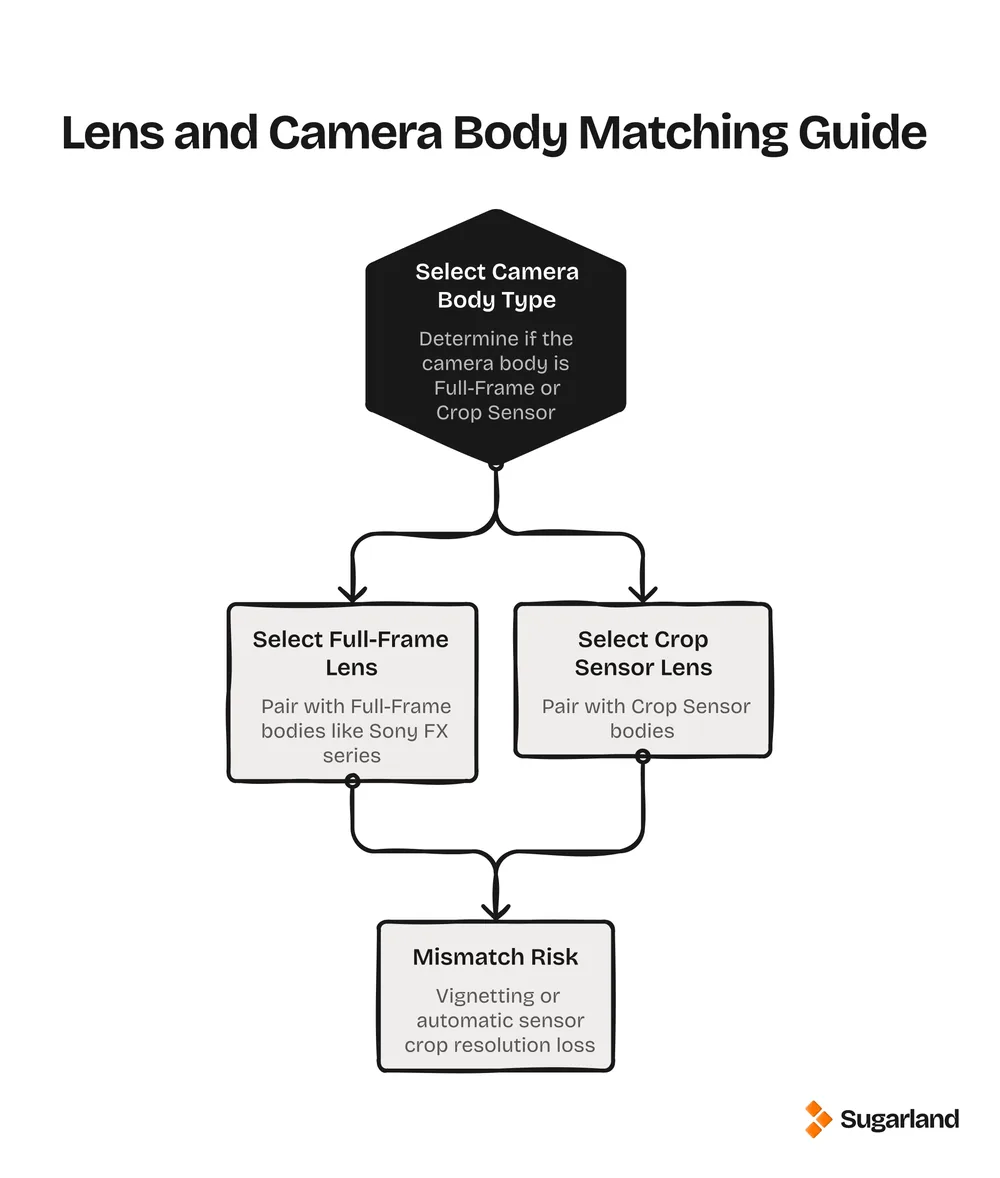
Mismatch the two and you risk vignetting or an automatic sensor crop that throws away resolution.
Most of what we stock at Sugarland is full frame, and when someone hires one of our full frame bodies, like the Sony FX series, we pair it with full frame lenses such as the Sony G Master range.
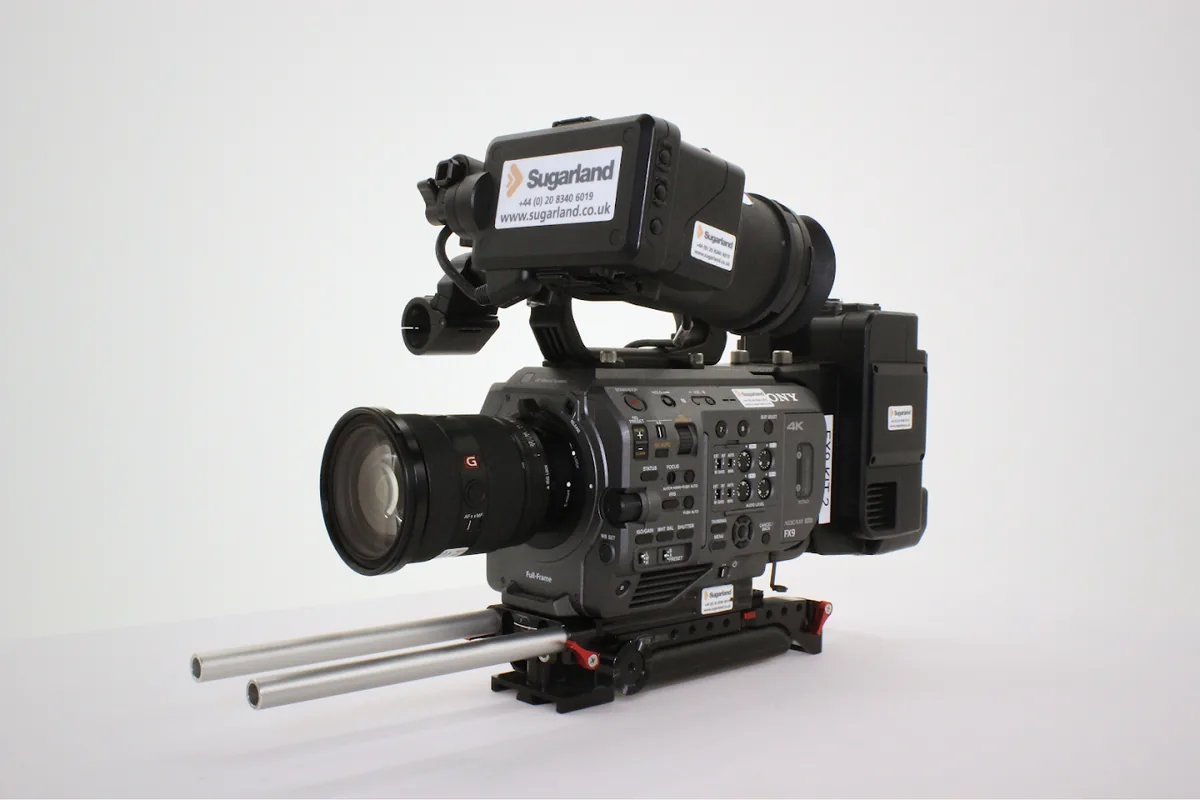
The reason is simple: a full frame lens projects an image circle large enough to cover the whole sensor, so you get a clean edge-to-edge image with no dark corners.
A lens built for crop only needs an image circle wide enough for the smaller sensor, so mounting it on full frame means the sensor sees past the edge of what the lens was designed to project.
Put a crop lens on a full frame body and it can't cover the sensor properly, which either vignettes the corners or forces the camera into a cropped recording mode.
If you're hiring a crop sensor camera, we'll point you to crop sensor lenses.
If you're hiring one of our full frame bodies, our advice is the same: match the glass to the body, and if you want the latest Sony sensor tech and feature set, the FX series is where we'd steer you first.
You can see the full range on our Sony E-mount lenses page.
Can You Use a Crop Lens on a Full Frame Camera (or Vice Versa)?
Yes, within limits, but the effective focal length changes, and you need to account for it.
A full frame lens on a crop body works optically fine and just gives you a tighter field of view. A crop lens on a full frame body risks vignetting, as covered above.
Working out the equivalent focal length is straightforward:
- Take the lens's stated focal length.
- Multiply it by the sensor's crop factor.
- The result is the equivalent field of view on full frame.
For example, a 35mm lens on a 1.5x crop body behaves like a 52.5mm lens on full frame. The lens itself hasn't changed, only how much of the image circle your sensor is capturing.
If you're planning a shoot with mixed glass across two bodies, work out these equivalents before you get on set.
It's a lot easier to adjust your lens order at the quote stage than to discover a focal length doesn't do what you expected halfway through a shoot day.
Getting the Right Setup for Your Shoot
Full frame and crop sensor both belong on professional sets.
The right choice comes down to the look you're after, the lenses you already have access to, and how your shoot actually moves on the day.
If you're not sure which way to go, talk it through with us before you book.
We'll walk you through the options and make sure your camera and lenses are properly matched, so you're not troubleshooting a mismatch on set.
If you're already leaning full frame, our FX series comparison breaks down which Sony body suits which production. Request a quote and we'll help you get it right first time.
Let’s plan your next shoot
Get your equipment, studio and crew all in one place.