Sony FX5 vs FX6: Key Differences, Pros and Cons
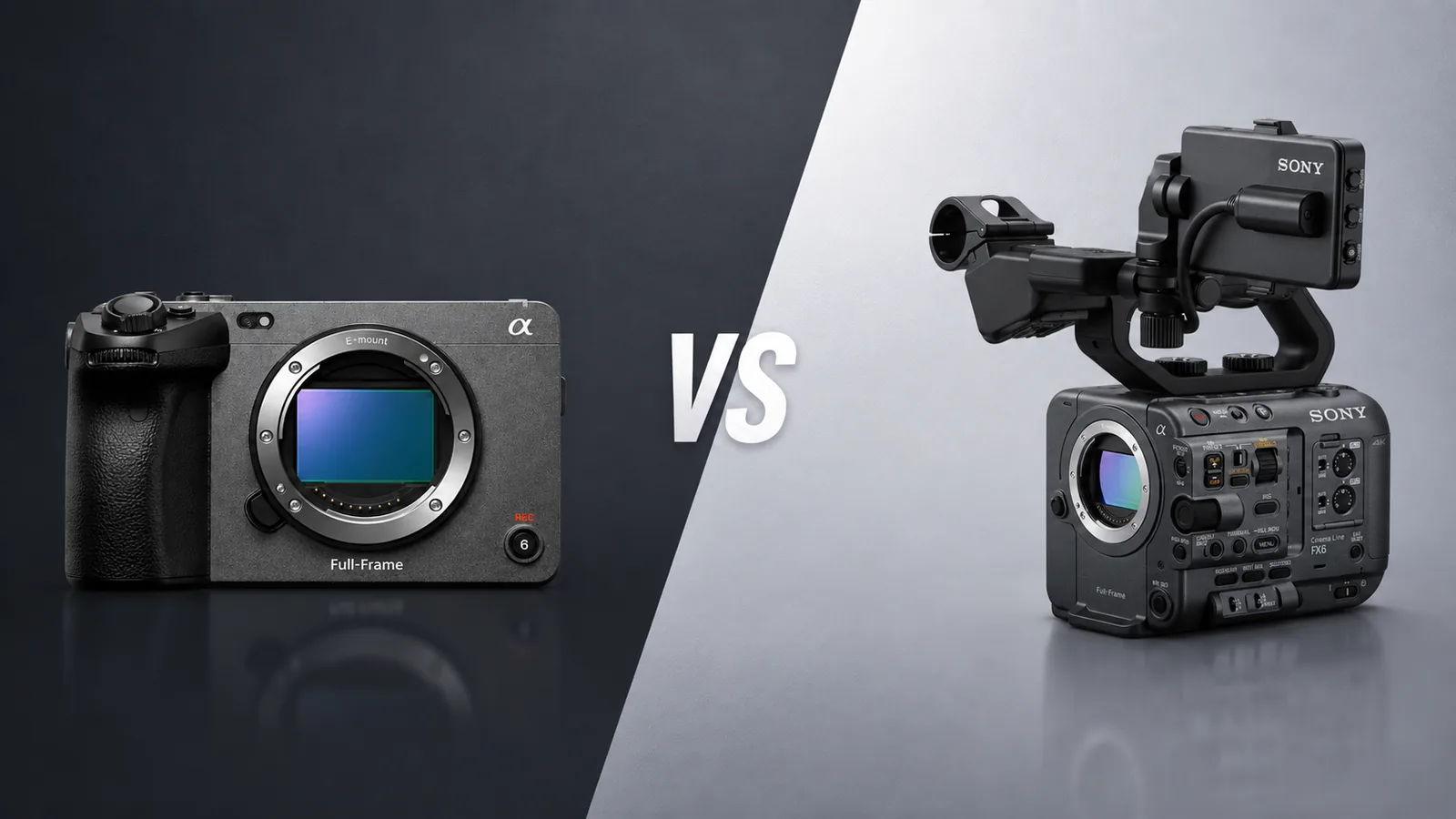
- The Sony FX5 is Sony's newest Cinema Line camera, built for multi-format delivery with 5K Open Gate recording and internal 16-bit RAW.
- The Sony FX6 is the established production camera, built around a built-in variable ND filter and Netflix-approved status.
- The FX5 has no built-in ND filter or SDI output, while the FX6 lacks Open Gate recording, internal RAW and the FX5's newer sensor.
- The FX5 suits flexible, multi-platform content and gimbal work. The FX6 suits long-form interviews, documentary and broadcast jobs.
- Sugarland now stocks both, so you don't need to pick a supplier based on which camera you need.
Sony FX5 vs FX6: What's Actually the Difference?
Sony's Cinema Line has three full-frame bodies sitting close together on paper: the compact FX3, the newer FX5, and the box-style FX6.
The FX5 vs FX6 question comes up a lot on productions weighing up format flexibility against on-set speed, and the honest answer is that they're built for different jobs rather than one simply beating the other.
The FX5 is the newer camera, built around a newly developed sensor, Open Gate recording and internal RAW in a smaller body.
The FX6 has been Sony's go-to production camera since 2020, and it's built its reputation on a variable ND filter and box-camera ergonomics that make long shooting days easier.
Below, we'll walk through what each camera does well, where it falls short, and when to reach for which.
Sony FX5: Key Features
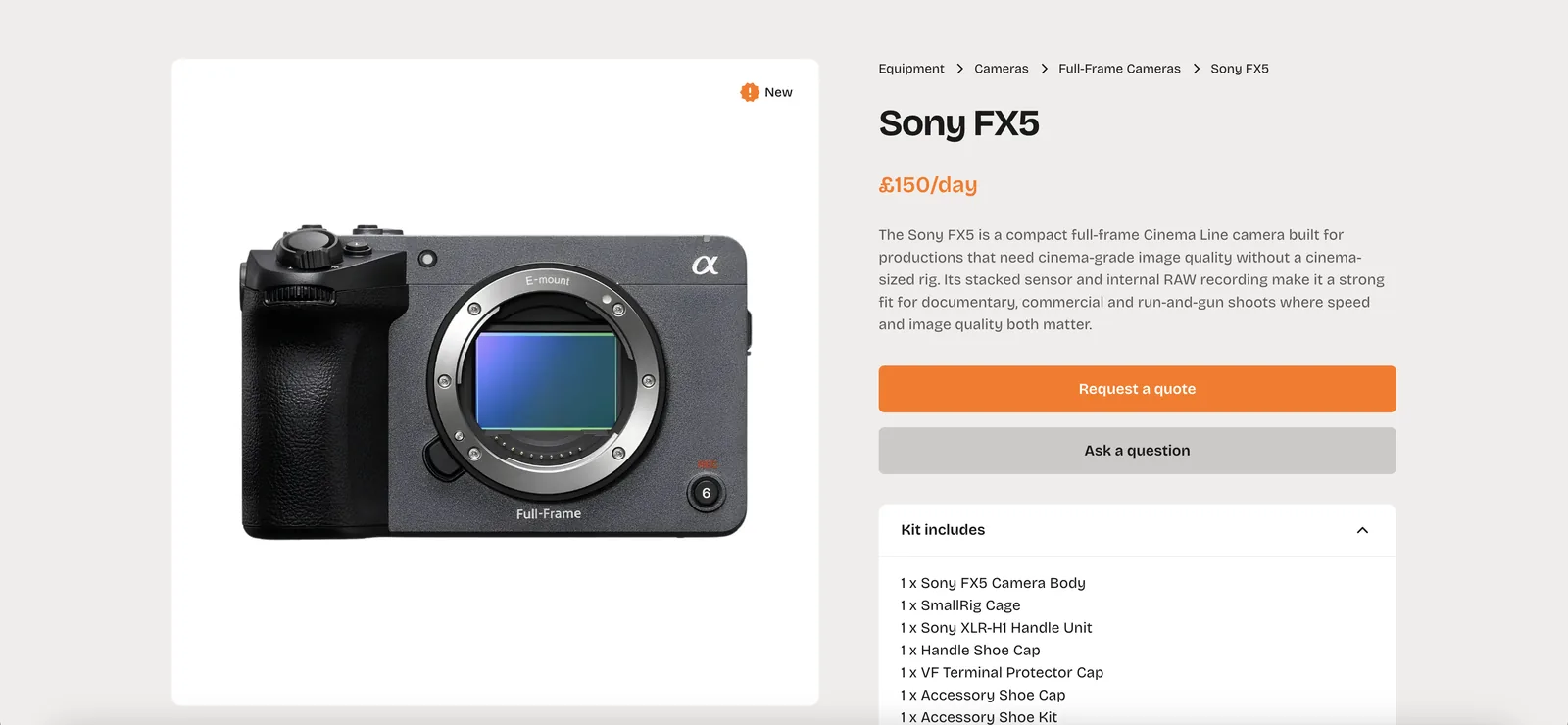
The FX5 pairs a newly developed 16.6MP full-frame, fully stacked sensor with Sony's latest BIONZ XR2 processor.
That processor carries a dedicated AI unit that Sony says gives autofocus, image processing and audio handling more headroom to work with than earlier Cinema Line bodies.
On the recording side, the FX5 is the first camera in the FX series to shoot Open Gate, meaning it captures the full sensor rather than a cropped 16:9 slice, so you can reframe the same take for widescreen, vertical or square delivery without reshooting.
It also records internal X-OCN RAW, a 16-bit linear recording format previously reserved for Sony's higher-end cinema bodies.
Sensitivity gets a boost too. Rather than the dual base ISO most Cinema Line cameras use, the FX5 runs a triple base ISO of 800, 4,000 and 12,800, giving a cleaner middle option for mixed lighting instead of jumping straight from a clean low ISO to a noisier high one.
Autofocus benefits from the same AI unit too: subject recognition now covers birds alongside people and animals, useful for documentary and wildlife work where manual pulls have traditionally been the only option.
Sony FX5: The Trade-Offs
The FX5's biggest omission is the ND filter. Unlike the FX6, it has no built-in variable ND, and it also lacks SDI support and the FX6's box-camera form factor, which makes rigging matte boxes and cages less straightforward.
On a run-and-gun shoot with changing light, that means carrying screw-in ND filters and swapping them by hand.
It's also brand new. That's an advantage in some ways (see the sensor and autofocus gains above), but it means the FX5 hasn't yet gone through Netflix's certification process, so it isn't currently on the platform's approved camera list the way the FX6 is.
If you need a Netflix-approved body for a specific job, that's worth checking before you book.
Sony FX6: Key Features
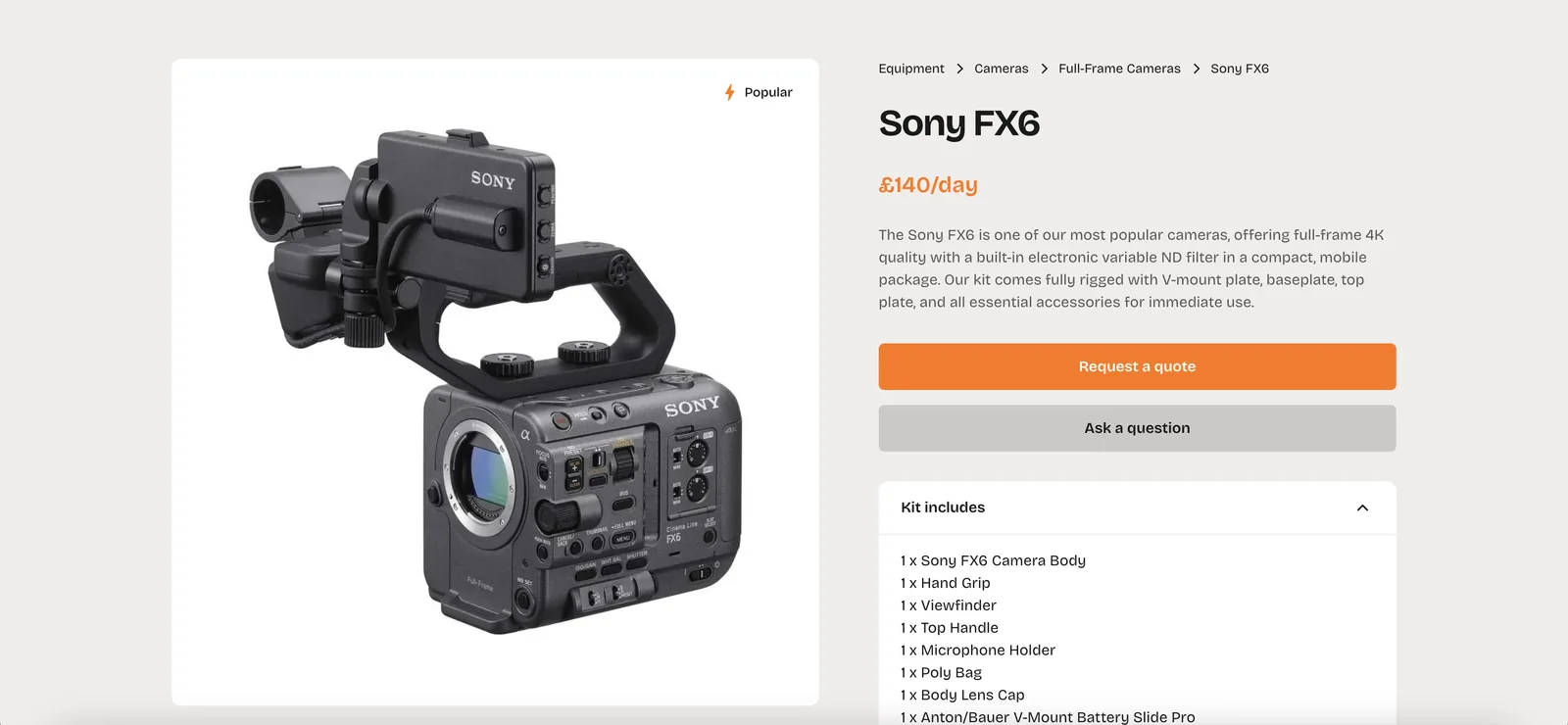
The FX6 built its reputation on one feature above all: a built-in electronic Variable Neutral Density filter, adjustable from 1/4 ND to 1/128 ND, either manually or on auto.
On set, that means you can hold your exposure and depth of field steady as light changes, without touching a screw-in filter or altering your aperture.
One operator review of the camera on release described the appeal simply: with the FX6 you can dial in the strength of the ND at the press of a button rather than swapping physical filters mid-shoot.
The FX6 also carries S-Cinetone colour science and a proper box-camera build, which makes it straightforward to rig with matte boxes, follow focus and cages for multi-operator productions.
Crucially, it's one of the Sony cameras confirmed on Netflix's approved camera list, which matters if you're shooting a Netflix original and need a body that meets the platform's technical bar.
For the full breakdown of what the FX6 offers, see our FX6 key features guide.
Sony FX6: The Trade-Offs
The FX6's sensor is older and lower-resolution than the FX5's, and it doesn't shoot Open Gate or record internal RAW, so if your workflow depends on reframing footage across formats in post, it isn't built for that.
It's also the bulkier of the two cameras. Independent side-by-side testing found the FX5 noticeably lighter than the FX6, which becomes a real factor on long handheld or walking days.
If portability and gimbal work matter more to your production than rigging flexibility, that weight difference adds up over a long shoot.
When Does the FX5 Make More Sense?
Reach for the FX5 when your delivery needs to work across multiple aspect ratios from a single shoot.
Open Gate recording means you capture the full frame once and crop to 16:9, vertical or square in the edit, which suits social-first campaigns, branded content going to multiple platforms, and productions that don't know their final format when they shoot.
It's also the better pick for gimbal, drone or long handheld days where every gram counts, and for anyone who wants an internal RAW workflow without stepping up to a larger cinema body.
When Does the FX6 Make More Sense?
Reach for the FX6 for long-form interview and documentary work, where the variable ND filter earns its keep every time you move a subject from indoors to out or the sun goes behind a cloud.
It's also the safer choice for any Netflix-original job, and it suits multicamera and rigged setups where the box-camera form factor makes life easier for a crew.
That preference plays out in the field too.
One production company built around long interview days, documentaries and corporate work looked closely at the FX5 on release and stuck with the FX6, not because the FX5 is a weak camera, but because its strengths (Open Gate, internal RAW, multi-format flexibility) weren't solving problems their workflow actually had.
If your production looks more like theirs than a multi-platform content shoot, that's worth weighing.
Can You Pair Them on the Same Shoot?
Yes. A common workflow on bigger productions is running the FX6 as the primary camera and the FX5 as a lighter B-cam, since both share Sony's Cinema Line colour science and E-mount lens compatibility, which keeps footage consistent when you cut between them.
One first-look comparison of the range noted the FX5 is designed to work alongside the FX6 and Sony's other high-end Cine cameras in exactly this kind of setup.
Which One Should You Hire?
The FX6 has been part of our kit list for a while, and it's the camera most London productions default to for interviews, documentary and Netflix-approved jobs.
The FX5 has just joined it, so if your next shoot calls for Open Gate recording, internal RAW, or a lighter body for gimbal work, you don't need to go elsewhere to get it.
Both are available to hire individually or alongside the rest of our camera hire catalogue, with lenses, lighting, audio, crew and studio space on top if your production needs it.
Not sure which one fits your shoot? Request a quote and tell us what you're filming: we'll talk you through it and put together the best option for your production.
Let’s plan your next shoot
Get your equipment, studio and crew all in one place.