What Is a Camera Assistant in Film & TV?
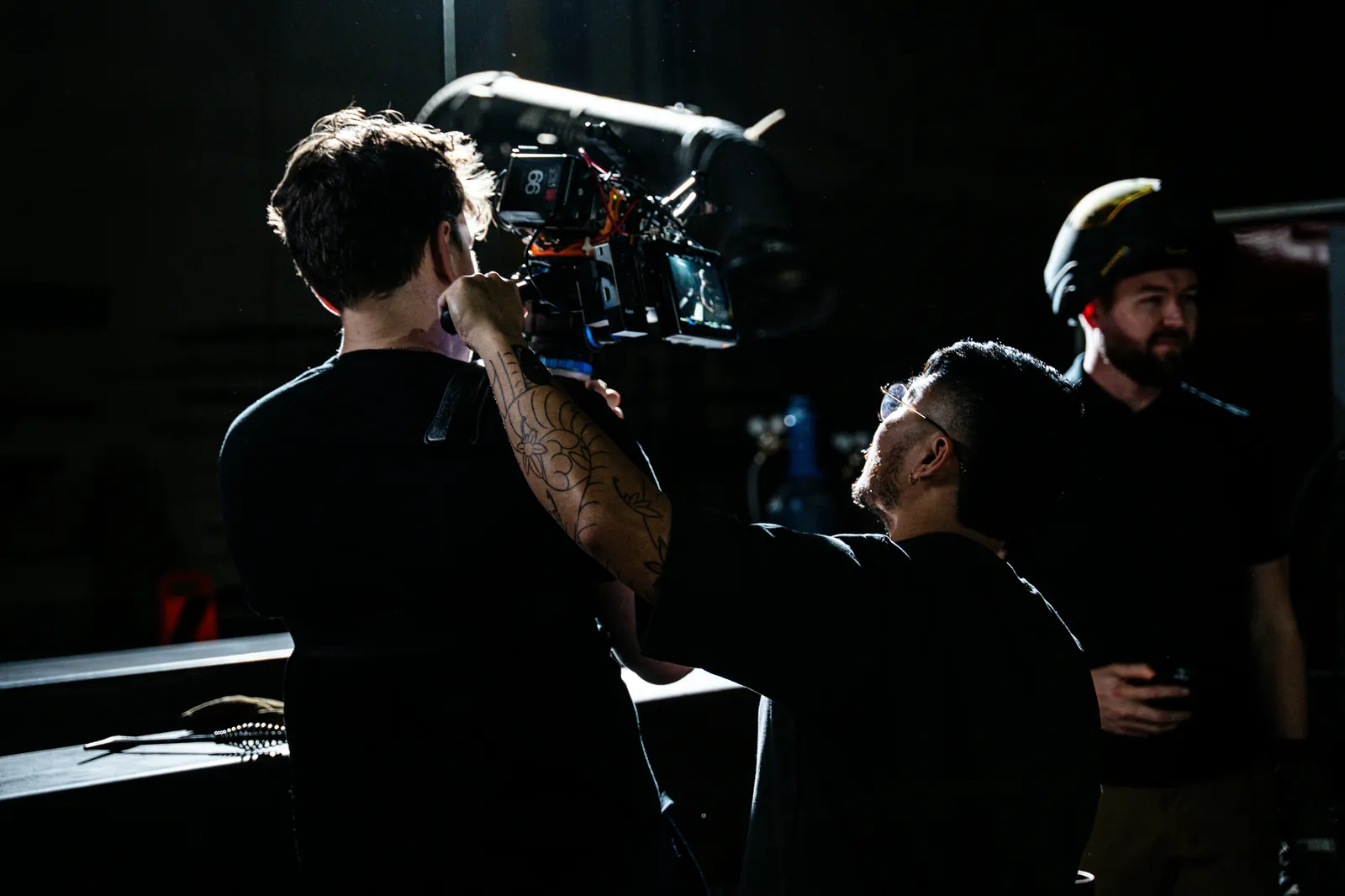
- A camera assistant (AC) supports the camera department by setting up, maintaining and checking equipment throughout a shoot, and often pulling focus.
- The role splits into two: the 1st AC (focus puller) handles focus and camera prep, while the 2nd AC manages slating, media and paperwork.
- Getting in usually means starting as a runner or trainee, or working a rental house kit room, rather than following a fixed qualification path.
- Pay varies by role, budget band and experience. Bectu publishes a dedicated camera ratecard as the industry benchmark.
- On larger shoots, a dedicated camera assistant genuinely earns their place on the crew list. On smaller jobs, an operator who can set up their own gear is often enough.
Ask most people outside the industry what a camera assistant does and you'll get a shrug, or a guess involving carrying tripods.
Ask anyone who's actually run a shoot with a proper camera department, and you'll get a very different answer.
Camera assistants are the reason a DOP can focus on the image instead of worrying whether the batteries are charged or the lens is clean.
It's a technical, structured job with its own hierarchy, and it's often the first rung on the ladder toward becoming a camera operator or DOP.
We supply camera assistants regularly through our crew hire service, particularly on larger productions.
Smaller shoots will often just use an operator capable of setting up their own gear, but once a production scales up, a dedicated AC becomes worth every penny.
What Does a Camera Assistant Do?
A camera assistant supports the camera department by preparing, maintaining and monitoring camera equipment throughout a shoot, and helping the operator or DOP get every shot technically right.
Day to day, that covers a lot of ground.
On location, camera assistants unload and set up equipment, keep batteries charged, cards ready and monitors working, and have lenses and filters on hand for the operator.
They're also often expected to help with lighting setup and provide basic camera maintenance.
It's not a glamorous list, but it's the reason a shoot runs smoothly instead of grinding to a halt every time something needs checking, charging or swapping.
What Is a Camera Assistant Called?
A camera assistant is most commonly called an AC, short for assistant camera or camera assistant.
Depending on seniority and the specific job, you'll also hear a few more specific titles:
- AC: the general shorthand used for the role as a whole
- 1st AC: also called the focus puller, the more senior of the two
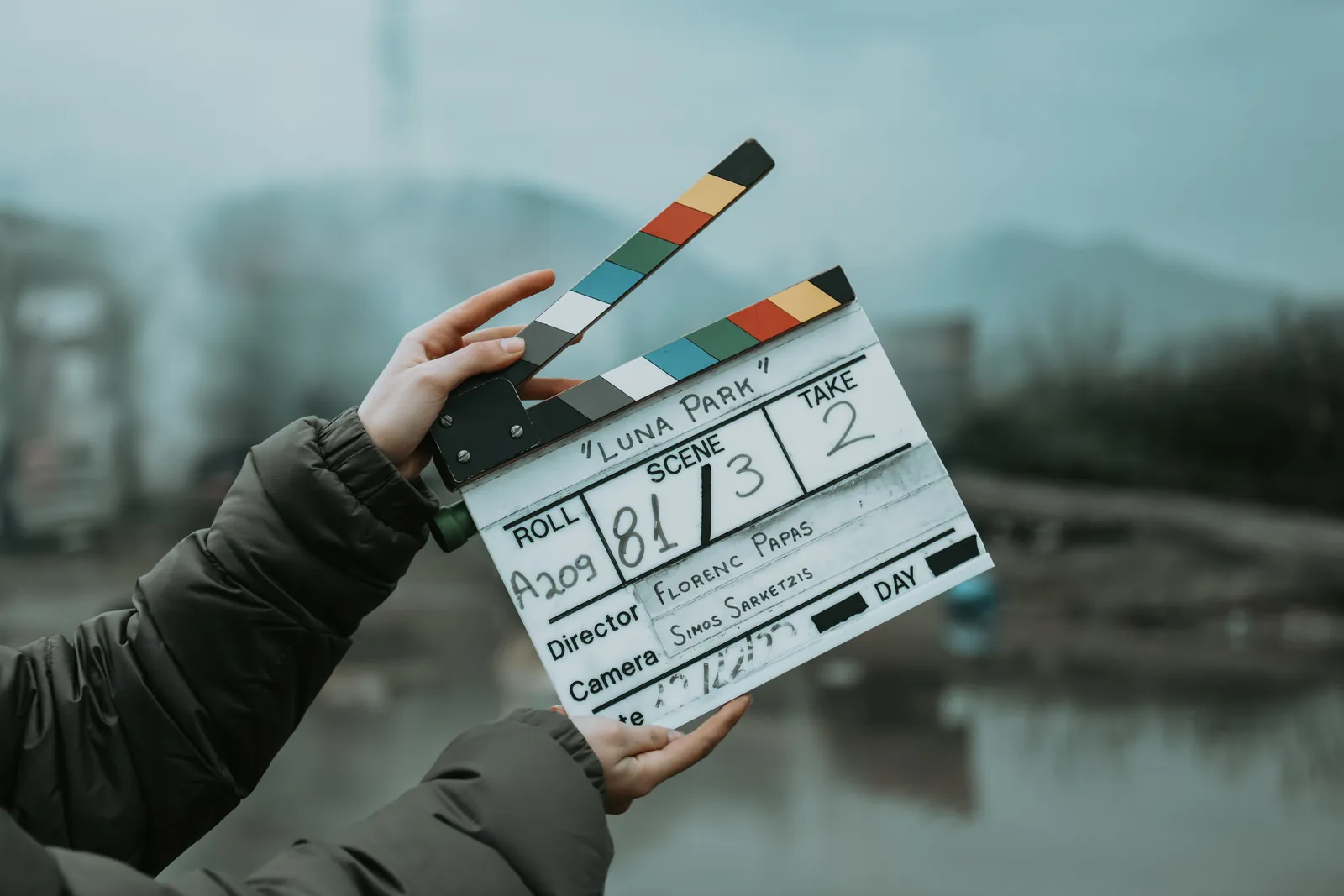
- 2nd AC: handles slating, media and camera department paperwork
- Clapper loader: an older name still used for the 2nd AC role, especially on film stock
These aren't interchangeable job titles picked at random.
Each one points to a specific set of responsibilities within the camera department, which is why call sheets and crew lists tend to be precise about which one they mean.
1st AC vs 2nd AC: What's the Difference?
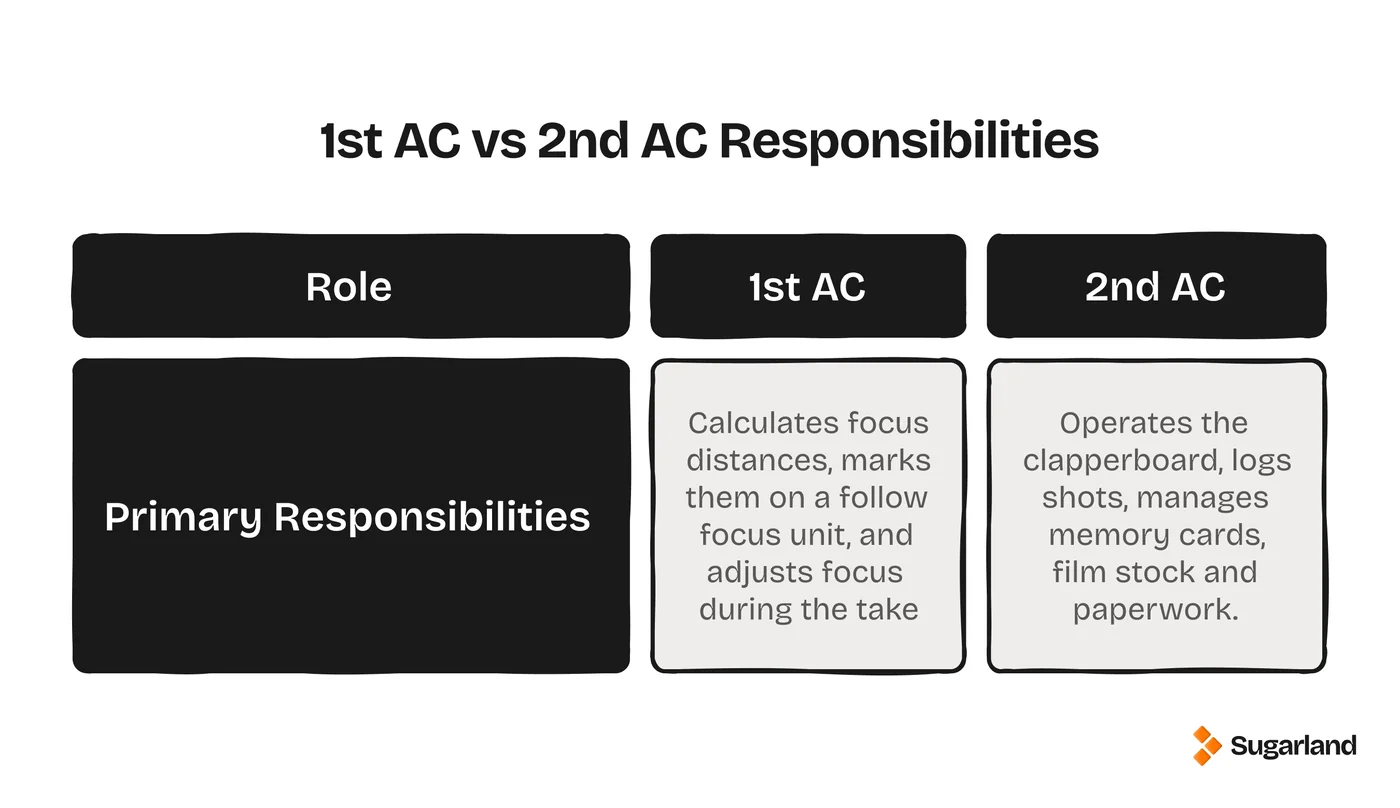
The 1st AC, also called the focus puller, handles focus and camera preparation, while the 2nd AC manages slating, media and camera paperwork.
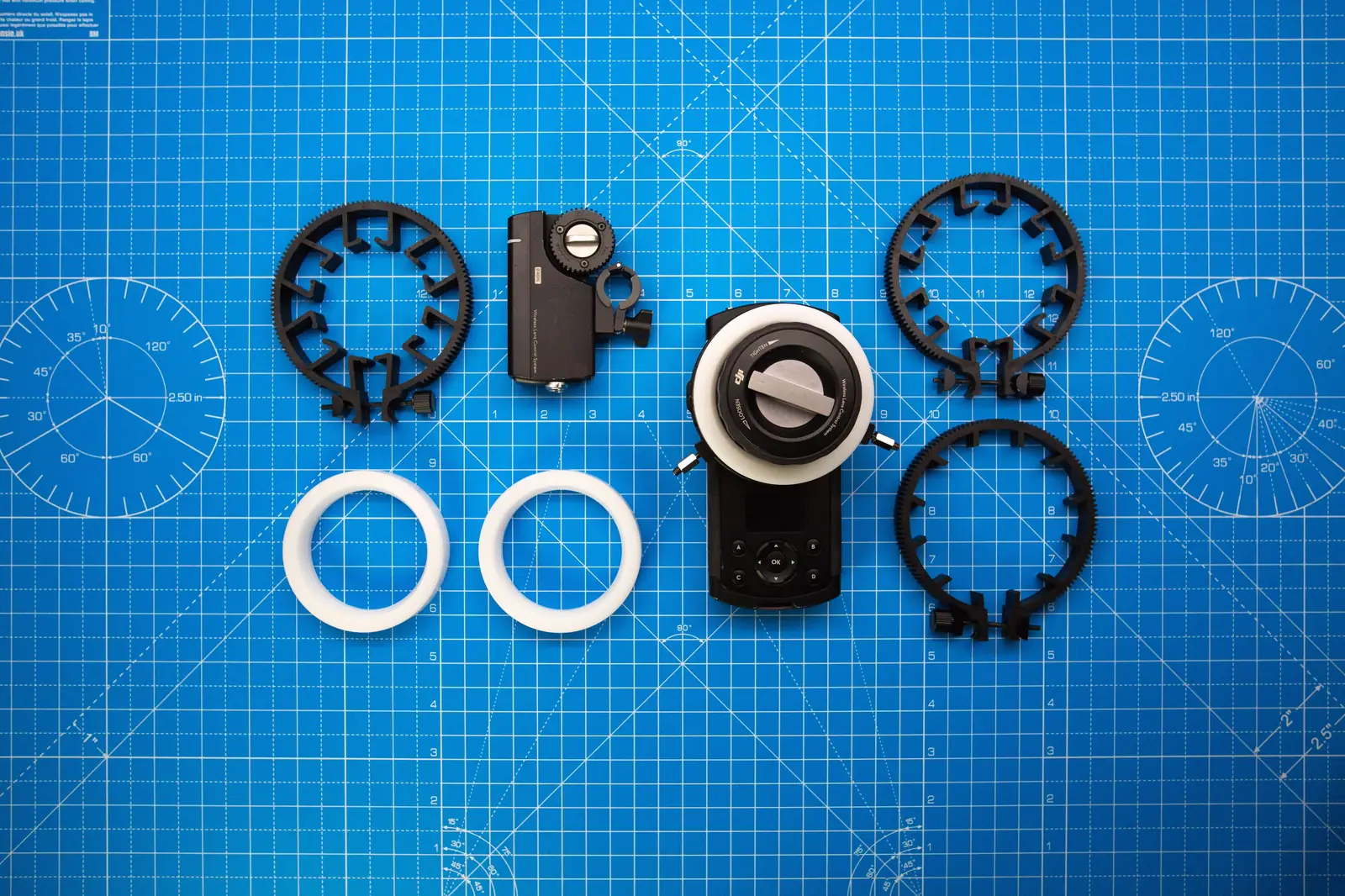
- 1st AC: calculates focus distances, marks them on a follow focus unit, and adjusts focus during the take itself
- 2nd AC: operates the clapperboard, logs shots, manages memory cards or film stock, and keeps the camera department's paperwork straight
Both report up to the camera operator and DOP, who handle framing and the overall visual approach.
Why Focus Pulling Is High-Stakes
Focus pulling only looks simple until you're doing it on a modern cinema camera.
Larger sensors and fast lenses produce a much shallower depth of field than older setups, which means there's less room for error and less time to react.
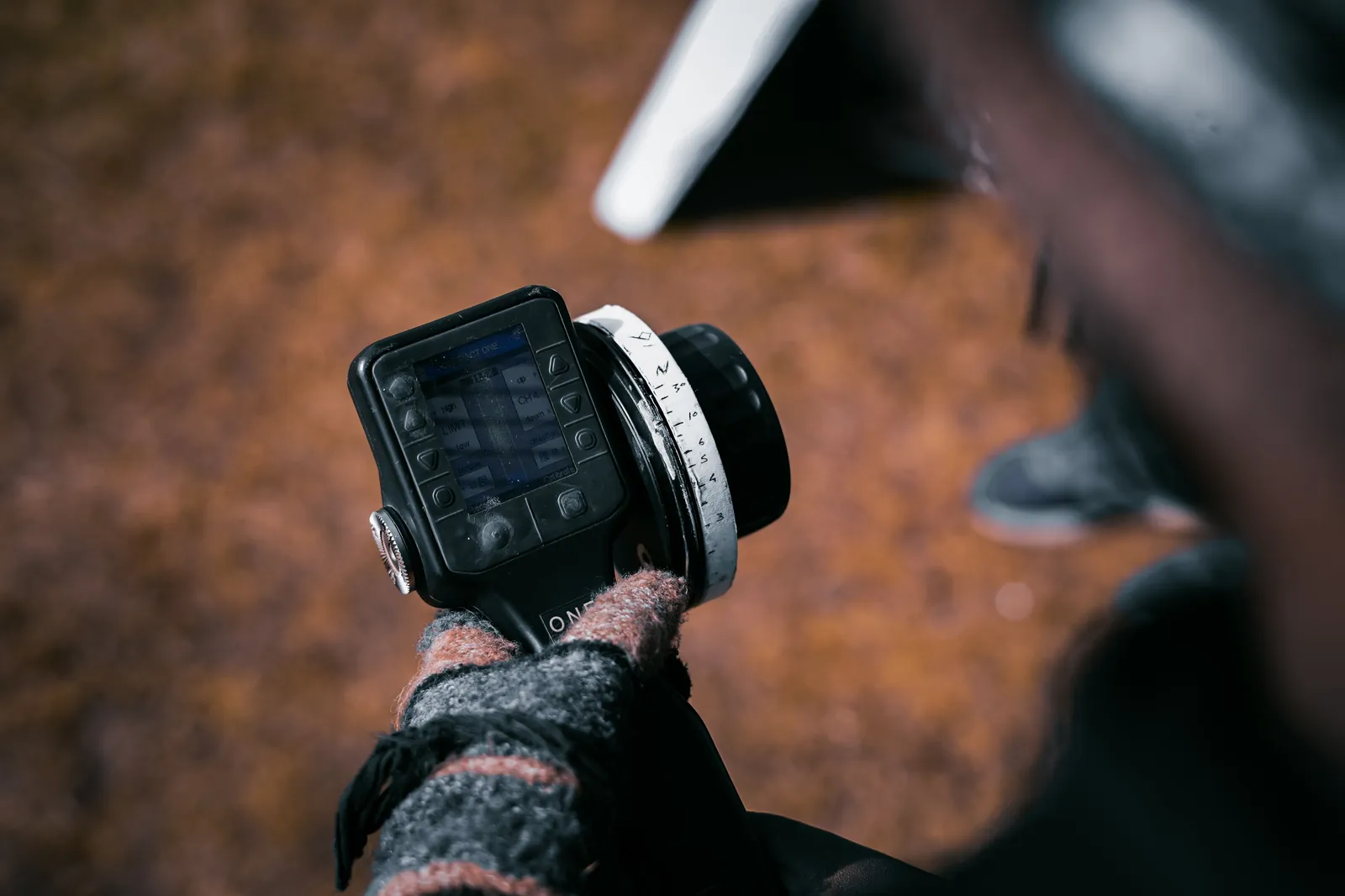
If you're weighing up sensor formats for a shoot, our sensor size guide covers how sensor size changes depth of field and why that matters for focus.
The tighter the depth of field, the more the 1st AC's skill directly determines whether a shot is usable. Get it wrong, and soft footage often can't be fixed in the edit.
What Are the Responsibilities of a Camera Assistant?
Camera assistant responsibilities centre on keeping the camera department's equipment ready, working and accounted for at every stage of a shoot.
Per the industry's own skills checklist for the role, the core list looks like this:
- Inventory: compiling a full inventory of camera equipment and consumables
- Condition checks: checking the condition of cameras, lenses, filters and accessories
- Testing: carrying out camera and lens tests before the shoot starts
- Rigging: setting up, testing and de-rigging camera kit
- Maintenance: cleaning, maintaining and packing equipment for transport
- Troubleshooting: fixing mechanical and electronic faults on the day
- Liaison: keeping the DOP and camera operator informed on technical needs
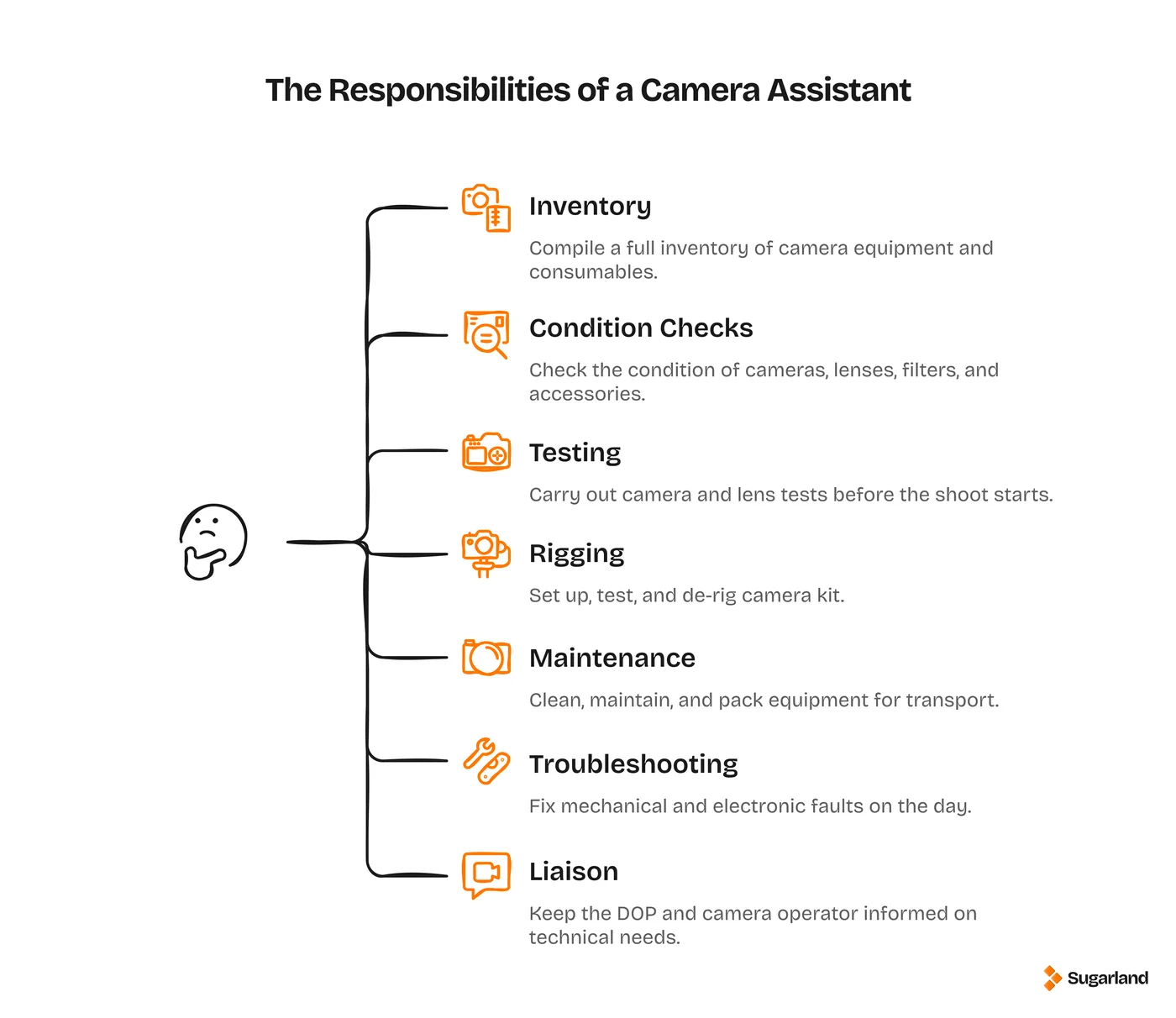
Add focus pulling and slating into that list for the 1st and 2nd AC roles specifically, and you've got a job that touches almost everything the camera department relies on.
Why a Good Camera Assistant Matters More Than People Think
In our experience, the value of a camera assistant becomes obvious the moment a shoot gets bigger.
On smaller jobs, you'll often see an operator who can set up and manage their own gear without extra hands.
Scale that up to a multi-camera setup, a longer shooting day, or a production with tight technical demands, and a dedicated AC stops being a nice-to-have.
We get asked for camera assistants regularly on the crew hire side, and it's not just larger productions booking them out of habit.
We're also in touch with 1st and 2nd ACs directly on the technical side of the equipment itself.
If an assistant has a question about a piece of kit mid-shoot, whether that's a mount, an adapter or a specific camera body, we'll talk them through it over the phone.
That relationship between the AC and the equipment side of a production is a lot closer than most people outside the industry would assume.
A camera assistant who genuinely knows the gear can save a shoot hours. One who doesn't can cost it just as easily.
How Do You Become a Camera Assistant?
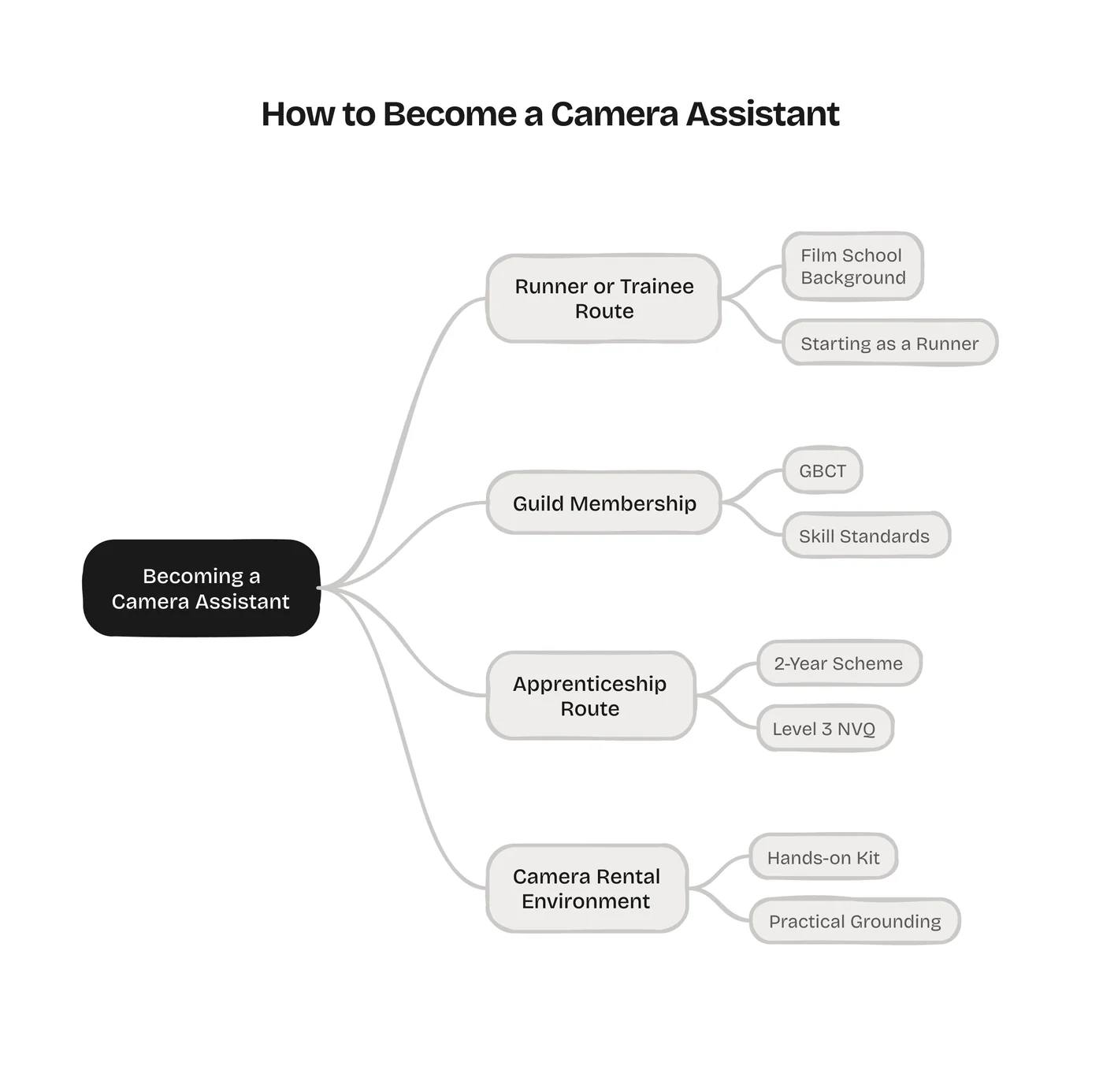
There's no fixed qualification required to become a camera assistant. Most people get in through one of a few hands-on routes:
- Runner or trainee route: a film school background can help, but it's not essential, and plenty of camera assistants start out as runners before making the move
- Guild membership: the camera department has its own professional body in the Guild of British Camera Technicians (GBCT), which exists to protect skill standards across the camera department and counts camera assistants among its members
- Apprenticeship route: a 2-year apprenticeship scheme, backed by several UK camera rental companies, trains participants to senior technician standard and finishes with a formal Level 3 NVQ qualification
Whichever route you take, spending time in a camera rental environment tends to come up again and again.
It's where assistants get hands-on with a wide range of kit and mounts, which is exactly the kind of practical grounding the role demands.
How Do You Get a Job as a Camera Assistant?
Landing a first camera assistant job is less about applications and more about who you know and what you can already do with a camera.
Most work comes through recommendations and reputation rather than open job ads, so the practical basics matter more than they might on other career paths.
A few things consistently help:
- Turn up early enough that an unexpected delay doesn't put the whole schedule behind
- Bring a basic toolkit of your own, rather than relying on borrowing from other assistants
- Treat every piece of equipment on set like it's yours to answer for
- Say yes to the work that's going, even when it's not glamorous, since that's usually how people learn the kit and build the contacts that lead to the next job
None of this is complicated, but it's consistent. The camera assistants who move up fastest tend to be the ones who are reliable, prepared and easy to work with, not necessarily the most technically gifted on day one.
What Does a Camera Assistant Get Paid?
Camera assistant day rates vary by production budget, experience level and whether you're working as a 1st or 2nd AC, so there's no single figure that applies across the board.
The trade union publishes a camera branch ratecard covering film, TV drama, factual and outside broadcast, which is the closest thing the UK industry has to an agreed benchmark.
Rates are reviewed and updated regularly, so it's worth checking the current version rather than relying on a figure that might already be out of date.
If you're budgeting a shoot and want a rough day-rate breakdown by crew role, our crew cost calculator is built on the same published rate cards.
Camera assistant work is also the standard entry point toward becoming a camera operator, so the day rate tends to climb as experience builds and credits stack up.
Where Camera Assistants Fit on a Sugarland Shoot
Camera assistants sit within our crew hire offering, and it's a role we supply often, especially once a production scales up and genuinely needs a dedicated pair of hands managing the camera department's equipment.
Because we also run equipment hire alongside crew, we end up in a fairly unique position: talking directly to the assistants who are actually handling the gear on set, not just the DOP who booked it.
If a 1st or 2nd AC calls us mid-shoot with a technical question, we're set up to answer it there and then.
If your next production needs an experienced camera assistant, or a full camera department built around one, request a quote and we'll work out what your shoot actually needs.
Let’s plan your next shoot
Get your equipment, studio and crew all in one place.