What Is a Camera Operator in Film & TV?

- A camera operator physically runs the camera on set, following direction from the director or DOP. It's a different job from either.
- The right operator for a shoot depends on the equipment: PTZ, handheld, gimbal and all-round operators all bring different strengths.
- Most operators work their way up through the camera department, starting as a runner or trainee.
- BECTU's 2025 rate card sets the day-rate benchmark for camera operators on UK TV drama and film.
Ask most people what a camera operator does and you'll get "holds the camera."
Fair enough on the surface, but anyone who has stood behind an actual production knows there's a lot more to it than that.
A camera operator is a specific, skilled role within the camera department, with its own reporting line, its own specialisms, and its own career ladder.
We've worked with camera operators for 29+ years at Sugarland, both supplying them to productions and relying on them for our own kit demos, so it's a role we know from the inside.
Here's what the job actually covers, how it differs from other camera-department roles, and what it takes to do it well.
What Is a Camera Operator?
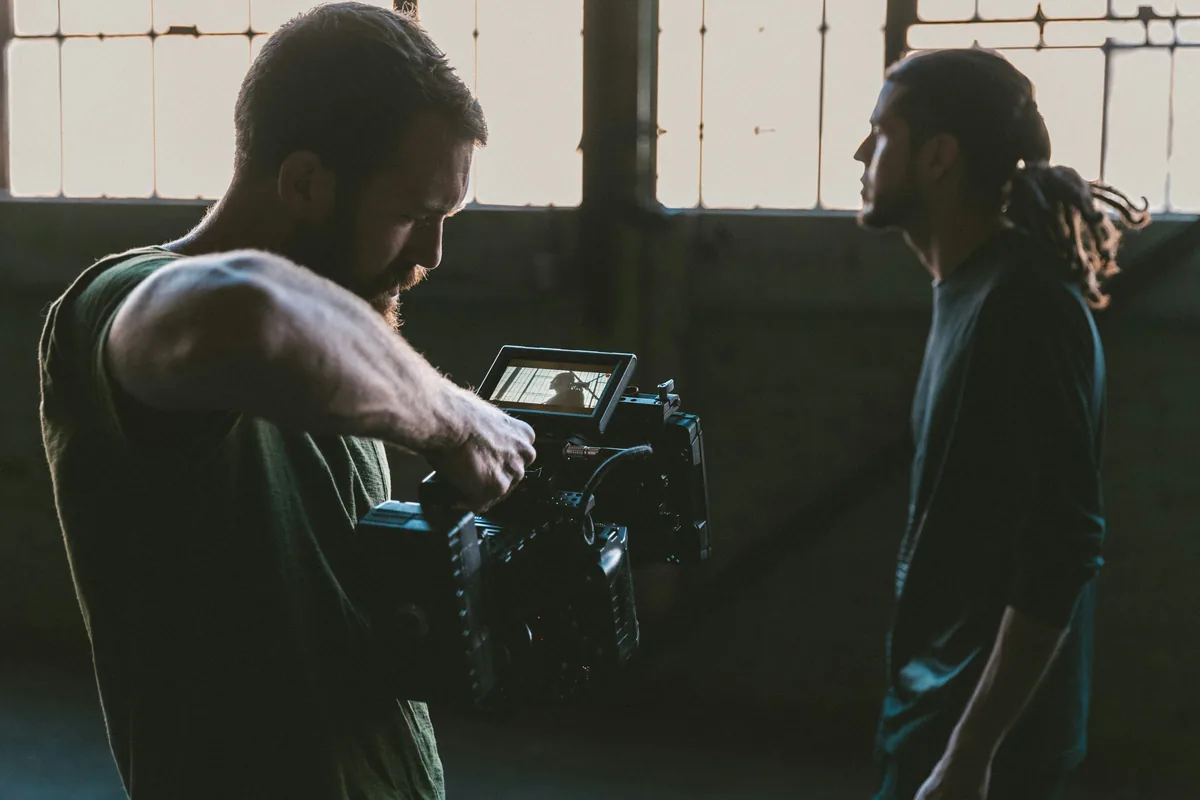
A camera operator is the person who physically operates the camera on a film or TV set, framing and executing shots under the direction of the director or the director of photography.
They aren't the same as a DOP. The DOP sets the overall look of a production and leads the camera and lighting departments, while the camera operator carries out that vision shot by shot, hands on the camera itself.
On smaller productions, the DOP sometimes operates the camera themselves.
On anything with a bit more scale, a dedicated operator takes that job on, freeing the DOP up to focus on lighting, composition and the bigger picture across the whole shoot.
What Are Camera Operators Called?
Camera operator is the standard professional title, though cameraman and camerawoman are both still used informally, regardless of who's actually behind the camera.
In video production specifically, you'll also hear videographer or television camera operator, depending on the setting.
Within the camera department, the job sits inside a clear camera department hierarchy: the DOP leads the department, the camera operator executes the shots, and two assistant roles support them.
The first assistant, or focus puller, handles focus and camera maintenance, and the second assistant loads media and keeps the camera report.
What Does a Camera Operator Do on a Film or TV Set?
Before a shoot starts, the camera operator usually sits down with the director to talk through the sequence, the desired effects and the shots that need covering.
That prep matters just as much as anything that happens once the cameras roll.
Once filming starts, the operator is constantly adjusting: framing, focus, movement, position, exposure, all shifting in response to direction from the director or DOP.
There's a technical thread running underneath all of that too, battery levels, media capacity, lens choice, cable runs, all things an operator is quietly tracking while everyone else is watching the shot.
It's a physically demanding job as well. Long days, awkward positions, heavy kit on the shoulder or a gimbal rig strapped on for hours at a time.
None of that shows up on screen, but it's a big part of what separates a good operator from a great one.
What Equipment Do Camera Operators Use?
The equipment a camera operator uses depends entirely on the job, and that's exactly why the right operator for one shoot isn't always the right operator for another.
As we always say to clients, the right operator depends on what the job needs:
- PTZ operators control PTZ cameras remotely, which suits things like hidden camera shoots where the camera is controlled remotely without anyone standing behind it.
- Handheld or shoulder-mount operators are strongest for run-and-gun style work, where the camera moves with the operator's body.
- Gimbal operators specialise in smooth, stabilised moving shots.
- All-rounders can turn their hand to most formats, useful when a job doesn't call for one specific specialism.
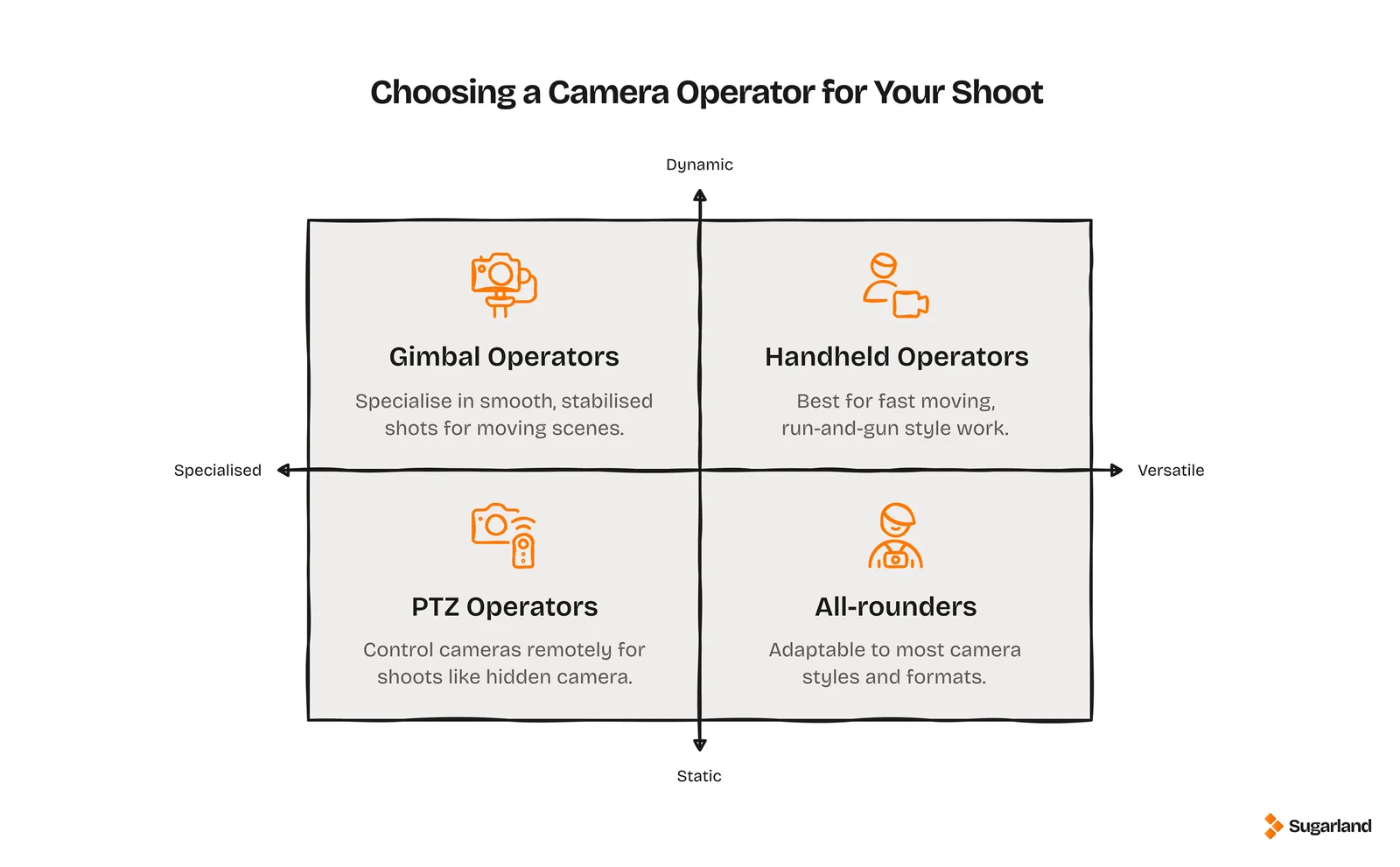
That's the thinking behind how we staff crew at Sugarland: we choose which operator to put forward based on what the job actually needs, not just who's around that week.
When a Camera Operator's Experience Really Shows
Kit knowledge is where the difference between operators becomes obvious, and not always in a way clients notice at the time.
On a recent shoot using PTZ cameras, similar to the setups we've supplied for hidden camera productions, the crew had to set up on the morning of the shoot itself, a couple of hours before filming, since the location didn't allow access the night before.
Once on site, the cable run between the camera and the video village turned out to be too short.
With no time to spare and the wrong connectors, that's the kind of problem that can ruin a shoot day outright.
The operator on that job knew exactly which connectors and adapters to reach for, and sorted it out in minutes, because they'd dealt with exactly that issue before.
That's the real value of an experienced operator. Not just steady hands on a shot, but knowing how to fix a problem before it becomes the production's problem.
Knowing the kit inside out isn't a nice-to-have. It's what stands between a minor hiccup and a ruined shoot day.
What Skills Do Camera Operators Need?
The single most important skill for a camera operator is knowing the kit inside out. That's what lets them solve problems on set rather than just point a camera in the right direction.
Beyond that, the skills that matter most are:
- Shot composition and framing, so every shot serves the story
- Hand-eye coordination, for precise, repeatable camera moves
- Problem-solving under pressure, when light, weather or a last-minute change throws the plan out
- Physical stamina, more than most people expect going in
- Reading a director's shorthand, so instructions don't need spelling out in full every time

How Do You Become a Camera Operator?
There's no single fixed route in, but most working camera operators in the UK follow a similar shape: start at the bottom of the camera department and work up.
The typical camera department ladder looks like this:
- Runner or camera trainee
- Second assistant camera (clapper loader)
- First assistant camera (focus puller)
- Camera operator

Some people take that route via a college diploma, a media production degree, or a camera prep apprenticeship.
Others get in through equipment hire companies, which is a genuinely good way to build contacts and hands-on kit experience before moving onto set.
Iki, who founded Sugarland, took a version of that path himself. He started in a trainee camera role, then landed his first camera operator job on The Big Breakfast.
From there, he began taking on cameraman jobs with his own gear, and that grew into the business Sugarland is today.
It's not a bad blueprint: learn the kit properly, take the work in front of you, and let the reputation build from there.
Is Camera Operator a Good Career?
Yes, it can be a genuinely good career, but it comes with real trade-offs around freelance income and competition for senior roles.
On pay, entry-level trainee salaries start around £22,000, rising to £36,000 or more with experience, while freelance day rates sit considerably higher once you're established.
BECTU's rate card sets out the current day rates camera operators should expect on UK TV drama and film productions.
Rates vary by production type and experience level, which is also true of how Sugarland prices crew: we quote camera operators individually rather than publishing a single day rate, since it depends on the role, the experience level and the job itself.
On demand, the picture is mixed rather than uniformly rosy.
Recent workforce research puts the UK's off-screen production workforce at 183,000 to 194,000 people, with 65% of freelancers reporting it was hard to find work over the past year, and skills gaps concentrated more at mid to senior level than at entry point.
That lines up with what most working operators will tell you: getting started takes graft, and freelance income isn't always steady, but there's a real, sizeable industry here for people who stick with it and build a reputation.
Is it hard? Physically and competitively, yes. Long days, heavy kit, and a lot of freelance hustle early on. That's exactly why knowing the kit and building genuine experience, rather than just qualifications, tends to matter more in this trade than in most.
Ready to Bring in the Right Camera Operator for Your Shoot?
Whether you need someone who lives and breathes PTZ cameras, a steady hand for handheld work, or an all-rounder who can turn their hand to whatever the day throws up, we'll match the operator to the job.
Camera operators are part of our crew hire service, and we can supply them alongside equipment or on their own.
Request a quote and tell us about the shoot, and we'll recommend the right operator for it.
Let’s plan your next shoot
Get your equipment, studio and crew all in one place.