What Is a DOP in Film & TV?
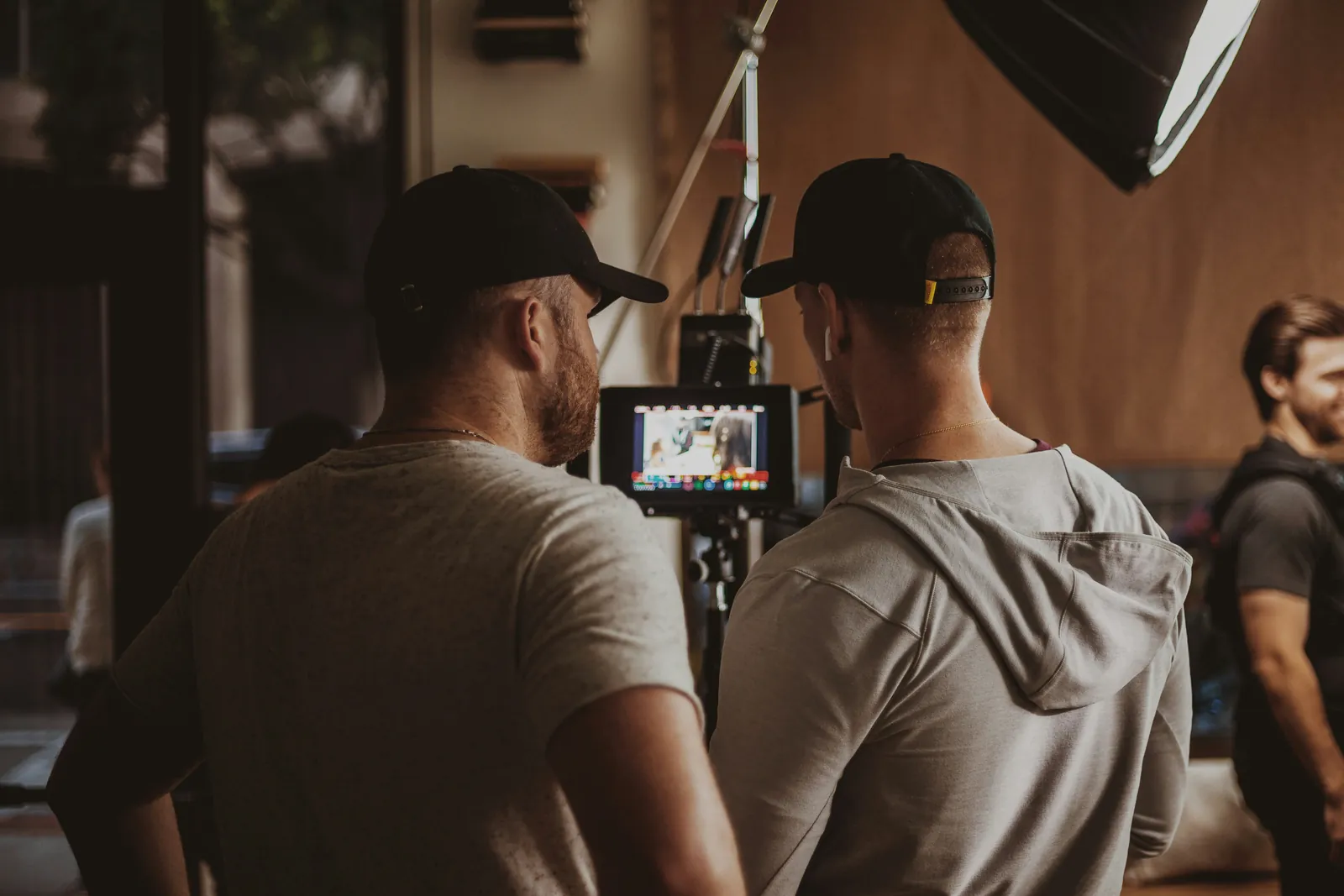
- DOP stands for Director of Photography, the person who leads the camera and lighting departments and shapes a production's visual look.
- A DOP is not the same as a director. The director decides what the story should feel like, the DOP decides how to actually get that look on camera.
- DP and DOP are the same role, just different regional shorthand for the title.
- A DOP is not a cameraman. The camera operator works under the DOP's direction, they don't lead the visual concept.
- DOPs are senior, experienced crew. Day rates vary hugely by production scale and experience, so there's no single "going rate" worth quoting.
If you've ever seen "DOP" on a call sheet and wondered whether that's the same as the director, the cameraman, or something else entirely, you're not alone.
It's one of the most mixed-up titles in film and TV, mostly because so many similar-sounding roles (DP, cinematographer, camera operator) get thrown around interchangeably, sometimes correctly, sometimes not.
We've worked alongside DOPs on productions for 29+ years, so here's a straight answer to every version of that question we get asked.
A Role With Too Many Names
Part of the confusion comes from language.
DOP, DP, and cinematographer are all names for the exact same job, just used more or less depending on where you are and who you ask.
The other part comes from proximity: a DOP works so closely with the director, the camera operator, and the wider camera department that it's easy to assume their responsibilities blur together. They don't.
Each role has a distinct job, and knowing the difference matters if you're hiring for a shoot and want the right person for the right task.
What Does DOP Stand For?
DOP stands for Director of Photography.
It's a formal job title used across film, TV, commercials, and music video production, and it refers to a specific, senior role in the camera department, not an entry-level or general "photography" job as the name might suggest to anyone outside the industry.
What Is a DOP in Film and TV?
A DOP is the person responsible for a production's visual look, leading both the camera and lighting departments on a shoot.
They read the script, discuss the tone and feel of the story with the director, and then work out how to actually achieve that look through lighting, framing, camera movement, and equipment choices.
It's a technical role and a creative one in equal measure.
A DOP needs deep knowledge of cameras, lenses, and lighting, but they also need a genuine eye for storytelling, since every choice they make on set is in service of the story being told.
What Does a DOP Do on Set?
A DOP's job runs across the whole production, not just the days of filming.
Before filming starts, they work with the director to plan the visual approach scene by scene, scout locations for light and space, and put together the equipment and crew list needed to pull it off.
This is where a DOP's specific requests come in, and it's often more detailed than people expect.
During filming, the DOP directs the camera and lighting crews, blocks shots with the director, oversees lighting setups, and reviews footage each day to make sure everything's usable.
They're first on set to get equipment ready and often the last to leave.
After filming wraps, their involvement tapers off, but many DOPs stay involved through the colour grade to make sure the final look matches what they shot for.
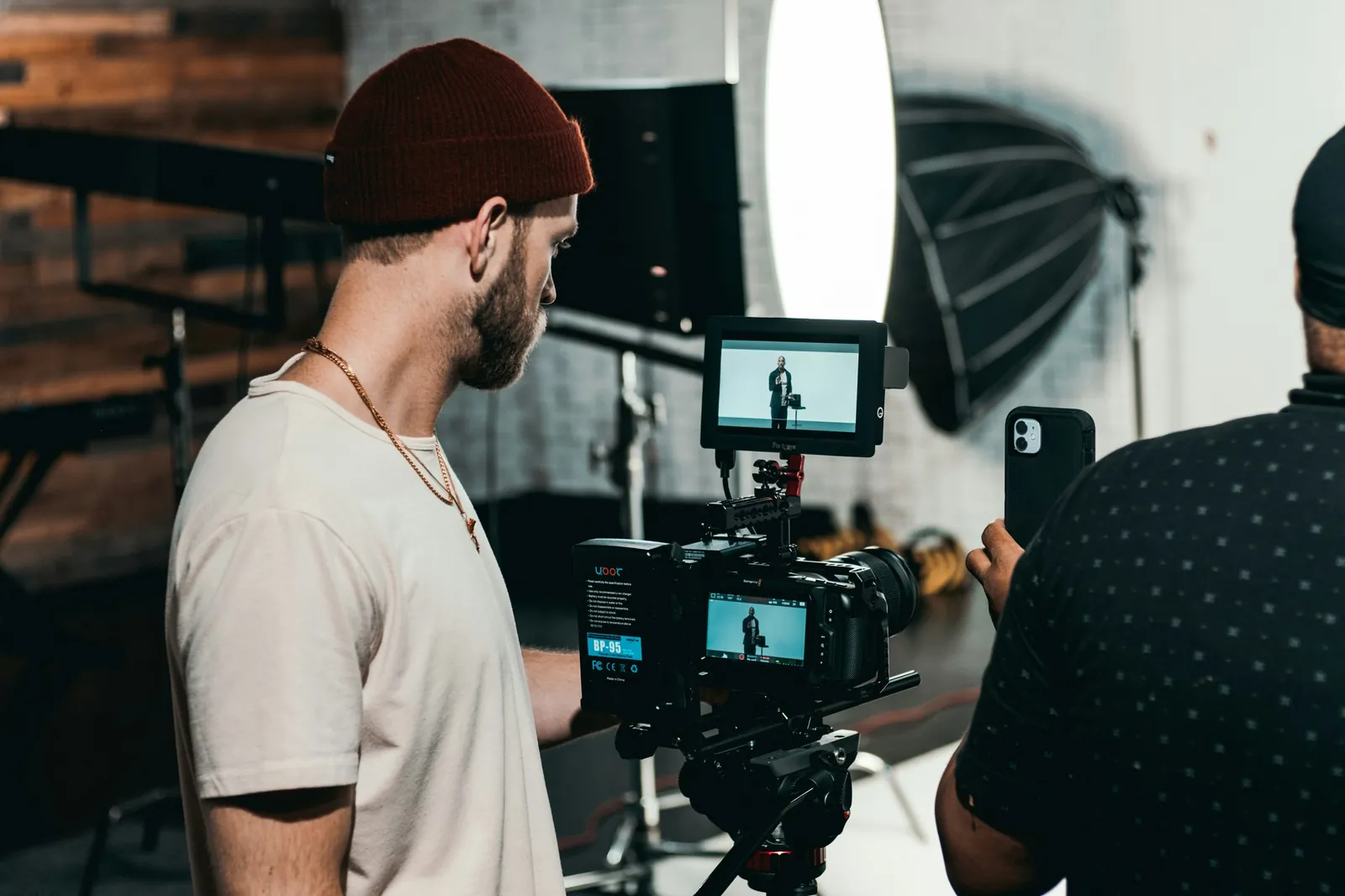
In our experience, this is where DOPs really stand out from other roles: they know exactly what they want equipment-wise, right down to specifics.
We regularly get requests from DOPs for a particular lens because of its bokeh, or a specific focal length because it suits the look they're going for on that shoot.
It's rarely a case of "give me a camera," it's "give me this camera with this lens, because that's the exact character I need in the image."
The Camera Department Under a DOP
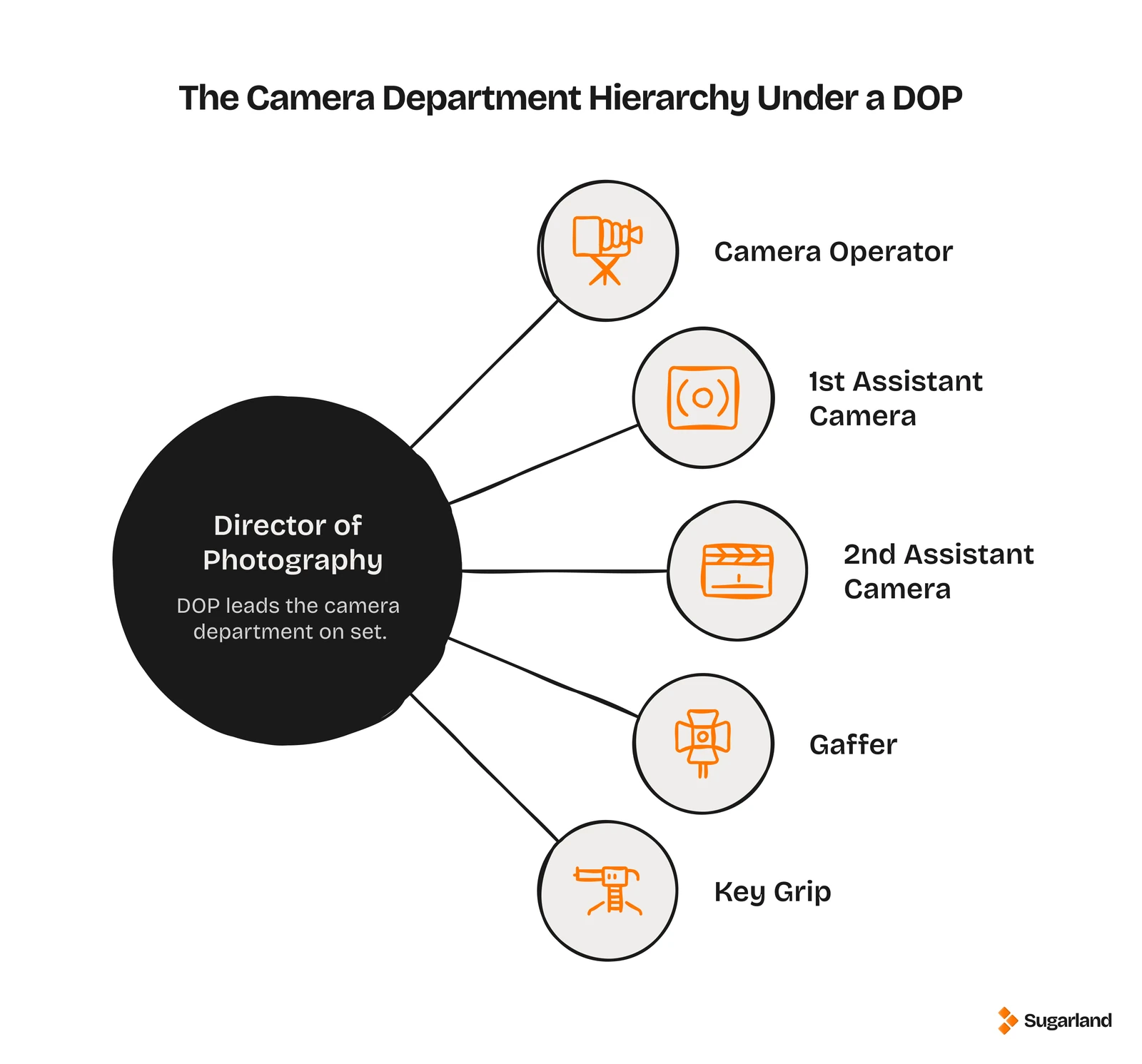
The DOP sits at the top of the camera department, and a fair number of roles report into them:
- Camera operator: physically operates the camera, following the DOP's direction on framing and movement
- 1st assistant camera (focus puller): keeps the shot in focus during a take
- 2nd assistant camera (clapper loader): slates scenes and keeps the camera report
- Gaffer: designs and runs the lighting plan, which has to be signed off by the DOP so it matches the visual idea
- Key grip: handles the camera movement equipment (dollies, cranes, rigging), again working to the DOP's plan
On smaller productions, a DOP might operate the camera themselves rather than delegating to a camera operator.
On bigger jobs, all of the above are separate people, and the DOP is coordinating the whole department at once.
Is a DOP the Same as a Director?
No, a DOP is not the same as a director, though the two work closely together throughout a shoot.
- Director: decides what the story should look and feel like
- DOP: decides how to actually achieve that on camera
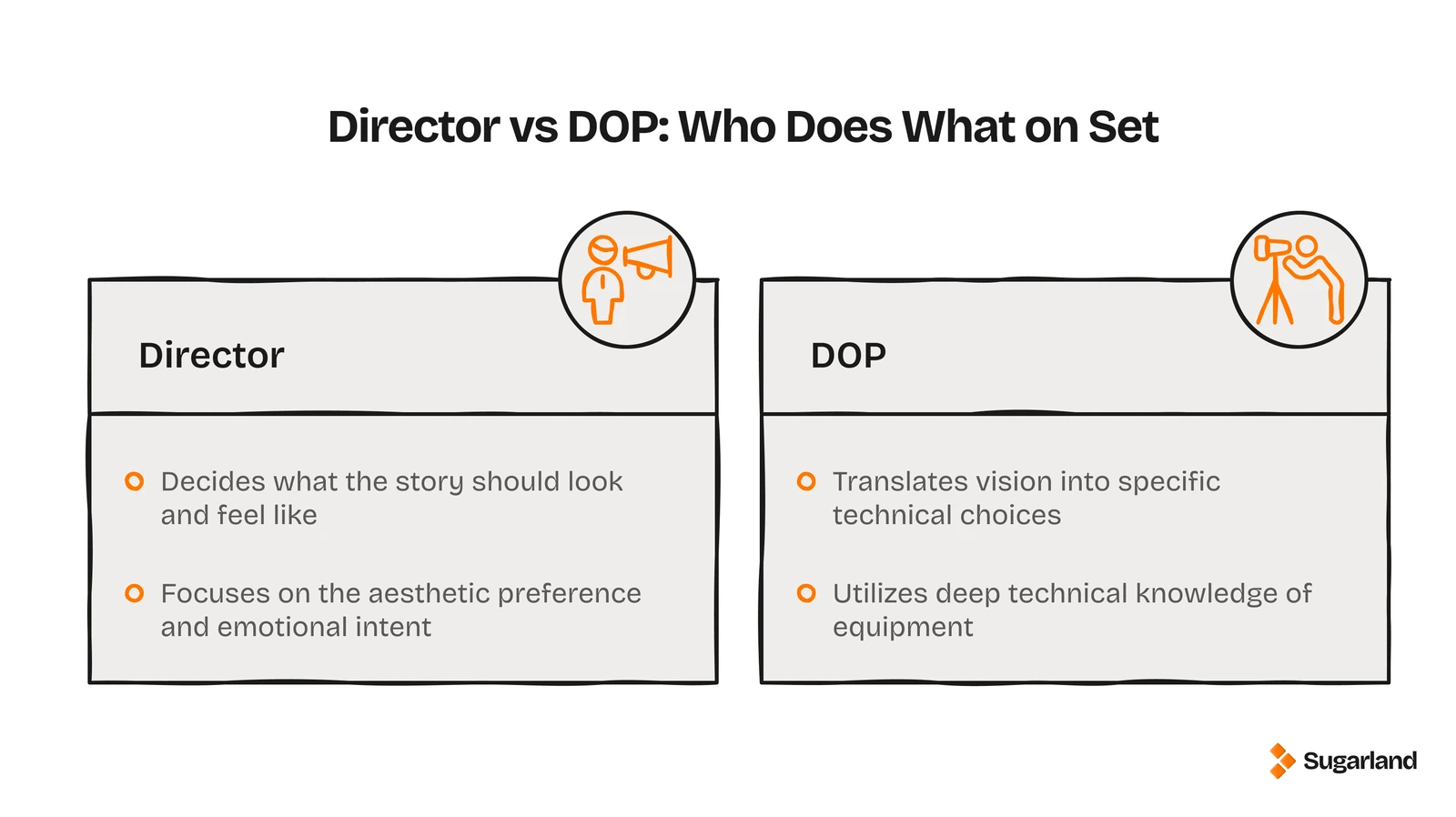
Here's how we tend to explain it to clients: the director has the vision for the shoot; the DOP is the one who brings it to life through the equipment and the team leading up to and on the day.
For example, a director might say a scene needs to feel intimate and unsettling.
It's the DOP who translates that into a specific lens choice, a lighting setup, and camera movement that actually creates that feeling on screen.
This shows up clearly in the equipment requests we get.
DOPs will often specify an exact lens for its bokeh characteristics, or a particular focal length because it's right for the emotional weight of a scene, choices that come from deep technical knowledge of how equipment shapes an image, not just an aesthetic preference.
The director controls the creative vision, the DOP brings it to life on screen.
Is DP the Same as DOP?
Yes, DP and DOP are the same role.
Both are shorthand for Director of Photography, and the terms are used interchangeably depending on region and personal preference, with "DP" more common in the US and "DOP" more common in the UK.
Cinematographer is also the same job, just a slightly more formal or artistic-leaning title for the same position.
Are DOP and Cameraman the Same?
No, a DOP and a cameraman are not the same.
A cameraman, more commonly called a camera operator today, operates the camera under the DOP's direction.
They handle framing, camera movement, and keeping the shot steady, but the creative and technical decisions about how the whole production should look sit with the DOP, not the operator.
The DOP designs the shot, the camera operator captures it.
Pay and Career Path for a DOP
Pay varies enormously depending on experience, production type, and budget, and it also shifts a lot from country to country, so there's no single, reliable figure worth quoting.
General industry salary estimates put DOP earnings anywhere from the tens of thousands up into six figures annually for established names on bigger productions, with day rates on individual jobs scaling the same way.
What's consistent across what we've seen is that DOP is treated as a senior, experience-driven role rather than an entry-level one, and pay reflects that everywhere it's measured.
Getting there usually means starting out in the camera or lighting department.
Most people work up from camera trainee or assistant, through camera operator or gaffer, building both technical knowledge and a portfolio along the way before stepping into the DOP role itself.

Booking a DOP for Your Production
Given how much a DOP shapes the final look of a shoot, getting the right one on board matters as much as getting the right camera.
We supply DOPs as part of our crew hire, alongside camera operators, sound recordists, gaffers, grips and much more.
Day rates vary by experience and the scale of the production, so there's no fixed public rate, we'll always put together a quote based on what your shoot actually needs.
We also stock the kind of kit DOPs request by name, not just generic camera packages.
Whether that's a specific lens for its character, lighting for a particular mood, or a full camera hire setup built around what your DOP has already specced, we're used to working from exact briefs rather than starting from scratch.

Whether you need a DOP, the equipment, or both, get in touch and request a quote for your production.
Let’s plan your next shoot
Get your equipment, studio and crew all in one place.