What Is a Gaffer in Film & TV?
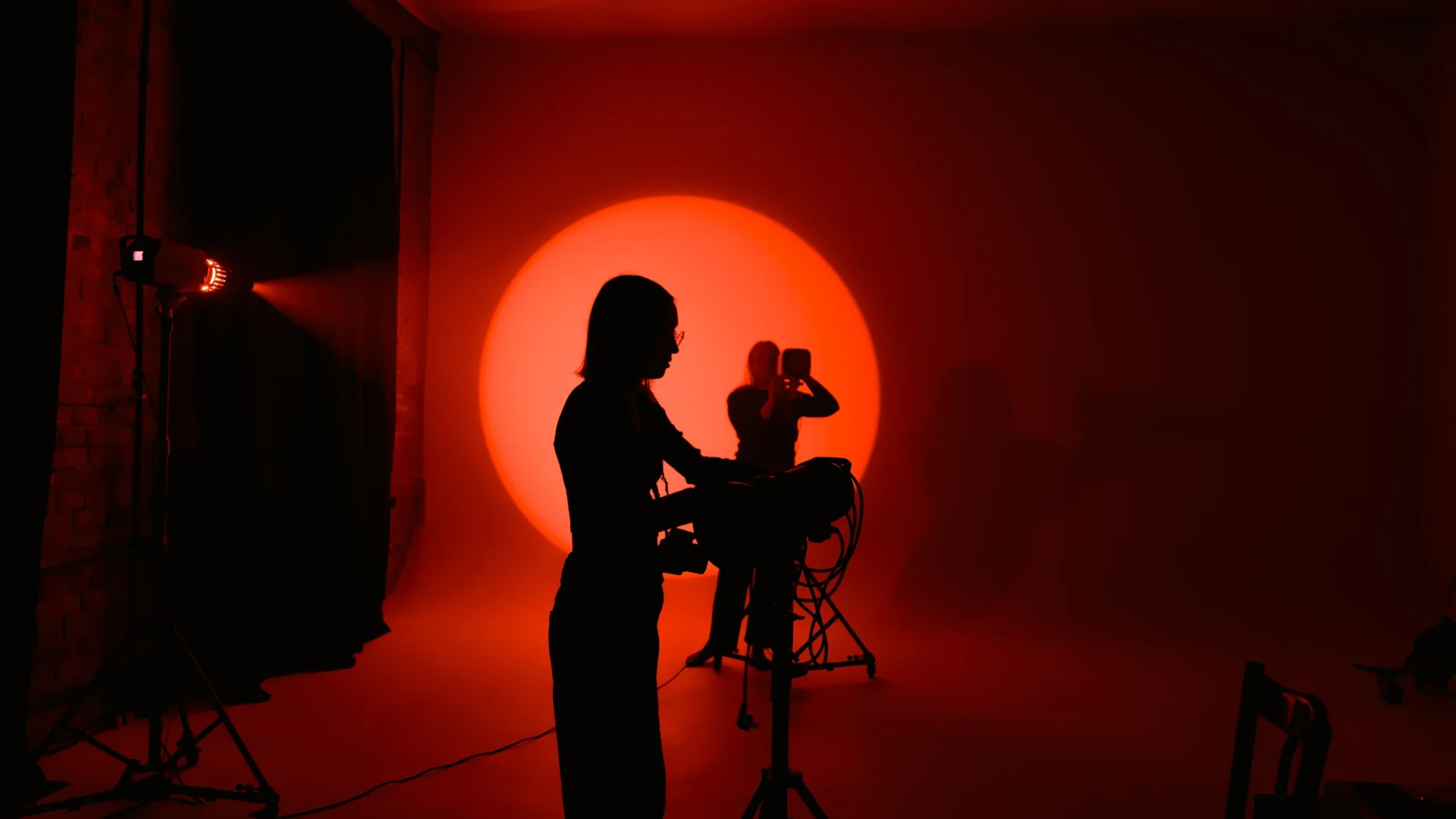
- A gaffer is the head of the lighting department on a film or TV set, sometimes called the chief lighting technician.
- The DOP decides how a scene should look. The gaffer works out how to light it, runs the lighting crew and makes it happen.
- Gaffers look after light and power. Grips look after rigging and support. On small shoots, the roles often merge.
- Power on set is a safety job too, and temporary electrics on UK shoots fall under BS 7909.
- If you're good at lighting, you may not need a gaffer. If not, booking one gets you the look you're after.
What is a gaffer? It's one of those credits everyone has seen roll past and few people can explain.
In short, the gaffer is the person in charge of lighting on set. Here's what the job involves, who's on their team, and when your shoot actually needs one.
What Is a Gaffer in Film and TV?
A gaffer is the head of the lighting department on a film or TV production.
According to ScreenSkills, the gaffer is responsible for on-set lighting as head of the lighting department. They go on recces and plan the lighting for each location.
On bigger productions, there's often a separate rigging gaffer too. Their crew installs lighting on sets ahead of the shooting crew arriving.
What Is a Gaffer's Job on a Shoot?
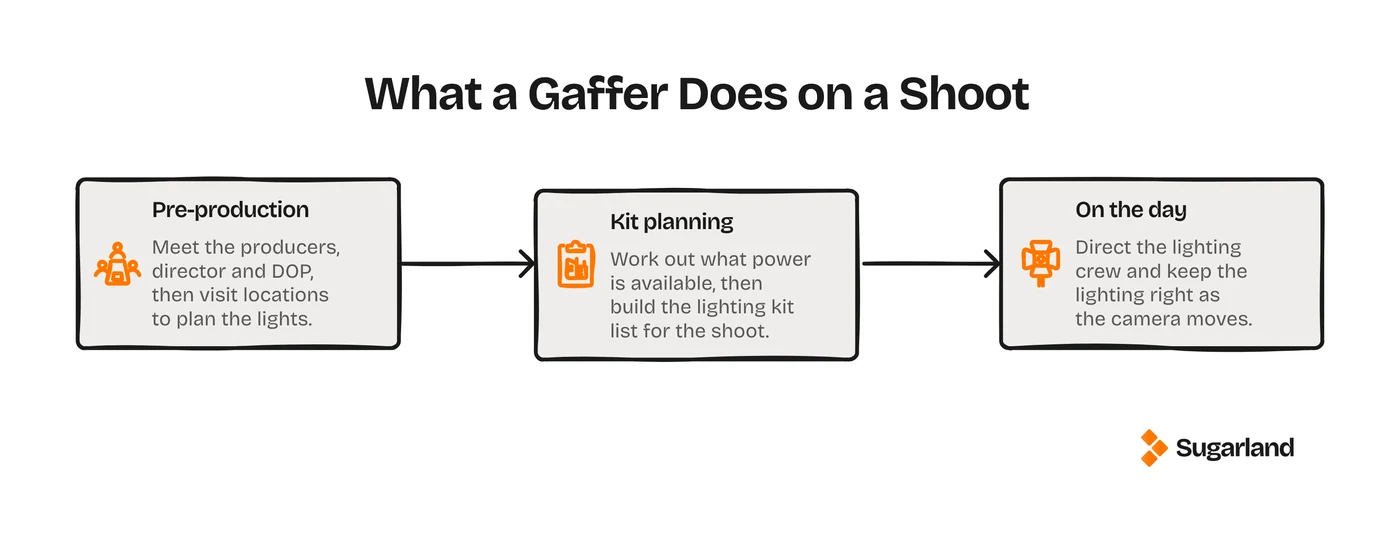
A gaffer's job is to plan the lighting before the shoot, then run the lighting crew on the day so every setup looks right and stays on schedule.
Before the Shoot
The work starts in pre-production, where the gaffer usually meets the producers, the director and the DOP.
From there, they:
- Visit locations and plan where the lights will go
- Work out what power is available
- Build the lighting kit list
On the Day
On set, the gaffer directs the lighting crew and keeps the lighting right as the camera moves between setups.
Clear instructions matter here. Every mix-up eats into shooting time, and shooting time is the one thing no production has spare.
How Does a Gaffer Work With the DOP?
The DOP decides the look, and the gaffer makes it happen.
The DOP sets the creative direction for the camera and lighting.
The gaffer turns that into a working setup: which lights, where they go, and how they're powered.
Gaffer Lee Walters puts it neatly: "the gaffer looks after the paint, while the DoP uses the brush."
British Cinematographer calls the DP-gaffer relationship one of the most crucial but least recognised collaborations in filmmaking.
Good gaffers stay a step ahead of their DOP and know what they'll ask for before they ask.
The job has changed a lot with LEDs, too. The same piece describes Rogue One as the first show lit entirely with RGB LED, a request the gaffer took in his stride.
What's the Difference Between a Gaffer and a Grip?
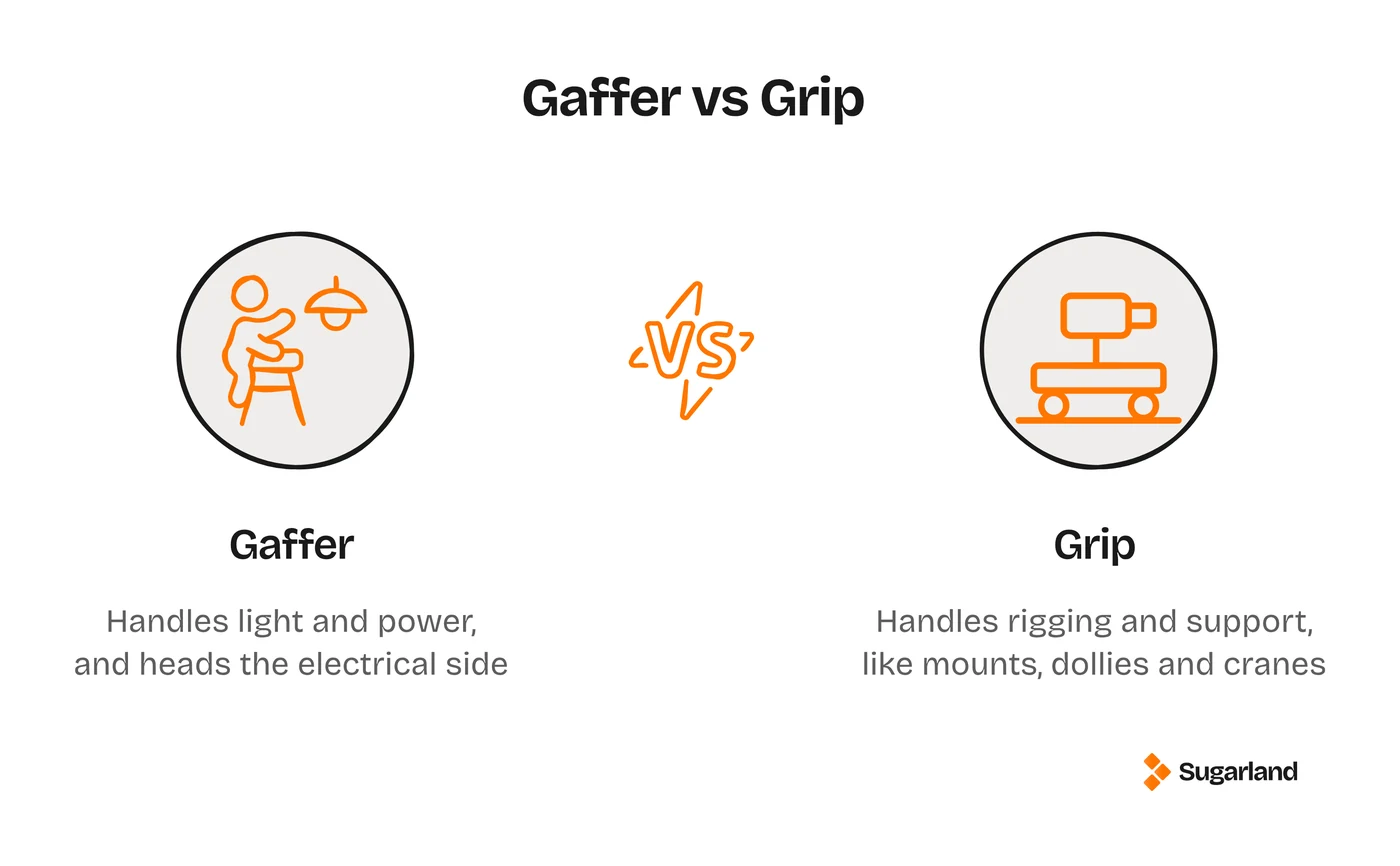
A gaffer handles light and power, while a grip handles rigging and support, like mounts, dollies and cranes.
The 2 departments work side by side, but they're separate teams with separate heads.The gaffer runs the electrical side, and the key grip runs the grip side.
On smaller productions, the roles often get rolled into one.
On very small shoots, the DOP may end up setting up the lights and operating the camera themselves.
Who's on the Gaffer's Team?
On a larger job, the gaffer leads a team of their own:
- Best boy electric: the gaffer's second in command, who helps run the lighting crew. Not to be confused with the best boy grip, who assists the key grip. MasterClass has a handy breakdown of the best boy electric and how the 2 roles differ.
- Electricians (sparks): the lighting technicians who rig, run cable and set the lights.
- Rigging gaffer: on bigger productions, the person who pre-rigs sets before the shooting crew arrives.
Why Power and Safety Sit With the Gaffer
Lights need power, and power on a film set is temporary by nature. That makes it a safety job as well as a creative one.
In the UK, temporary electrical systems for entertainment, including film and TV, are covered by a code of practice called BS 7909. It was fully revised in 2023.
It isn't just paperwork either. Richmond Council's film office points out that electrical safety law applies to location filming, and film officers may ask to see completion certificates for the setup.
On many shoots, managing that safely falls to the gaffer and their team. It's one of the big reasons the role exists.
What Makes a Great Gaffer?
A great gaffer gives the client exactly the lighting they need, and knows which lights will get them there.
That's the technical side. ScreenSkills notes the role usually needs electrical qualifications and plenty of on-set experience, with many gaffers working their way up from the kit room.
But the best gaffers go further than getting the lights working. In my view, that's what separates a great gaffer from an average one.
Great gaffers make the lighting exactly what the client needs and bring their vision to life.
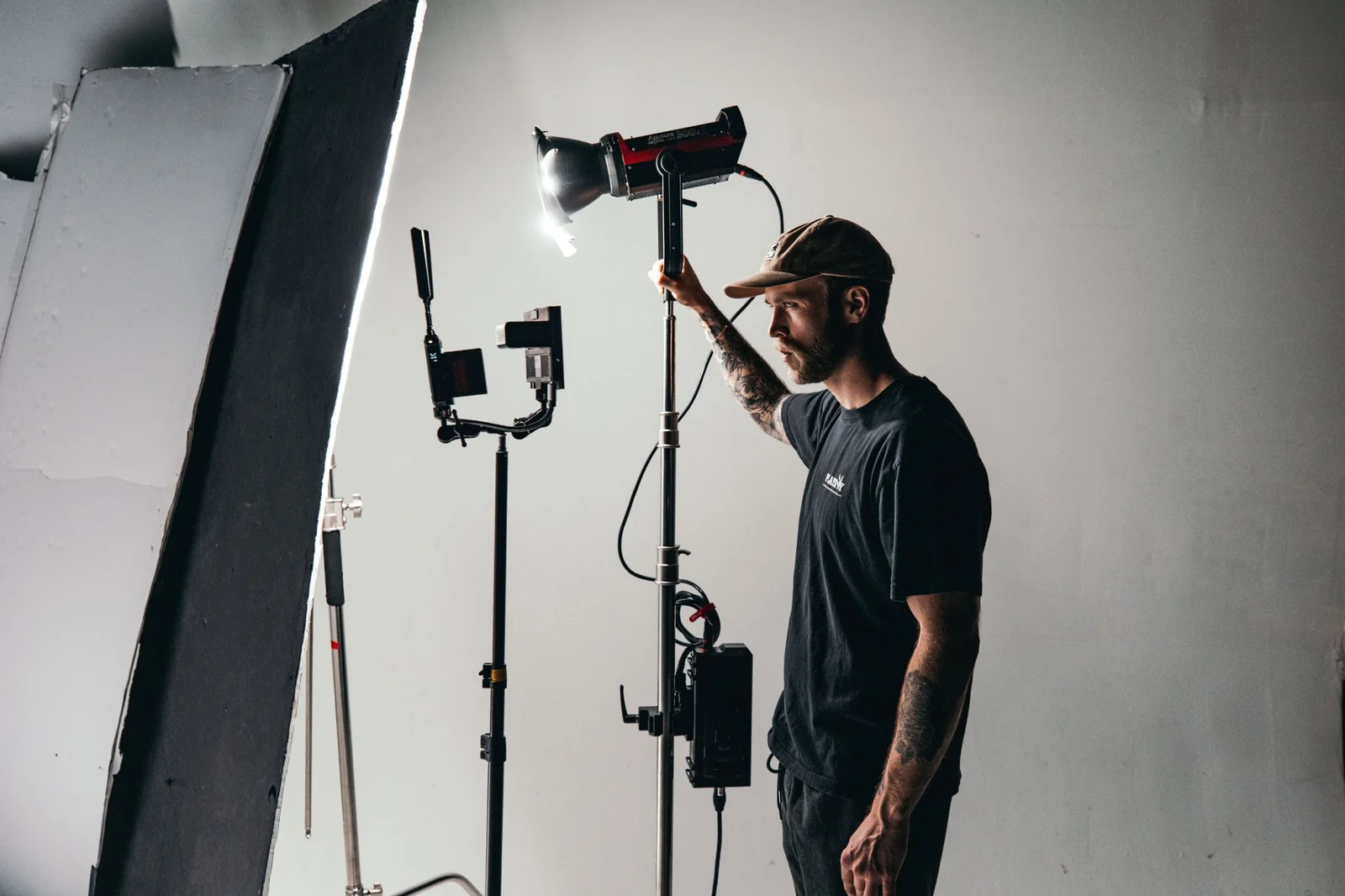
They can make lights create a look, a vibe, a feel, and they can pick which lights will do the job.
Do You Need a Gaffer for Your Shoot?
You don't need a gaffer if you're good at lighting and know what you're doing. If you're not, we'd recommend booking one.
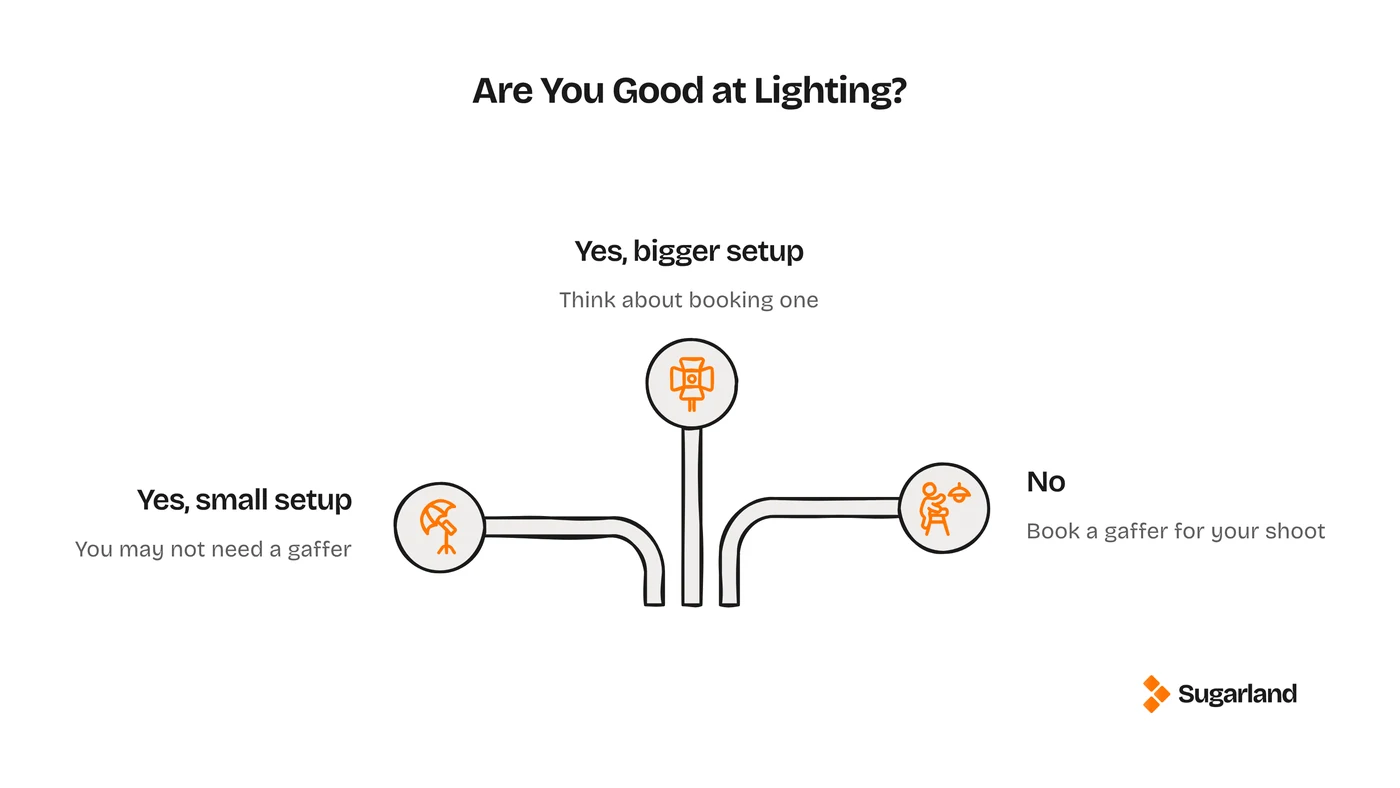
Plenty of small shoots run without a dedicated gaffer, with the DOP or camera operator lighting the scene themselves.
The bigger the setup, the stronger the case for one. More lights, more power and more setups mean more to manage.
Not sure what your shoot needs? Our lighting setup builder turns your shoot type, room size and look into a lighting kit list, including a crew recommendation.
Where the Name "Gaffer" Comes From
Nobody is completely sure, but there are 2 main theories.
The most widely accepted is that "gaffer" started as a contraction of "godfather". According to Merriam-Webster, it began as a title of respect, and over time came to mean a boss or foreman.
The other story points to the gaff, a hooked pole once used to adjust lighting and overhead equipment.
Either way, the name stuck. It even gave us gaffer tape, the cloth tape you'll find on every set.
Hiring a Gaffer Through Sugarland
We supply freelance crew across roles: directors, camera operators, sound recordists, gaffers, grips, and more.
Clients book gaffers through us for all sorts of jobs: studio shoots, corporate work and events.
Bigger productions usually have their crew sorted, but sometimes they need someone we know with a particular specialism.
Before any shoot, we talk you through exactly what you need, so you're set well before the day.
Our gaffers usually work with our lighting kit, since we're typically supplying it.
If you or your gaffer want to use something we don't stock, you can bring it, or we'll source it for you.
A few things worth knowing:
- Crew are freelance, not in-house, so availability depends on who's available. The more notice you give us, the better.
- Equipment doesn't come with crew hire. It's quoted and billed separately.
Have a look at our crew hire page, or request a quote with your shoot details and we'll put the right gaffer and kit together.
Let’s plan your next shoot
Get your equipment, studio and crew all in one place.