What Is a PTZ Operator in Film and TV?
- A PTZ operator controls pan-tilt-zoom cameras remotely from a joystick controller, rather than standing behind the camera.
- One operator can run anything from 1 camera to a full multi-camera setup. It depends on the cameras, the controller and how demanding the shots are.
- The best PTZ operators are all-rounders, usually experienced camera operators who also understand networks, cabling and troubleshooting.
- The most common mistake we see is underestimating cable, especially length. Plan your cable runs early.
- You can hire PTZ cameras, controllers, cabling and an operator together from one place.
Some shots need a camera where a person can't stand.
Up in the rig at a fashion show, tucked behind the stage at an esports final, or hidden in a cinema to catch the audience jump.
That's where PTZ cameras come in, and where a PTZ operator earns their place on the crew.
We supply PTZ kit and crew for London Fashion Week shows, live events, reality shows, prank shows, fashion shoots and music videos.
Here's what the job involves, and what to plan for if your shoot needs one.
What Is a PTZ Operator?
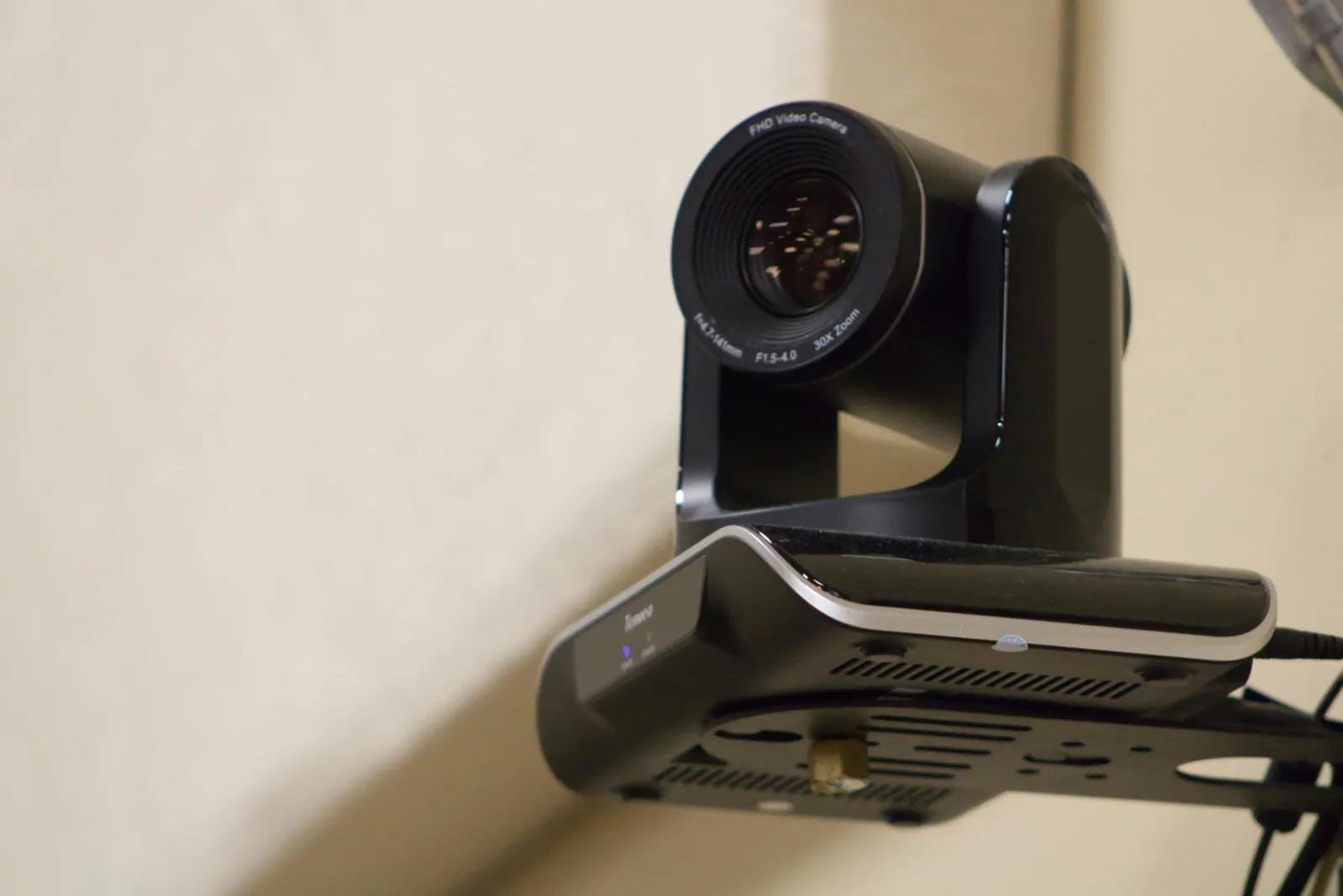
A PTZ operator is the crew member who controls pan-tilt-zoom (PTZ) cameras remotely, using a joystick controller instead of handling the camera directly.
PTZ cameras have a motorised head built in, so they pan, tilt and zoom on command.
That means they can go where a manned camera can't fit, or where a camera needs to stay out of sight.
On reality shows, cameras are often hidden behind Perspex in buildings that were never designed for filming.
The operator's job is to get usable, well-framed shots from every one of those cameras, live.
What Does a PTZ Operator Do on a Shoot?
A PTZ operator sets up, frames and moves the remote cameras, then keeps them running for the whole shoot.
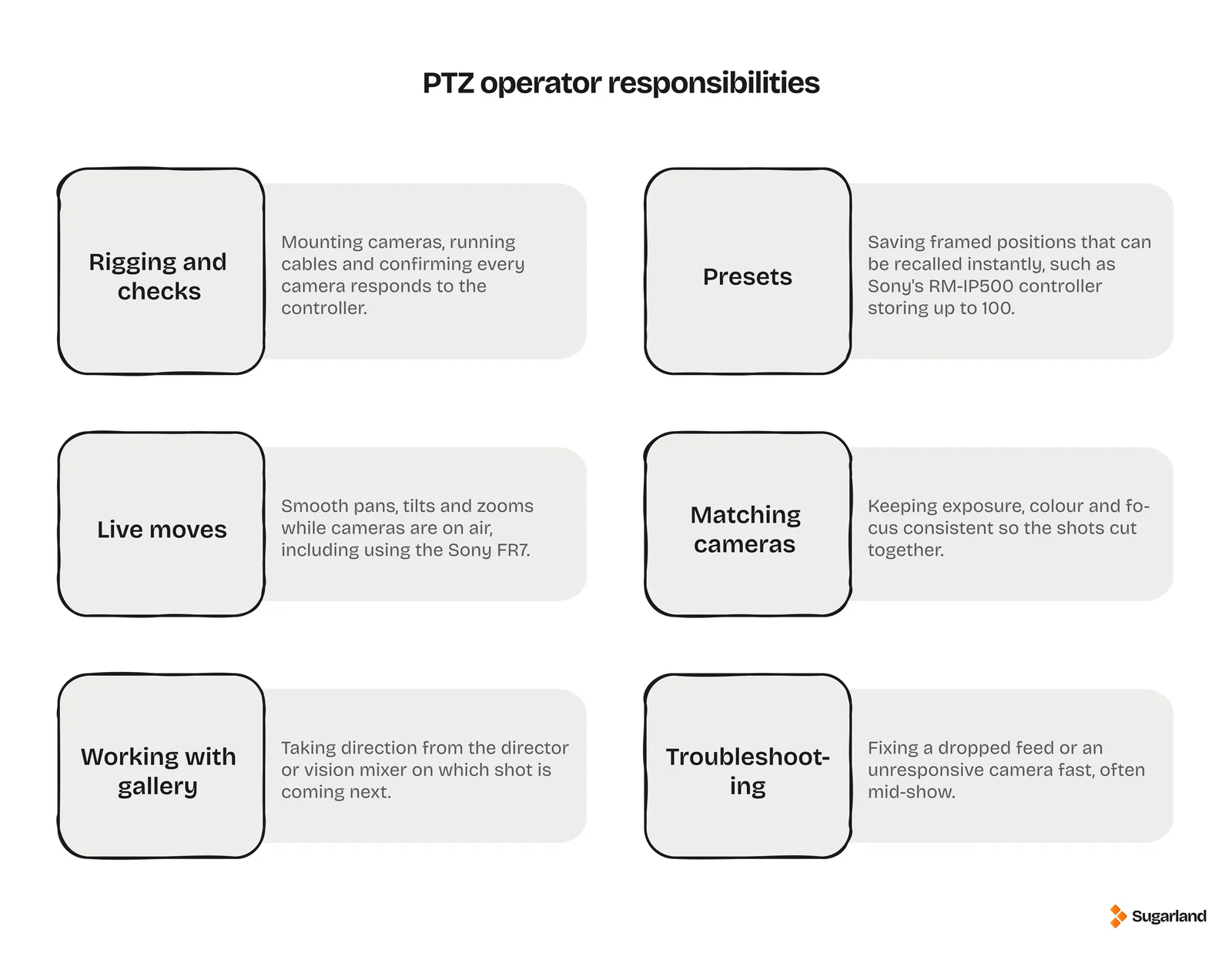
A typical day covers:
- Rigging and checks: mounting cameras, running cables and confirming every camera responds to the controller.
- Presets: saving framed positions that can be recalled instantly. Sony's RM-IP500 controller stores up to 100 of them.
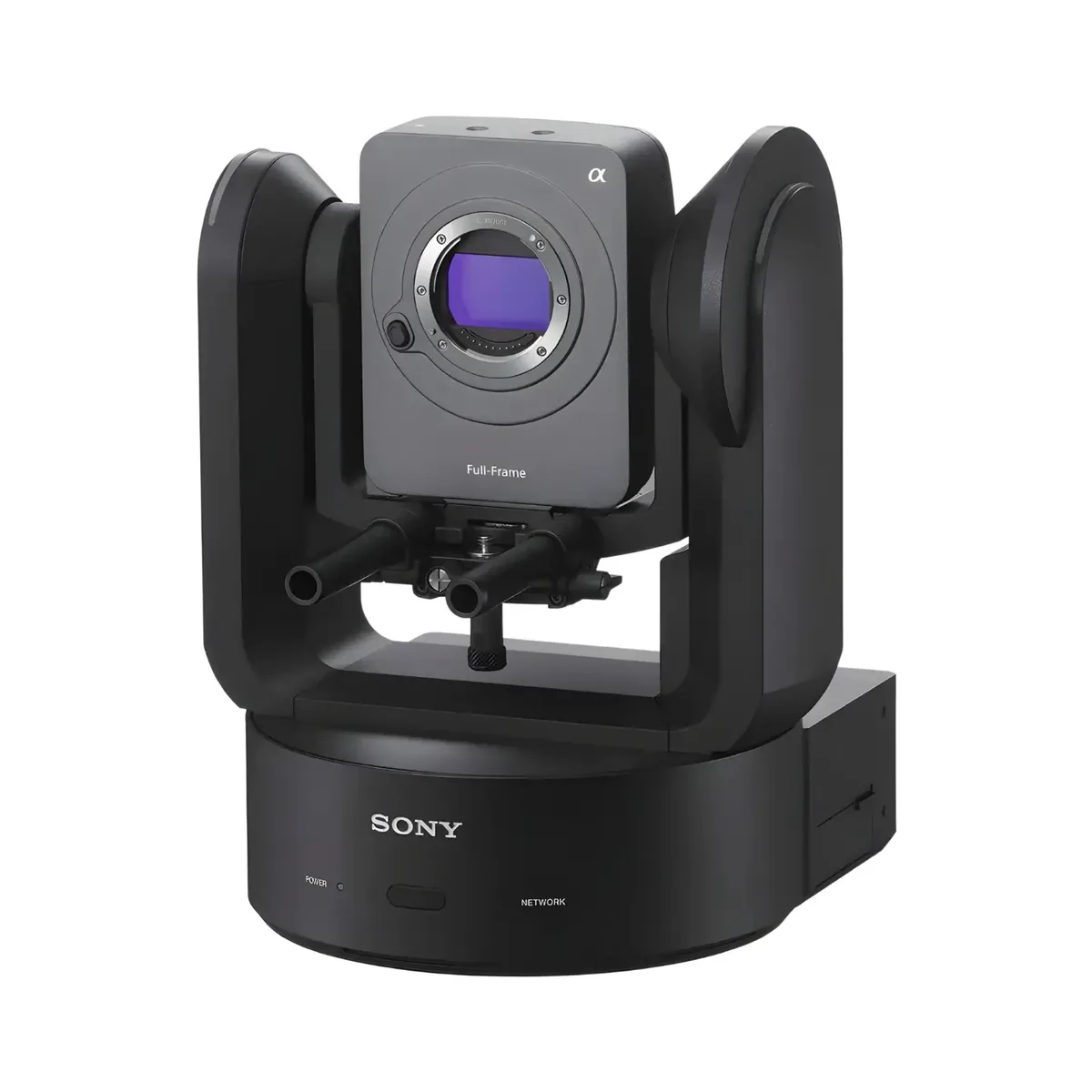
- Live moves: smooth pans, tilts and zooms while cameras are on air. The Sony FR7 can pan as slowly as 0.02° per second, so the feel of every move is in the operator's hands.
- Matching cameras: keeping exposure, colour and focus consistent so the shots cut together.
- Working with the gallery: taking direction from the director or vision mixer on which shot is coming next.
- Troubleshooting: fixing a dropped feed or an unresponsive camera fast, often mid-show.
Where Are PTZ Operators Used in Film and TV?
Anywhere a normal camera would get in the way, or get spotted.
Fashion Shows and Live Events
At runway shows and live events, PTZ cameras cover angles nobody could hold for the full running time.
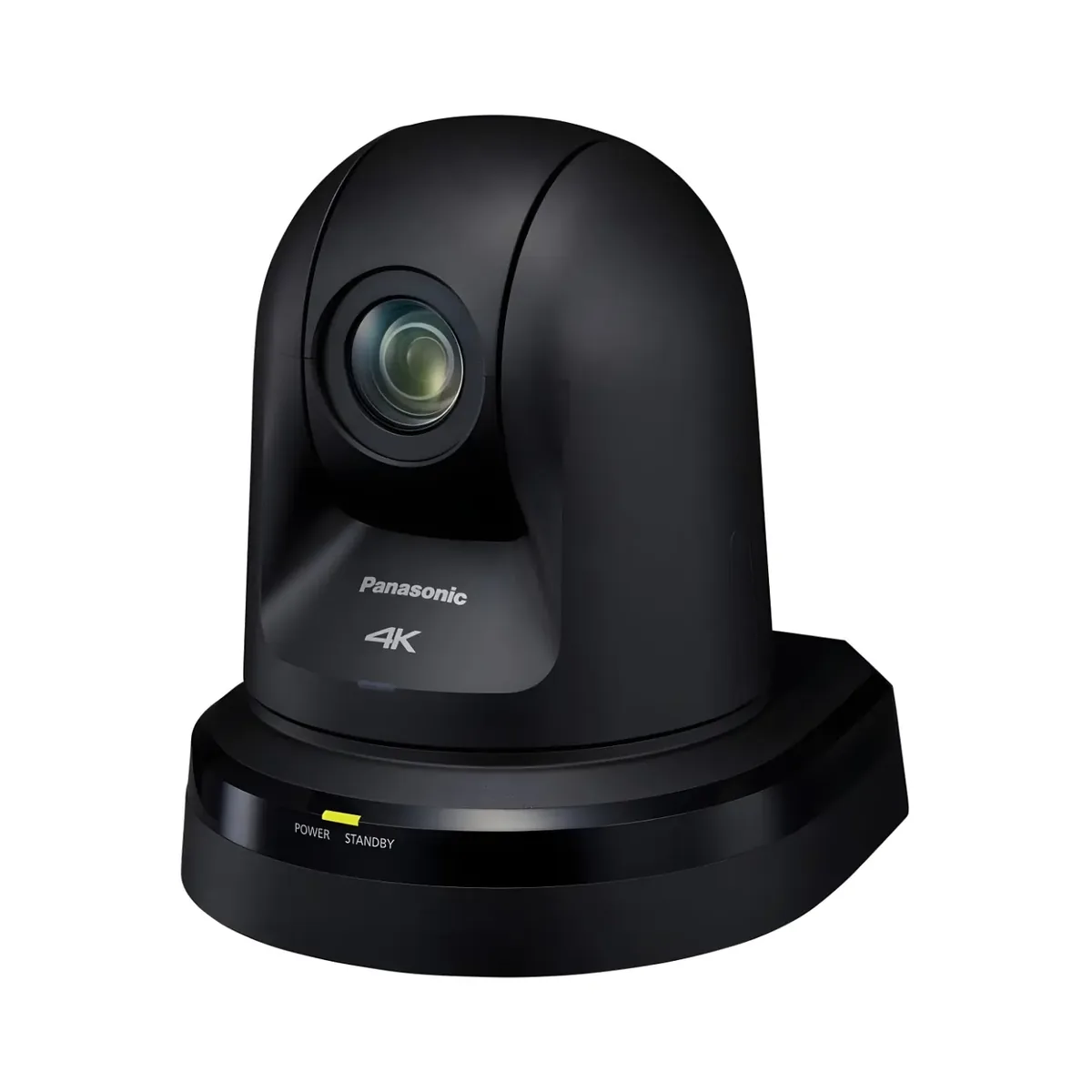
For the BLAST Premier Open 2025 at OVO Arena Wembley, we supplied 3 Panasonic AW-UE70 PTZ cameras run from a single AW-RP50 controller, alongside the rest of the broadcast kit.
The AW-UE70 is a compact 4K remote camera designed for remote production and live events.
Reality TV and Fixed Rig
Fixed rig shows fill a location with remote cameras that all feed a control room, known as the gallery.
Fixed rig production took off in the 2010s, with a gallery director choosing which of dozens of feeds to record.
The PTZ operator works alongside them, moving cameras to follow the action as it unfolds.
Prank Shows and Hidden Cameras
For the past few years, we've supplied kit and crew for hidden camera shoots in cinemas, capturing audience reactions for film promos including Smile 2 and The Naked Gun.
The typical setup is built around Panasonic AW-UE70 PTZ cameras and AW-RP50 controllers, so the cameras stay out of the audience's way.

We've also used PTZ setups on recent fashion shoots and music videos, where a manned camera wouldn't suit the space or the brief.
How Many Cameras Can One PTZ Operator Run?
One PTZ operator can run anything from a single camera to a full multi-camera setup, depending on the cameras and controller being used.
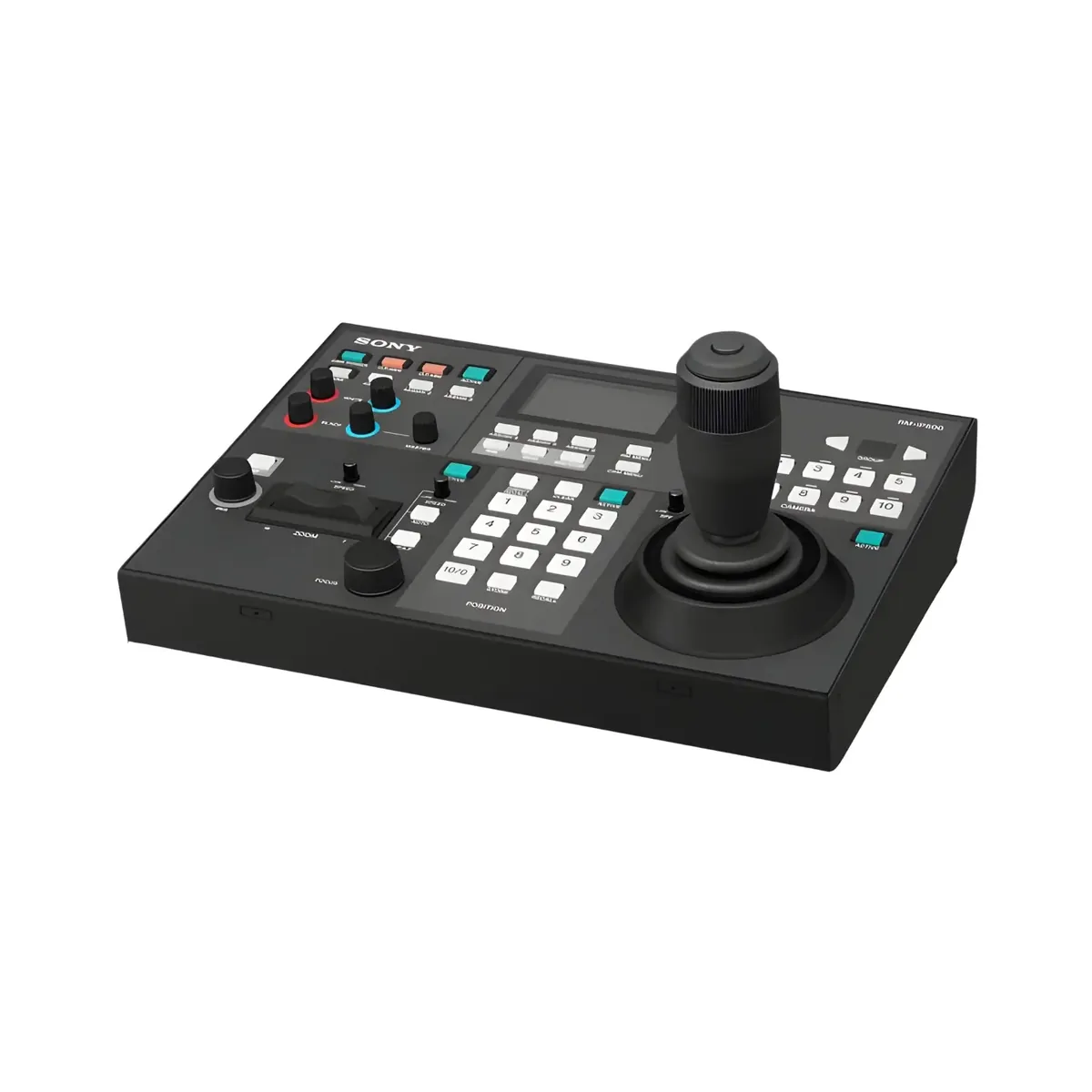
Controllers vary a lot. Sony's RM-IP500, for example, can control up to 100 compatible cameras over a network.
Up to 5 controllers can share that network, so a big show can split its cameras between several operators.
The practical limit is how many live shots one person can manage well.
A minicam specialist told Definition that one operator can handle 4 or 5 hidden cameras in a small space.
We spec it to the brief. If a client wants 1 angle, that's 1 camera. If they want 10, we match the cameras, controller and crew to that.
How Is a PTZ Operator Different From a Camera Operator?
A camera operator frames and moves one camera by hand, while a PTZ operator does the same job remotely, often across several cameras at once.
The core skills are shared: composition, timing and reading the action. What changes is the interface.
You're working a joystick and a bank of monitors instead of a viewfinder.
That's why most PTZ operators we know are also camera operators. The eye for a shot comes first, and the remote side is learned on top.
What Makes a Good PTZ Operator?
A good PTZ operator is an all-rounder: they know the gear inside out, know exactly how to use it, and can fix problems the moment they come up.
In my experience, all of that comes with practice. There's no shortcut to being calm when a camera drops out halfway through a live show.
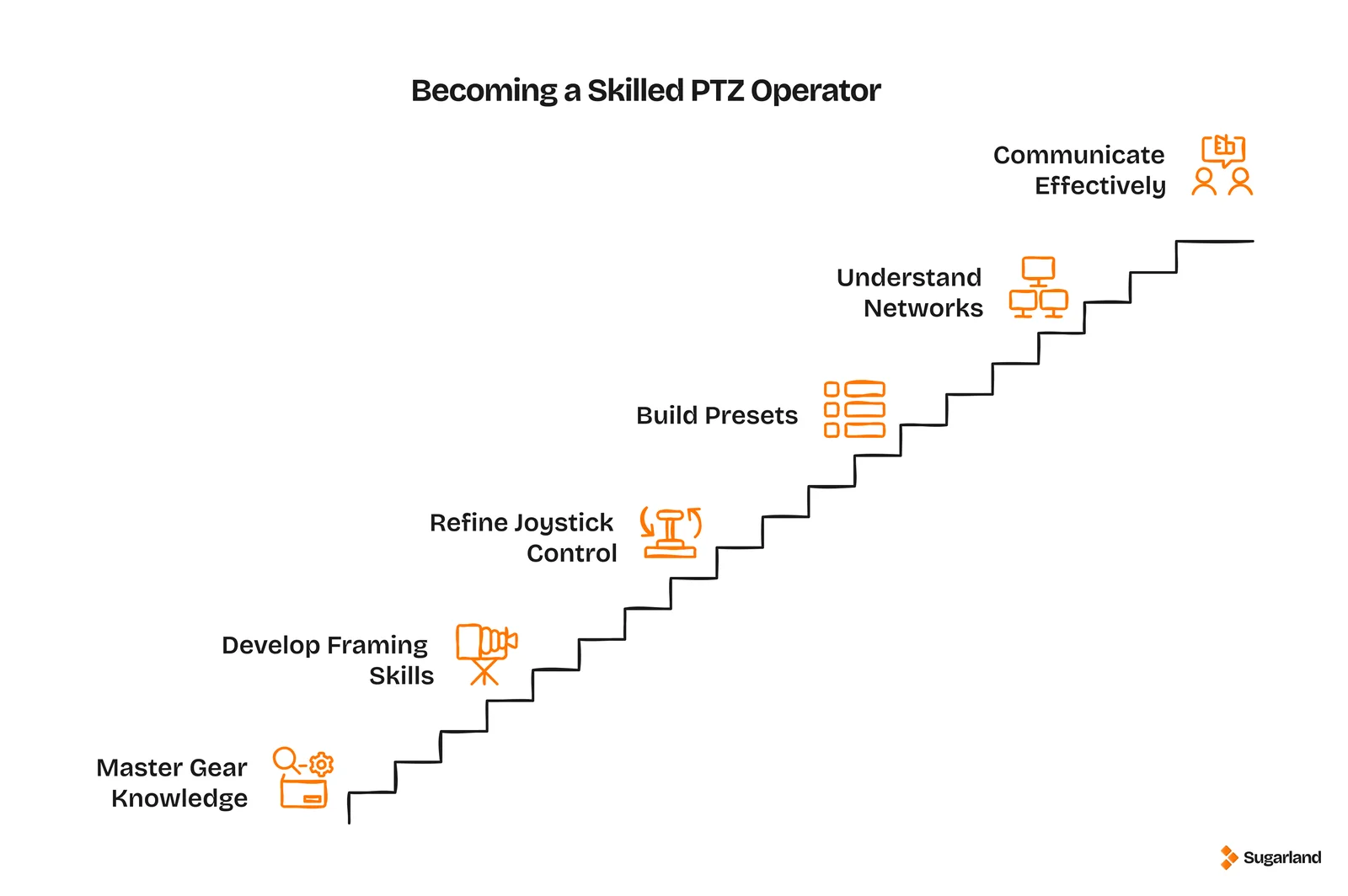
The skills that matter most:
- Strong framing and composition
- Smooth, controlled joystick work
- Building and recalling presets quickly
- Understanding networks, IP addresses and signal flow
- Clear communication with the director and vision mixer
What Kit Does a PTZ Operator Need?
A PTZ setup needs cameras, a controller, cabling or a network to link them, monitoring, and usually a vision mixer.
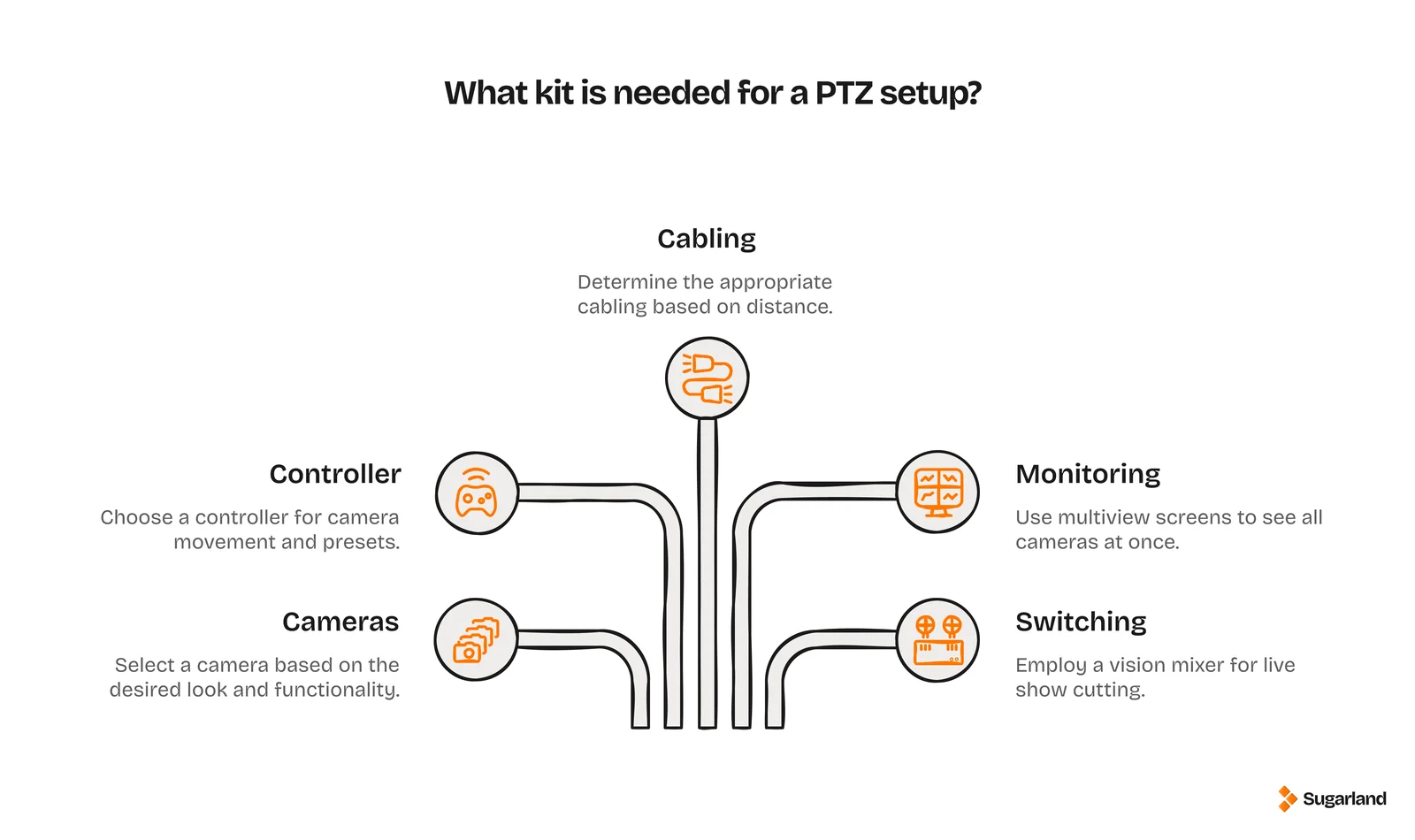
- Cameras: a compact 4K camera like the Panasonic AW-UE70 covers most live work. For a more cinematic look, the Sony FR7 is a full-frame Cinema Line camera with an interchangeable E-mount, so you can put proper lenses on it.
- Controller: a joystick unit for moving cameras and recalling presets, such as the Sony RM-IP500 (which works with the FR7) or the Panasonic AW-RP50.
- Cabling: Ethernet, SDI or fibre, depending on distance. More on that below.
- Monitoring: multiview screens so the operator can see every camera at once.
- Switching: a vision mixer, if the show is being cut live.
The Mistake We See Most: Not Enough Cable
The most common PTZ problem we see has nothing to do with the cameras. It's cabling, and especially cable length.
Clients often request a set amount of cable that turns out not to match the shoot.
So we always make sure the right quantity and lengths go out for that specific job.
Here's why length matters so much:
- Ethernet: Ethernet and PoE runs have a 100m limit, and that includes patch cables.
- 12G-SDI: 4K over copper runs out of reach even sooner. Barco's recommended distances go as short as 30m for some cable types, and standard BNC connectors reduce that further.
- Fibre: for long runs at big venues. The BLAST kit list included 6 × 300m fibre optic cable drums and 4 12G fibre converter kits. At arena scale, copper alone won't get there.
Before you book, measure from each camera position to where the operator will sit, and allow extra for routing around stages, doors and walkways.
Send us those distances and we'll spec the video cables to match.
Hiring a PTZ Operator in London
We supply PTZ operators through our crew hire, alongside the cameras, controllers and cabling, so you get kit and crew from one place.
The operators we work with know systems like the Sony FR7 inside out, and most come from a camera operating background.
If you'd rather bring your own operator, that's fine too. We'll supply the kit either way.
Our crew are freelance, so availability depends on their diaries. More notice genuinely helps, especially on multi-camera live jobs.
If your setup needs something we don't stock, we'll source it so you still deal with one point of contact.
Tell us the venue, camera positions and how many angles you need, and we'll put together a quote for kit, cabling and crew.
Let’s plan your next shoot
Get your equipment, studio and crew all in one place.