What Is an Anamorphic Lens? How It Works and Why It Looks Different
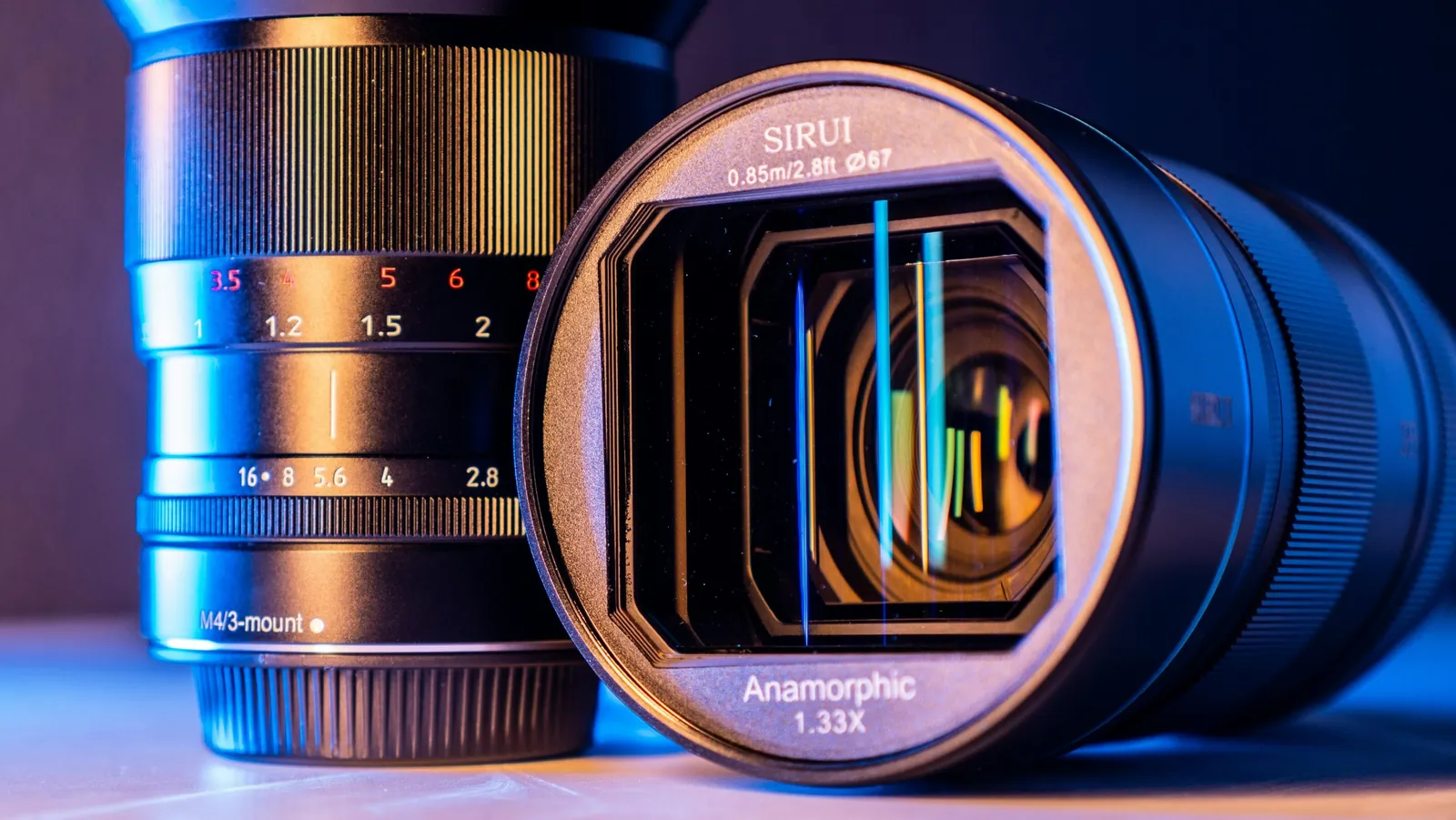
- An anamorphic lens squeezes a wider horizontal view onto your sensor. That image is then stretched back out into a widescreen frame, on set and in the edit.
- The squeeze is what creates the anamorphic look: oval bokeh, horizontal flares and a close-up feel inside a wide frame.
- Squeeze factor (2x, 1.8x, 1.5x, 1.33x) and the shape of your sensor together decide your final aspect ratio.
- Modern 1.5x full-frame lenses like the Atlas Mercury and Blazar Remus give you the classic look in a smaller, lighter package.
- Anamorphic is a deliberate creative choice. If you already know the shot you're after, it's worth putting on the kit list.
You've seen what an anamorphic lens does, even if you've never put a name to it.
Headlights streak across the frame. Background lights melt into tall ovals. The picture feels wider than the screen it's on.
So what is an anamorphic lens, and why does it look so different from everything else in the kit bag?
Here's how they work, what squeeze factor actually means, and what to plan for before you shoot with them.
What Is an Anamorphic Lens?
An anamorphic lens squeezes a wider horizontal field of view onto your sensor, which is then stretched back out into a widescreen image.
A normal (spherical) lens records the scene at its true proportions.
The key detail is that an anamorphic lens keeps the vertical field of view of its focal length but widens the horizontal.
So a 50mm anamorphic still feels like a 50mm top to bottom, but sees a lot more side to side.
That's the whole trick. Everything people love about the look comes from that one squeeze.
How Does an Anamorphic Lens Work?
An anamorphic lens works by adding an anamorphic element that compresses the image sideways without touching the vertical.
The squeezed image lands on the sensor looking tall and thin, and gets stretched back to normal later.
Where that element sits matters. Cooke notes that front anamorphic designs give the classic anamorphic look, while rear anamorphic lenses behave much more like a standard spherical lens.
The process runs in 3 steps:
- Squeeze. The lens compresses a wide scene horizontally onto the sensor.
- De-squeeze on set. The camera or monitor stretches the picture back so you can frame and focus properly.
- De-squeeze in post. The edit applies the same factor to give you the final widescreen image.
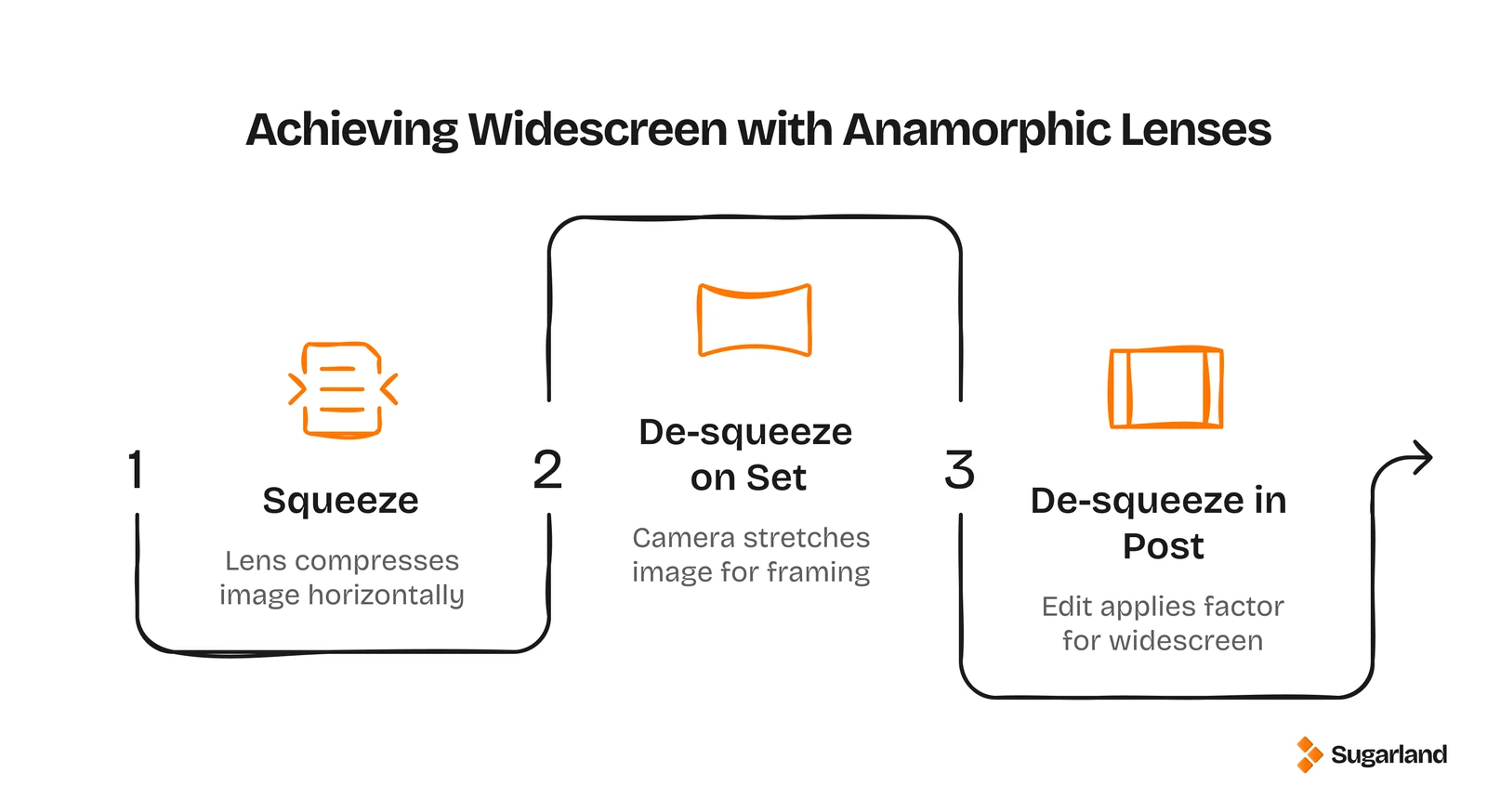
The squeeze and de-squeeze always have to match. Get them wrong and everyone on screen looks stretched or squashed.
Where Did Anamorphic Lenses Come From?
The idea is older than any camera on set today.
French astronomer Henri Chrétien patented his anamorphic filming device in 1927 and named it the Hypergonar.
It took the film industry 25 years to catch on. In 1952, 20th Century Fox bought the rights and turned it into CinemaScope.
The Robe followed in 1953 as the first feature released that was shot on an anamorphic lens.
That's where the shorthand "Scope" comes from. You'll still hear widescreen anamorphic called that on set.
What Is the Anamorphic Lens Effect?
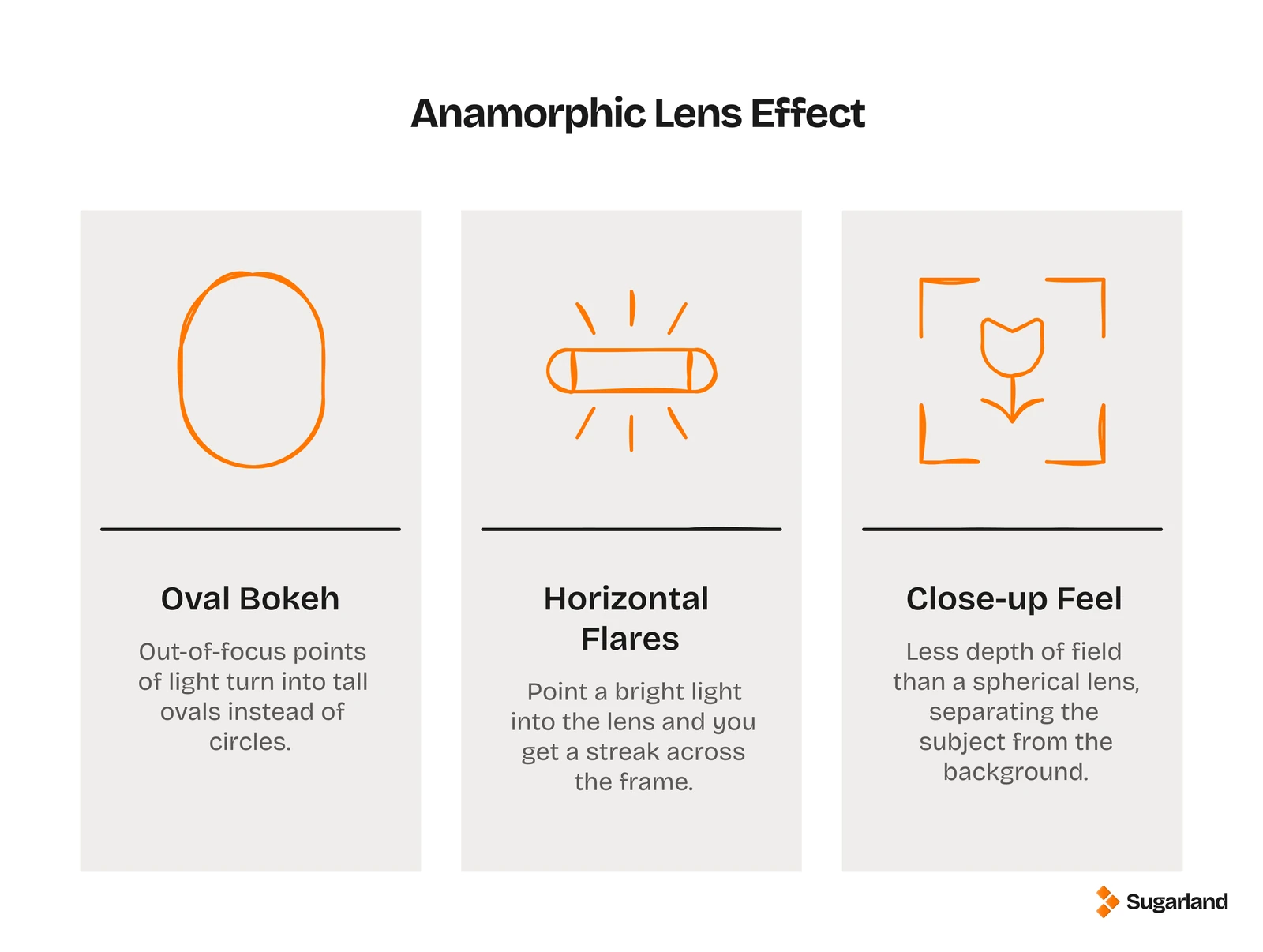
The anamorphic lens effect is a combination of 3 things: oval bokeh, horizontal flares, and shallow depth of field in a wide frame. Each one comes straight from the squeeze.
Oval Bokeh
Out-of-focus points of light turn into tall ovals instead of circles.
In the ASC's side-by-side tests, a soft background bulb that looks round through a spherical lens becomes a tall oval through an anamorphic.
It's the detail viewers notice without knowing why.
Horizontal Flares
Point a bright light into the lens and you get a streak across the frame rather than a round flare. Headlights, street lights and practicals all do it.

The colour depends on the lens. The Atlas Mercury, for example, throws a warm, golden flare.
A Close-Up Feel in a Wide Frame
From the same camera position with the same framing, anamorphic gives you less depth of field than a spherical lens.
The ASC sums it up as a close-up feeling inside a wide-shot frame.
In practice, your subject separates from the background even in a wide.
What Does Squeeze Factor Mean?
Squeeze factor is how much the lens compresses the image horizontally.
A 2x lens squeezes the scene to half its width, and a 1.5x lens squeezes it to about 2/3 of its width.
2x is the traditional standard. The rule of thumb is simple: the lower the squeeze, the softer the anamorphic character.
- 2x: the classic CinemaScope squeeze, made for 4:3 film and sensors. It gives the strongest bokeh and flares.
- 1.8x: found on full-frame cinema primes. Still a strong anamorphic character.
- 1.5x: built around modern digital sensors. You get the classic look in a lighter lens.
- 1.33x: suits 16:9 sensors. The character is more subtle.
Your sensor shape matters just as much. Multiply the sensor's aspect ratio by the squeeze to get your de-squeezed ratio:
- 3:2 full-frame with 1.5x gives roughly 2.25:1
- 16:9 with 1.5x gives roughly 2.67:1, which you'd crop to 2.39:1
- 16:9 with 1.33x lands close to 2.39:1 straight away
Cooke's chairman worked out that a 3:2 full-frame image needs about 1.6x to land exactly on 2.39:1.
n practice, you pick the squeeze for the look and crop to your delivery ratio.
What's the Difference Between Anamorphic and Normal Lenses?
The main difference is that a normal (spherical) lens records the image at its true proportions, while an anamorphic lens squeezes it and needs de-squeezing.
That one change affects almost everything else about the picture.
- Widescreen frame: a spherical lens crops the top and bottom. An anamorphic lens captures the width optically, then de-squeezes it.
- Field of view: spherical matches its focal length. Anamorphic keeps the vertical view and widens the horizontal.
- Bokeh: round on spherical, tall ovals on anamorphic.
- Flares: round or scattered on spherical, horizontal streaks on anamorphic.
- Depth of field: for the same framing, anamorphic is shallower.
- Monitoring: spherical needs nothing extra. Anamorphic needs de-squeeze.
With a traditional 2x anamorphic, the ASC found a spherical lens needs roughly half the focal length to match the angle of view.
That's where the "wide shot with close-up depth" feel comes from.
What Are the Downsides of Anamorphic Lenses?
The main downsides are size and weight, manual focus, extra monitoring steps, and a wider frame that takes more thought to compose.
None of them are deal-breakers, but plan for them.
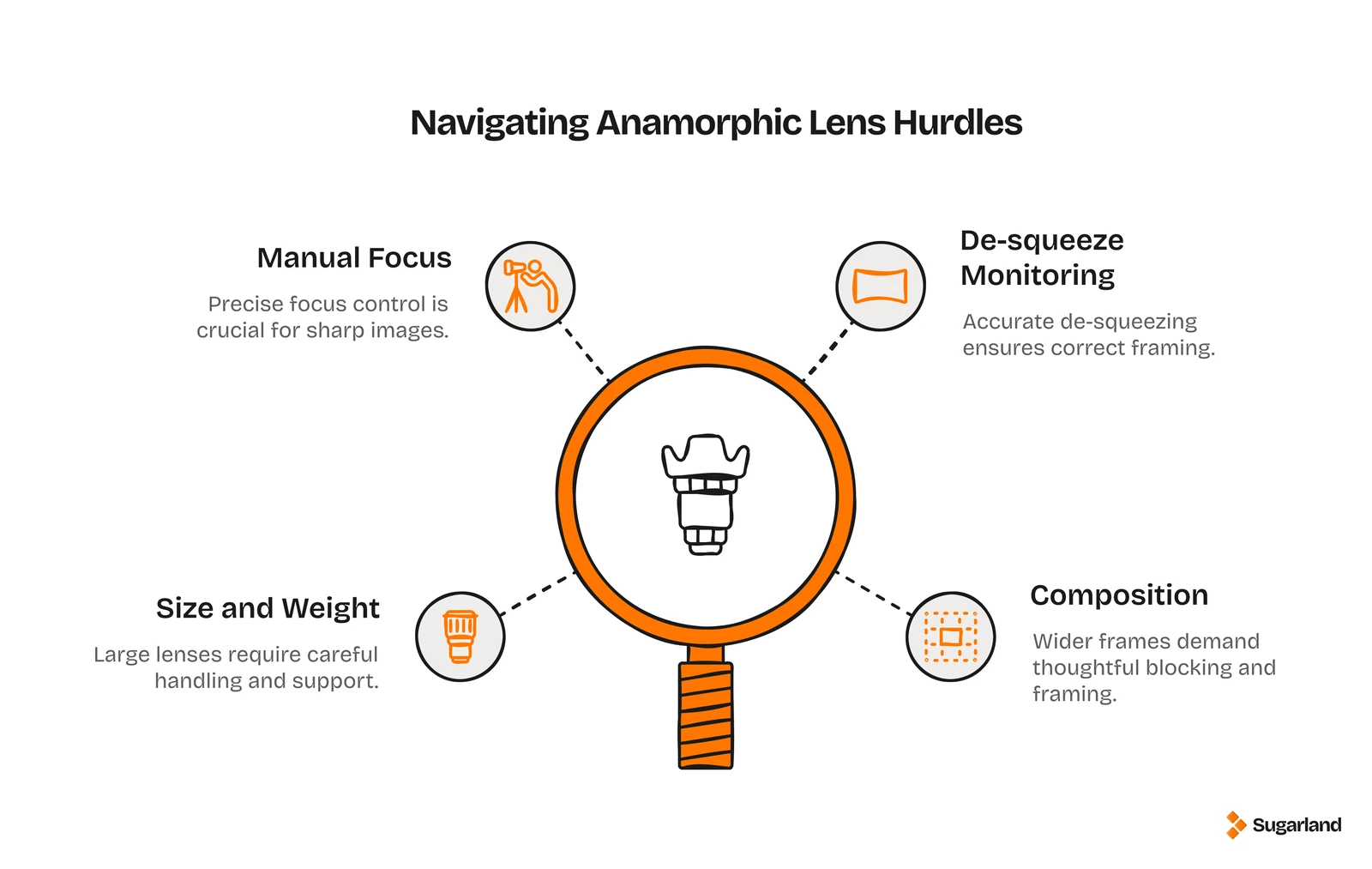
- Size and weight. Traditional 2x anamorphics are big lenses. Newer 1.5x designs like the Atlas Mercury come in at roughly half the size and weight of most pro anamorphic primes.
- Manual focus. These are geared cine lenses built for a follow focus, not autofocus glass. With shallower depth of field, anything with movement needs a steady hand on focus.
- De-squeeze monitoring. You need a camera or monitor that de-squeezes at the right factor. Without it, framing is guesswork.
- Composition. A 2.39:1 frame is a different shape to fill. Blocking and framing need planning, not just a lens swap.
How Do You Monitor Anamorphic Footage on Set?
You monitor anamorphic footage by switching on de-squeeze in the camera or monitor, set to the same factor as your lens.
That gives you a correctly proportioned picture to frame and pull focus on.
Sony added a 1.5x de-squeeze setting to the FX6 in firmware 5.0, covering both the viewfinder and HDMI output.
That makes the Sony FX6 a neat match for 1.5x glass, with a PL adapter in between.
In post, set the same factor in your edit software's clip or pixel aspect settings, then crop to your delivery ratio.
Tip: check the de-squeeze on day 1 with a test clip, so nobody finds a mismatch in the grade.
Who Should Hire Anamorphic Lenses?
In my experience, people who hire anamorphics aren't experimenting. They're after a specific type of shot, and they already know what they want.
That's the right way to come at it. Anamorphic isn't an upgrade you bolt onto any shoot.
It's a look that shapes the frame, the flares and the focus, so it needs to be part of the plan from the start.
It's a natural fit for work that leans on mood and texture: music videos, fashion films, commercials and narrative pieces.
If you can picture the flares and the wide frame in your head, you're probably the person these lenses are for.
If you're unsure, a good set of spherical primes and a 2.39:1 crop will get you a widescreen frame without the extra workflow.
The Anamorphic Lenses We Stock
We stock 2 full-frame 1.5x anamorphic options, both in PL mount.
Our Atlas Mercury set is a 3-lens kit: 36mm, 42mm and 72mm. The Mercury range covers full-frame sensors with a 1.5x squeeze and delivers to several widescreen ratios.
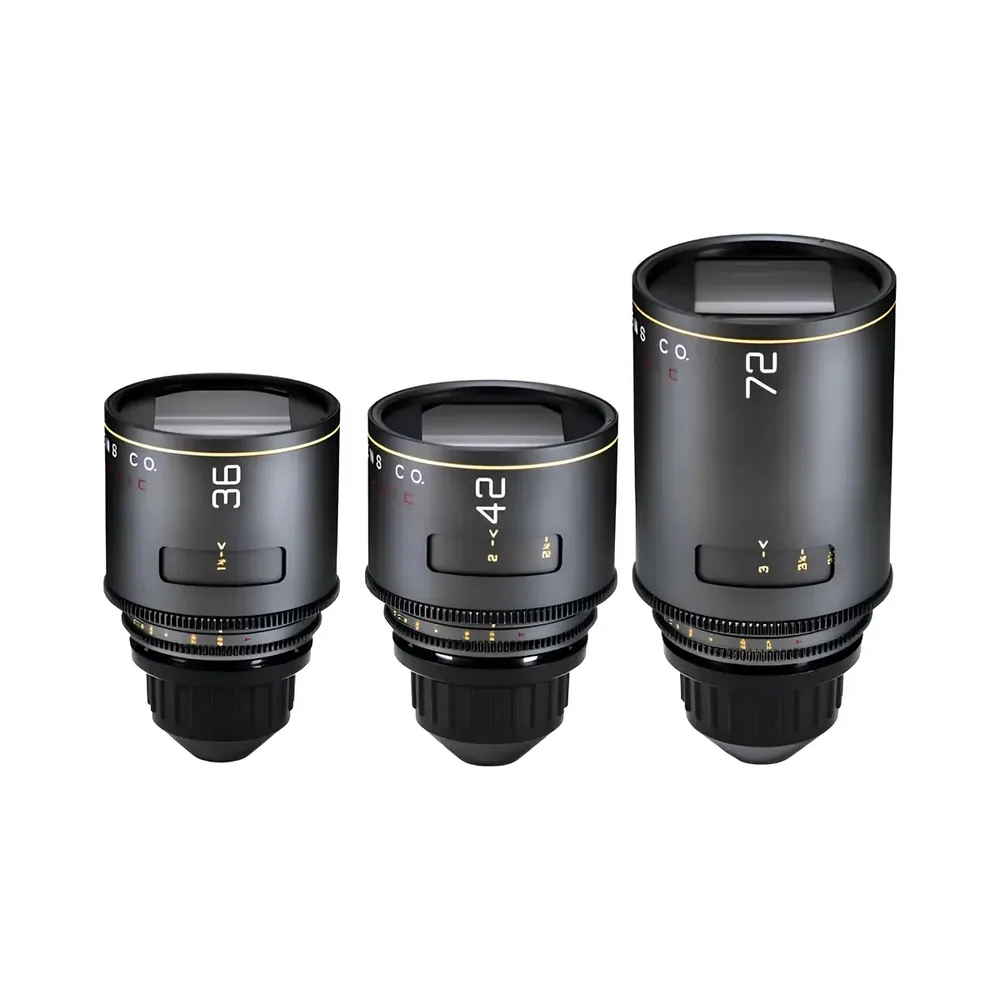
Expect warm, vintage character, golden flares and very little chromatic aberration, which suits modern high-resolution cameras.
The Blazar Remus 33mm is a single T1.8 lens from the same 1.5x full-frame family.
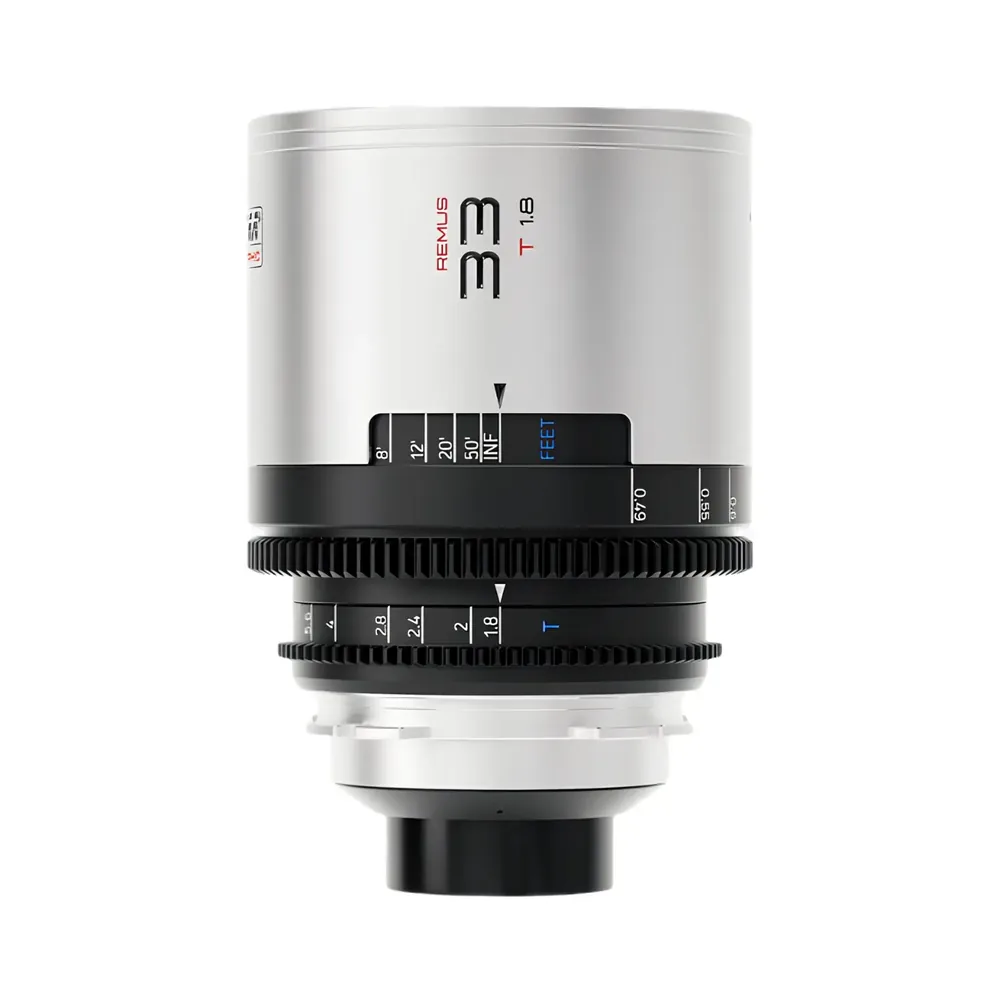
The Remus range is light and compact with a front anamorphic design, so it's a good pick when weight matters.
Shooting on a Sony body? Pair either option with the Vocas E-PL adapter to go from PL to E-mount. What's included with each lens is listed on its product page.
If you need a 2x set or a focal length we don't carry, we'll source it from other suppliers so you still deal with one point of contact.
Ready to Shoot Anamorphic?
If you know the shot you're after, we'll help you build the kit around it. Lenses, a body with the right de-squeeze, the adapter and the monitoring, all from one place.
We've been kitting out productions in London since 1997. Send over your kit list and request a quote, and we'll come back with the right setup for your shoot.
Let’s plan your next shoot
Get your equipment, studio and crew all in one place.