What Is the Holy Trinity of Sony Lenses?
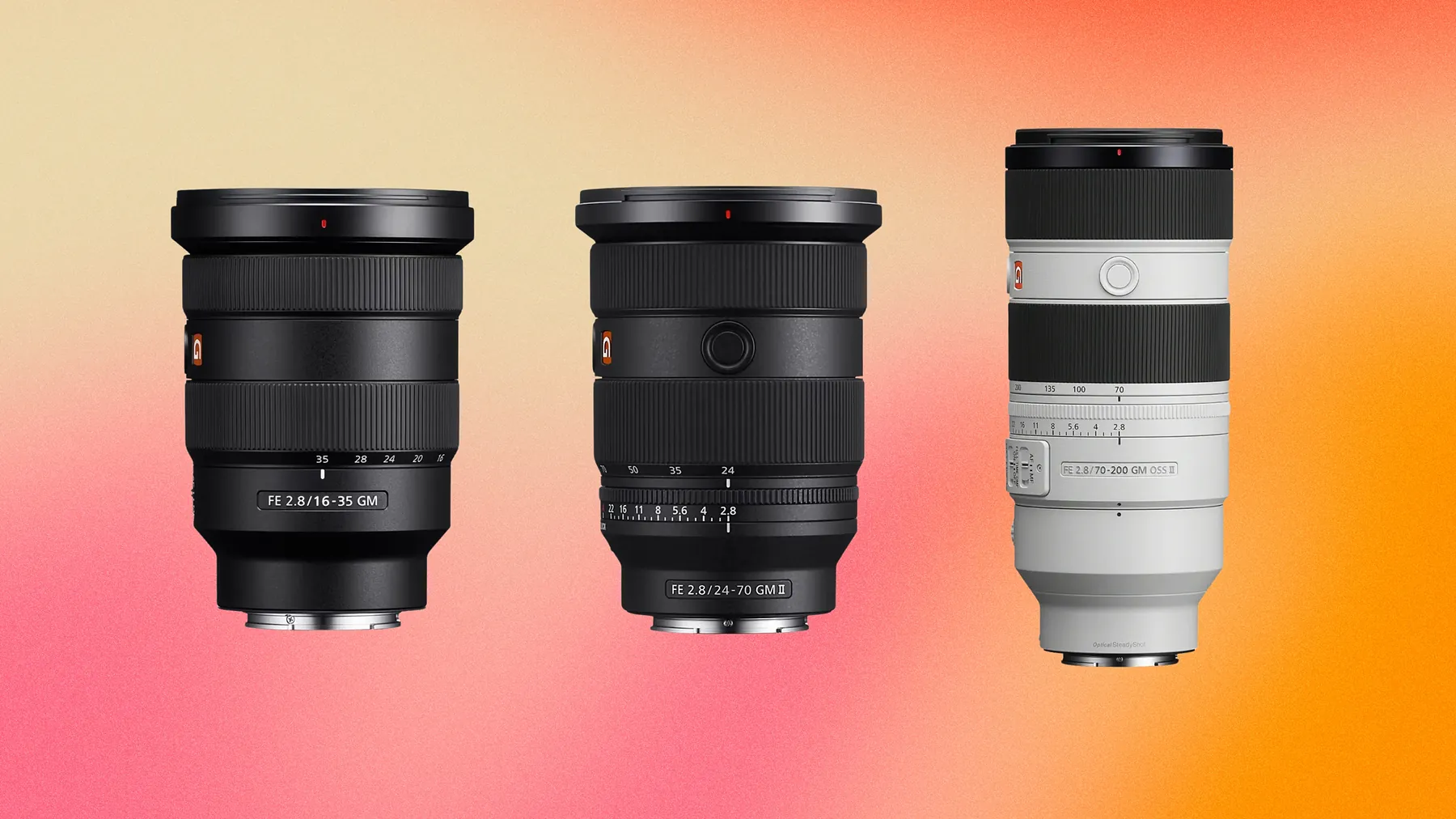
- The holy trinity of Sony lenses is three f/2.8 G Master zooms: the 16-35mm, 24-70mm and 70-200mm.
- Between them they cover ultra-wide to telephoto at a constant f/2.8 aperture, with no gaps in the range.
- Each lens suits a different job on set: wide coverage, the main shot, and reach for detail.
- You don't need all three for every shoot, but multi-camera productions often do.
- All three G Master II lenses are available to hire from Sugarland, individually or as a set.
If you shoot on Sony and you've spent any time around other filmmakers or photographers, you've probably heard someone mention the Sony holy trinity of lenses.
It's not a marketing term Sony invented, it's one that shooters gave the lenses themselves, because between them they cover almost everything you'd need on a shoot without switching systems.
What Is the Holy Trinity of Sony Lenses?
The Sony holy trinity is the nickname for three G Master zoom lenses: the 16-35mm GM II, the 24-70mm GM II, and the 70-200mm GM II. Together, they cover wide-angle through to telephoto at a constant f/2.8 aperture.
The name isn't official Sony branding. It's what shooters started calling the set once all three lenses existed at the same focal ranges and aperture, matching what Nikon and Canon photographers already called their own equivalent line-ups.
Sony completed its second-generation ("GM II") trinity in September 2023, when the 16-35mm became the final lens updated, joining the already-updated 24-70mm and 70-200mm.
The idea behind the trinity isn't unique to Sony either.
Canon and Nikon both build their own versions of the same three-lens set, which tells you something about how useful the format is across the whole industry, not just one camera system.
What Is the Sony FE 16-35mm f/2.8 GM II Good For?
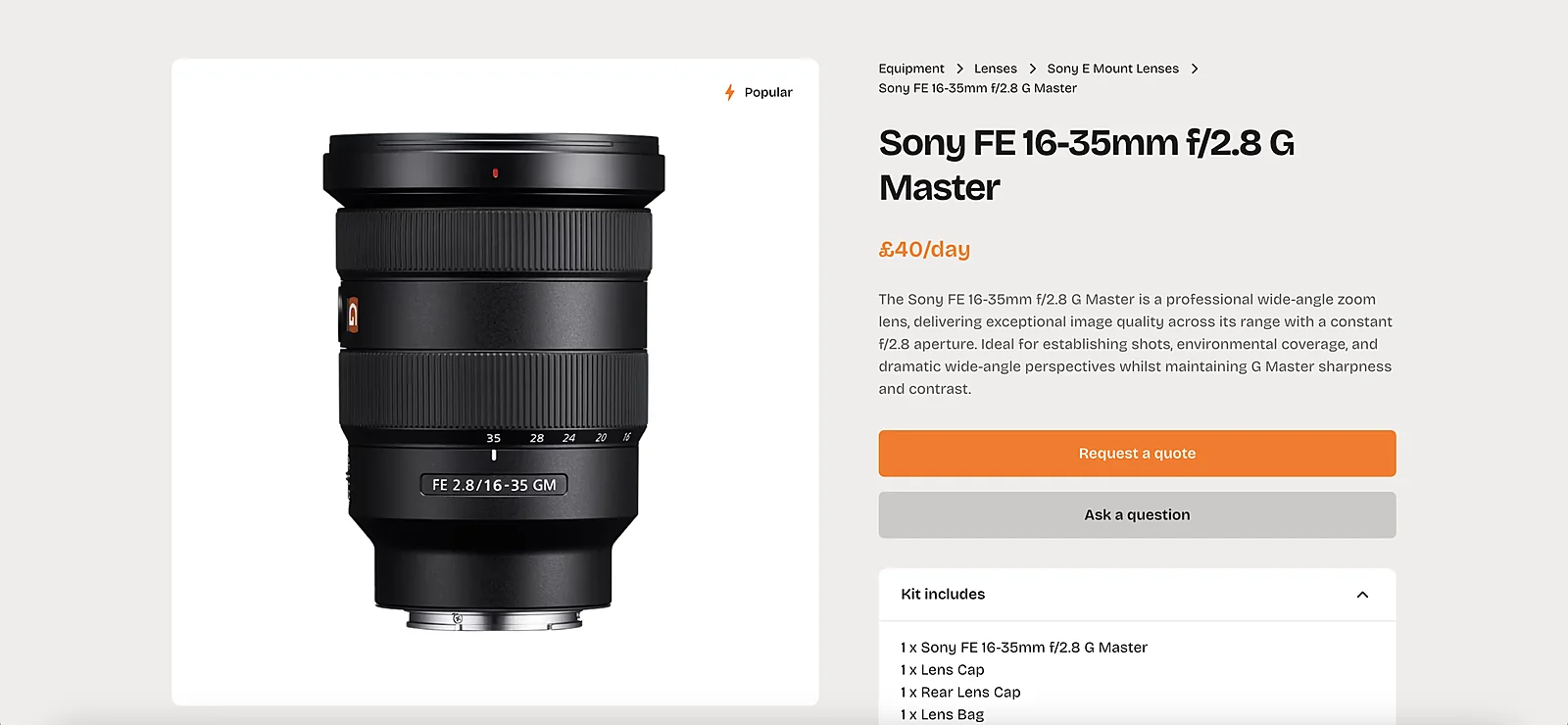
The 16-35mm GM II is built for wide coverage: establishing shots, tight interiors, and anything where you need to fit more into the frame.
It's the wide end of the trinity, and the lens you reach for when you're working close to your subject but still need context around it.
Specs at a glance:
- Focal range: 16-35mm
- Maximum aperture: Constant f/2.8
- Weight: 547g
- Filter thread: 82mm
At 547g, the GM II is around 20% lighter than the original version, which matters if you're carrying a full trinity kit through a full shoot day, or mounting it on a gimbal where weight shifts change your balance.
Sony FE 24-70mm f/2.8 GM II: The Standard Zoom
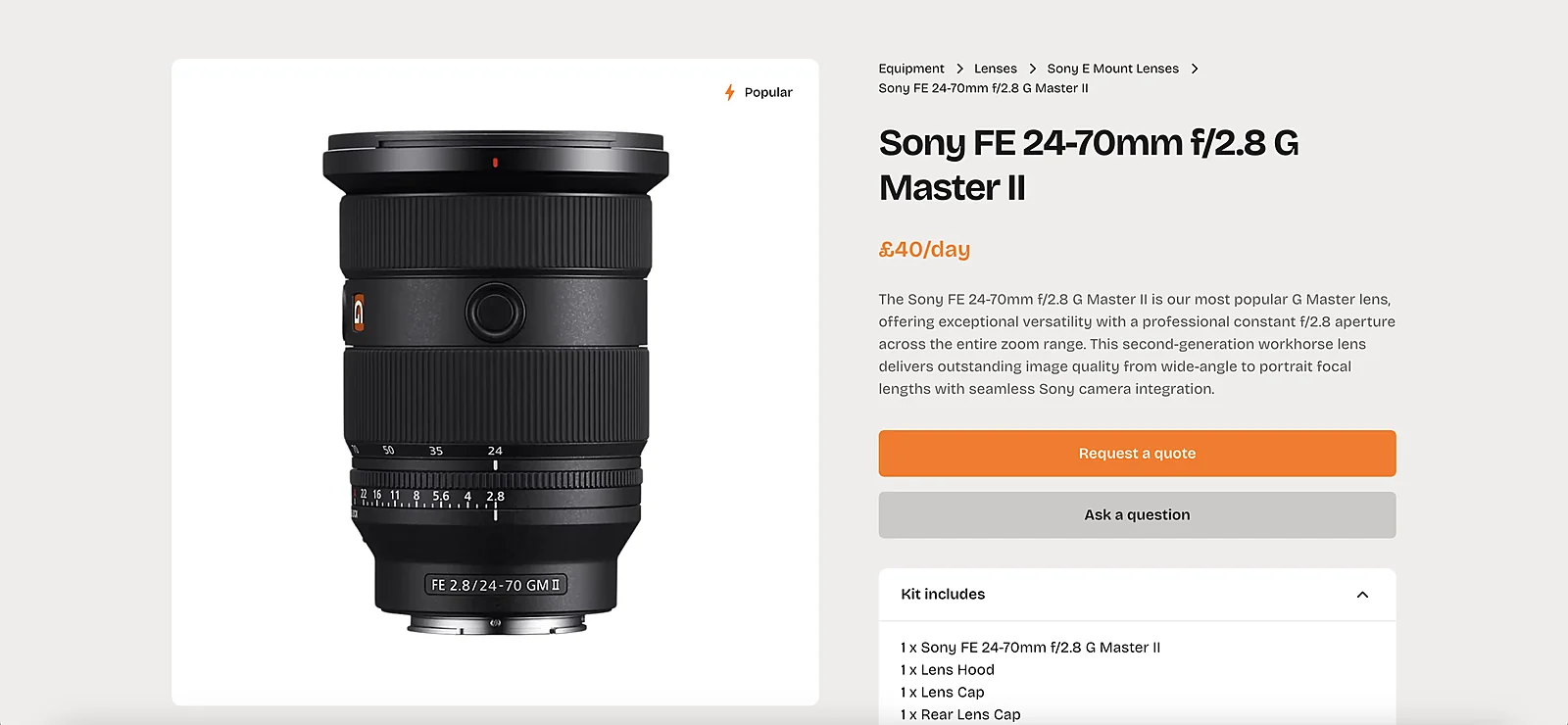
The 24-70mm sits in the middle and does the most work on most shoots.
It's the lens that covers your main coverage: the interview, the presenter piece to camera, the general scene-setting shot that doesn't need to be especially wide or especially tight.
Specs at a glance:
- Focal range: 24-70mm
- Maximum aperture: Constant f/2.8
- Weight: 695g
- Filter thread: 82mm
- Minimum focus distance: 0.21-0.3m
Independent testing has rated the 24-70mm GM II among the sharpest lenses in its focal range, and its close minimum focus distance means you can get tight on detail without switching lenses.
What Is the Sony FE 70-200mm f/2.8 GM II Good For?
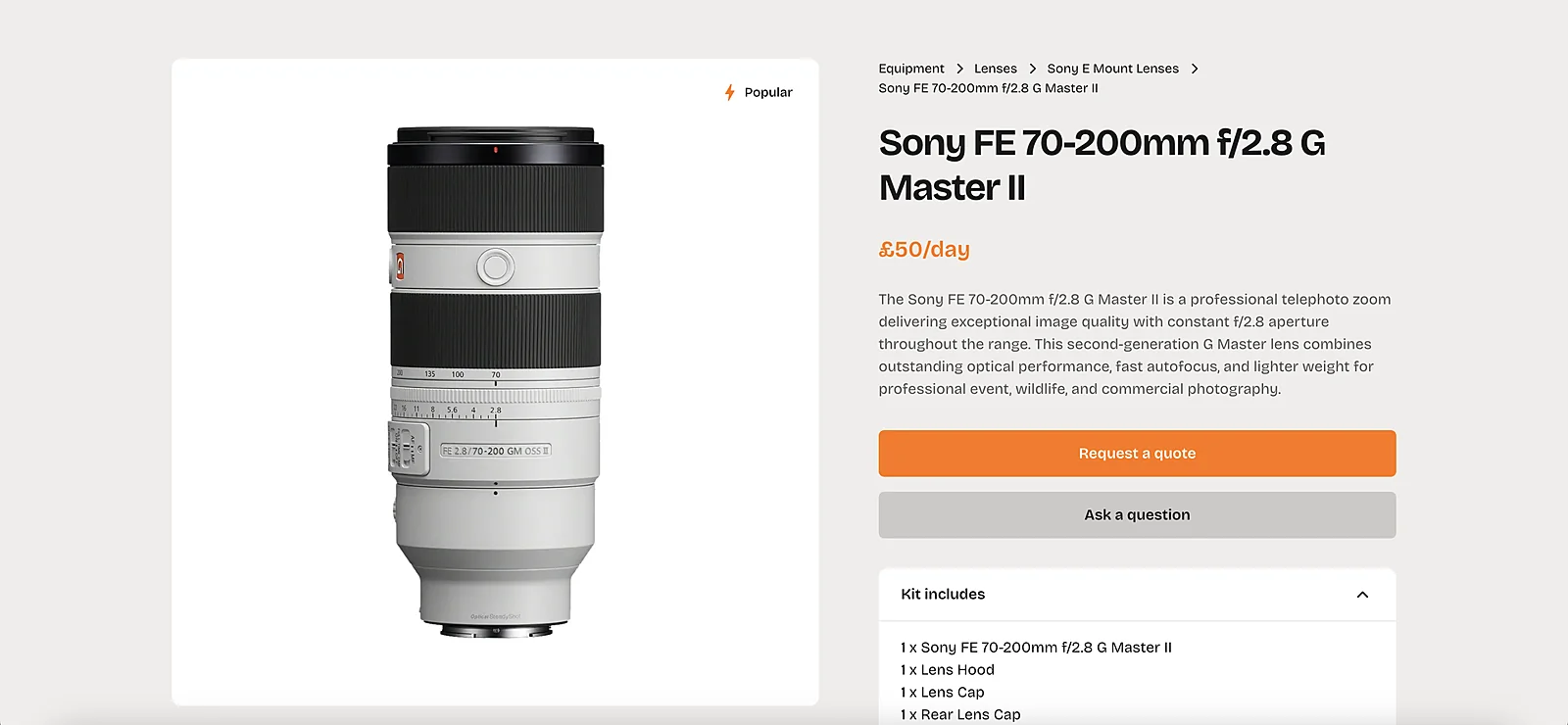
The 70-200mm is built for detail from a distance: close-ups, isolating a subject from a crowd, or shooting anything you can't physically get close to.
It's the reach end of the trinity, and the one you reach for when you need to stay out of the way.
Specs at a glance:
- Focal range: 70-200mm
- Maximum aperture: Constant f/2.8
- Weight: 1,045g
- Filter thread: 77mm
The current version cut weight by 29% over the previous model, which is a genuine difference if you're holding it handheld for a full shoot rather than on a tripod.
Reviewers have also called out the improvements to focus breathing and autofocus tracking as genuinely useful for video work, not just stills.
Why Does the Sony Holy Trinity Work So Well Together?
They work together because there's no gap between them. 16mm to 35mm, straight into 24mm to 70mm, straight into 70mm to 200mm, all at the same constant f/2.8 aperture.
You can move between wide, standard and telephoto without a jump in exposure or a change in how the image looks.
That consistency is part of why all three lenses test so well individually too.
Independent testing has ranked the 16-35mm and 70-200mm as top-performing zooms, with the 24-70mm sitting in the top three for its range.
It's not just that the three lenses cover a useful spread of focal lengths, each one holds up on its own merits too.
How Do You Actually Use All Three Together on a Shoot?
The trinity earns its reputation on multi-camera shoots, where each lens is doing a specific job at the same time rather than being swapped in and out.
A good example: a concert shoot using three Sony FX3s, one lens per camera.
The 16-35mm covered the wide angle, swinging from the artist on stage across to the crowd and back, giving that sense of scale and atmosphere.
The 24-70mm held the main shot, the steady mid-range coverage of the performance itself.
The 70-200mm handled the detail shots: close-ups on the artist's expression or hands on an instrument, pulled from a distance without anyone needing to get in the way on stage.
That's the trinity working as intended. Three cameras, three lenses, three different jobs, all covering the same event from a different angle without anyone having to physically move.
Do You Need All Three, or Just One?
You don't need all three for every shoot. If you're filming a single-camera interview or a straightforward piece to camera, the 24-70mm on its own will likely cover the whole job.
It's the most versatile of the three and the one that gets reached for most often.
Where the full trinity earns its place is multi-camera work: concerts, events, fashion shows, anything where you're covering wide, mid and tight angles at the same time rather than one after another.
If your production only has one camera but needs to switch between wide establishing shots and tight detail across a day, having all three on hand still saves you time even without three bodies running at once.
If you're not sure which lens (or lenses) your shoot actually needs, that's exactly the kind of thing worth a conversation before you book.
Sugarland stocks all three G Master II lenses across its Sony range, and you can hire them individually or as a full set depending on what the shoot calls for.
Request a quote and we'll help you work out what you actually need.
Let’s plan your next shoot
Get your equipment, studio and crew all in one place.