Sony FX30 vs FX3: Which Camera Should You Use?
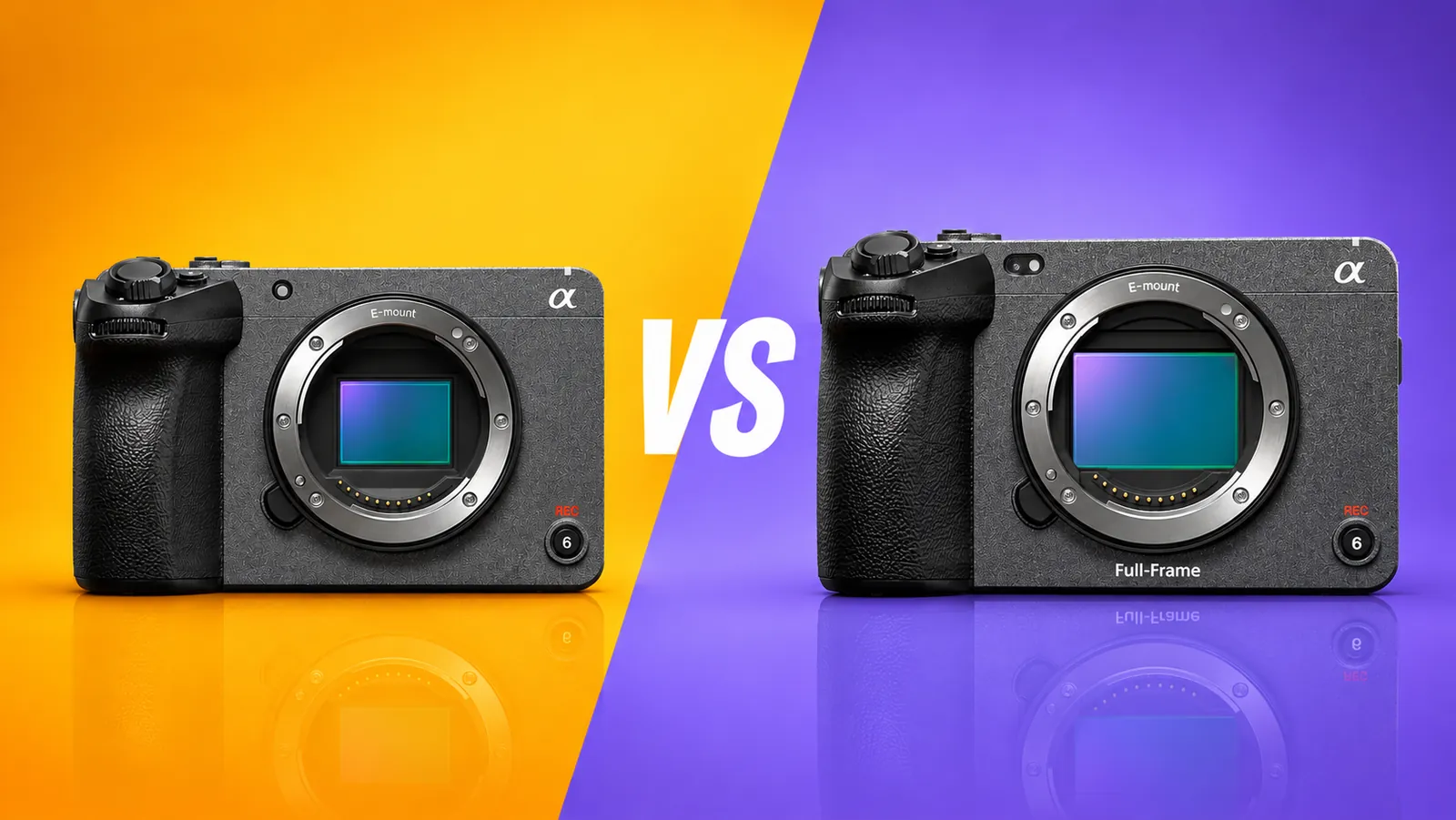
- The Sony FX30 and FX3 share the same body. The real difference is the sensor: Super 35 (APS-C) on the FX30, full frame on the FX3.
- The FX3 is the stronger low-light camera, with a high base ISO of 12800 against the FX30's 2500.
- The FX3 is on Netflix's approved camera list. The FX30 isn't.
- Overheating isn't a deciding factor, since both cameras have a built-in fan.
- For most shoots, especially with full-frame lenses, we'd pick the FX3. The FX30 earns its place as a B-cam.
Small teams on tight shoots ask us about the Sony FX30 a lot. It looks identical to the FX3, it sits in the same Cinema Line, and on paper it covers most of the same ground.
In practice, we usually point those teams to the FX3. Here's how the 2 cameras actually differ, and why the sensor (and your lenses) tend to settle it.
What Is the Sony FX30?
The Sony FX30 is Sony's compact Super 35 cinema camera, released in 2022 as the entry point to its Cinema Line.
Sony's launch announcement lists a 20.1MP APS-C sensor, dual base ISO 800/2500 and 14+ stops of latitude.
It records 4K by oversampling from 6K at up to 60fps, so the image stays detailed. It also shoots S-Log3, so it slots into a proper grading workflow.
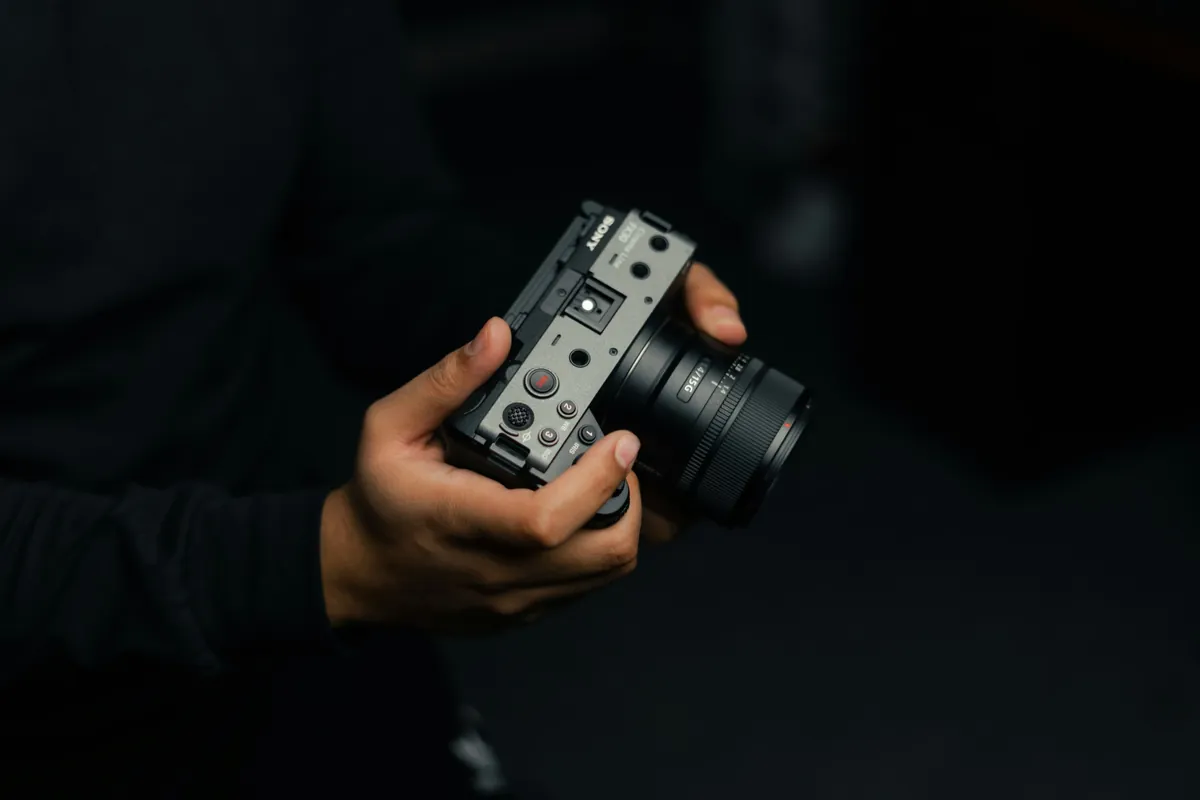
How Is the FX30 Different From the FX3?
The sensor is the difference: the FX30 is Super 35 (APS-C), while the FX3 is full frame.
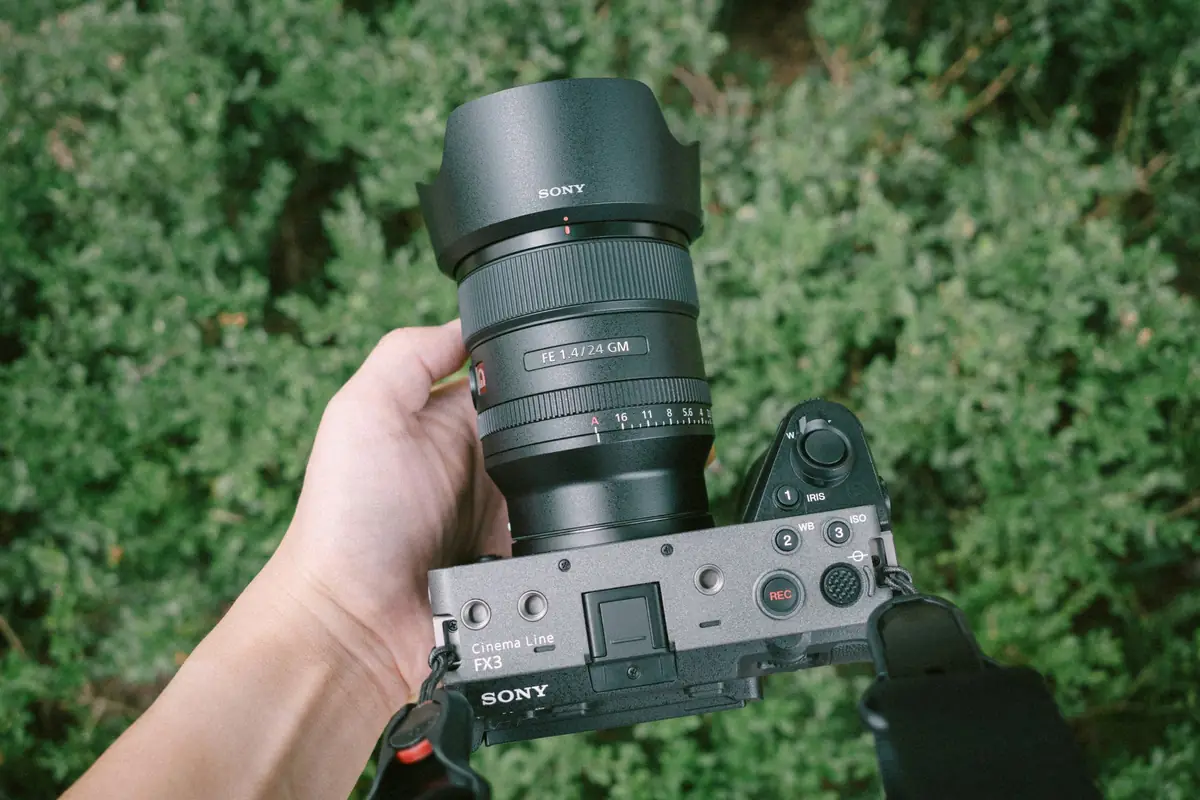
Put them side by side and you'd need to read the badge, because the body, controls and handling are the same.
The FX3 uses a 12.1MP full-frame sensor measuring 35.6 x 23.8mm. Fewer, larger pixels on a bigger sensor are what give it the edge when the light drops.
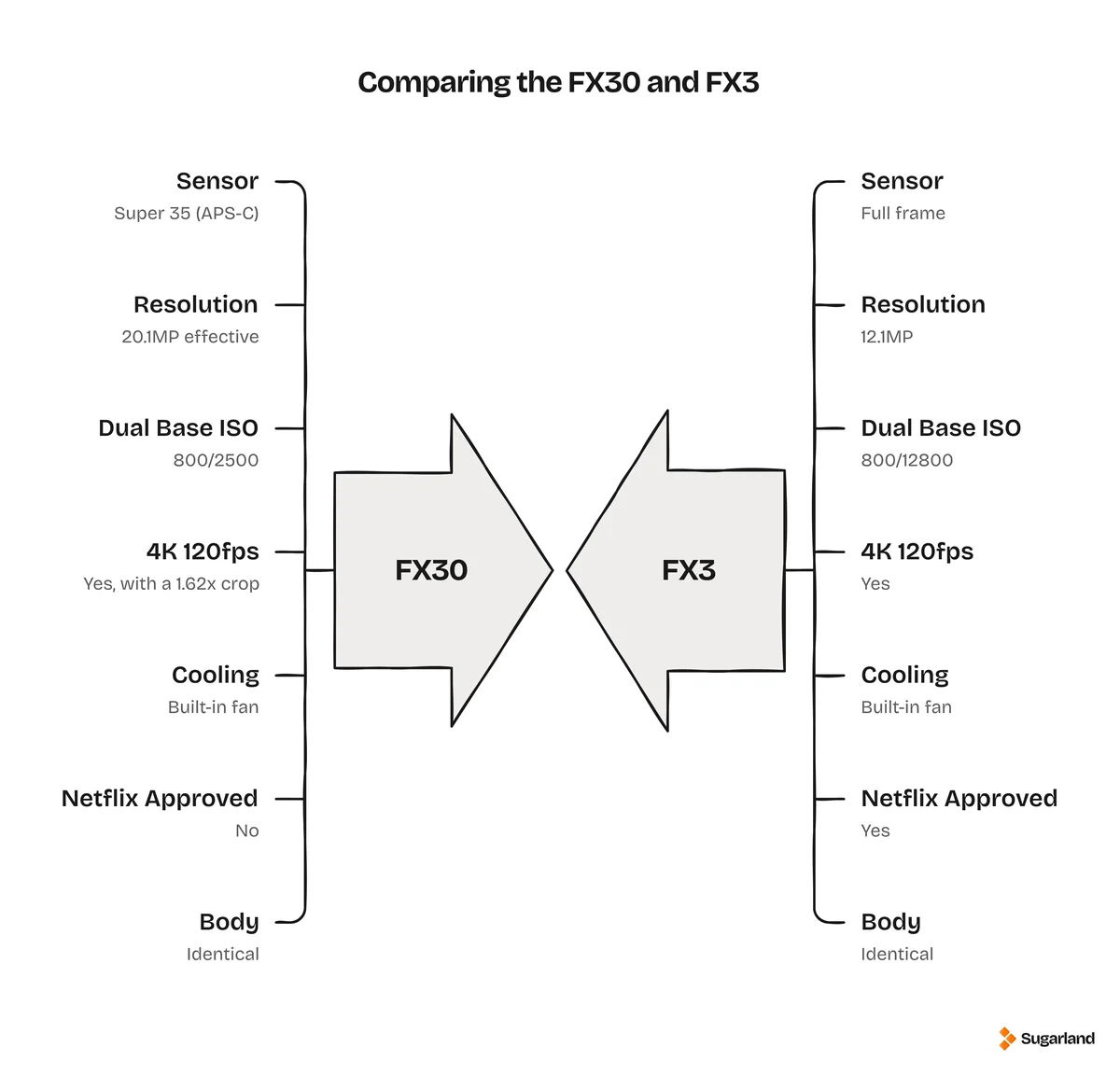
Here's how the 2 compare at a glance (FX30 first, FX3 second):
- Sensor: Super 35 (APS-C) vs full frame
- Resolution: 20.1MP effective vs 12.1MP
- Dual base ISO: 800/2500 vs 800/12800
- 4K 120fps: yes, with a 1.62x crop vs yes
- Cooling: built-in fan on both
- Netflix approved: no vs yes
- Body: identical
If you want a refresher on how sensor size changes framing and depth of field, our crop sensor guide covers it.
Is the Sony FX30 Good in Low Light?
The Sony FX30 is decent in low light, but the FX3 is noticeably better. The FX30's second base ISO sits at 2500, while the FX3 jumps to 12800.
That's why the FX3 has become a go-to for dim venues, night exteriors and anywhere you can't add much light.
Quick rule: on a well-lit studio or daylight shoot, you won't feel the gap. When the light drops, you will.
Does the FX30 Overheat?
No, the FX30 doesn't have an overheating problem, because it has a built-in fan just like the FX3. It's a fair assumption, since plenty of compact mirrorless bodies cut out on long takes.
Both cameras were designed for continuous recording, though. Overheating shouldn't be the reason you pick one over the other.
Rolling Shutter and Slow Motion: The Smaller Trade-Offs
2 less obvious differences are worth knowing before you choose.
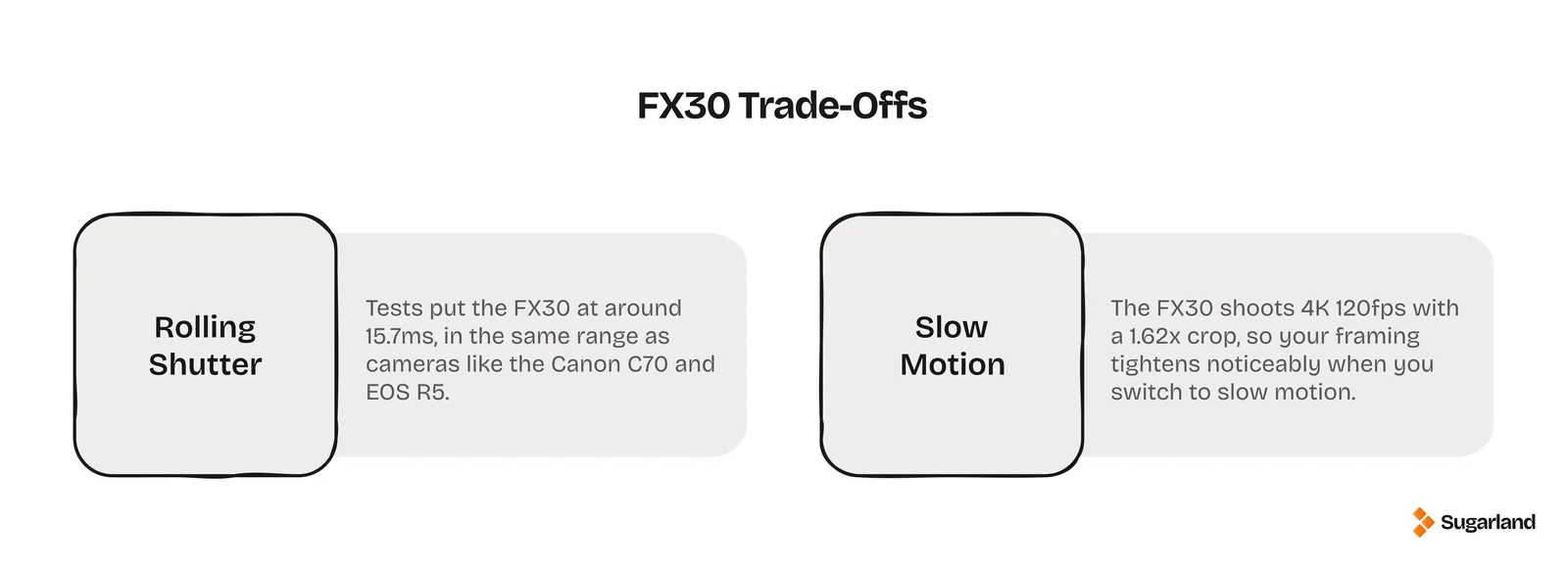
- Rolling shutter: tests put the FX30 at around 15.7ms, in the same range as cameras like the Canon C70 and EOS R5. You might spot some skew on fast whip pans, but it won't trouble most interview, studio or handheld work.
- Slow motion: the FX30 shoots 4K 120fps with a 1.62x crop, so your framing tightens noticeably when you switch to slow motion. The FX3 also shoots 4K 120fps, which suits shoots where slow motion is a big part of the plan.
Is the Sony FX30 Netflix Approved?
No, the Sony FX30 isn't on Netflix's approved camera list, but the FX3 is.
Netflix requires 90% of a programme's final runtime to be shot on approved cameras, so the FX30 can only play a minor role on a Netflix project.
Worth knowing: some sites say the FX30 is approved. Netflix's own list is the only source that counts.
We've listed every approved Sony body in a separate guide.
Why Your Lenses Usually Decide It
In my experience, this is the point that settles most conversations.
Our lens stock is full frame. We don't keep APS-C lenses, so anyone pairing an FX30 with our glass is putting full-frame lenses on a smaller sensor.
That works, since both cameras use Sony's E-mount, but every lens crops by roughly 1.5x. In practice, that means:
- A 24mm frames more like a 36mm
- Your widest options get a lot less wide
- Wide establishing shots and tight interiors become harder to cover
On the FX3, every lens behaves exactly as designed. That matters most with Sony's G Master lenses, which are built for full frame and work perfectly with the FX3.
Can You Use the FX30 and FX3 on the Same Shoot?
Yes, and the FX30 makes a good B-cam alongside an FX3. We've seen productions run it exactly that way.
It helps that the FX30 shares the same body as the FX3, so cages, handles and accessories fit both. If you're running the pair together:
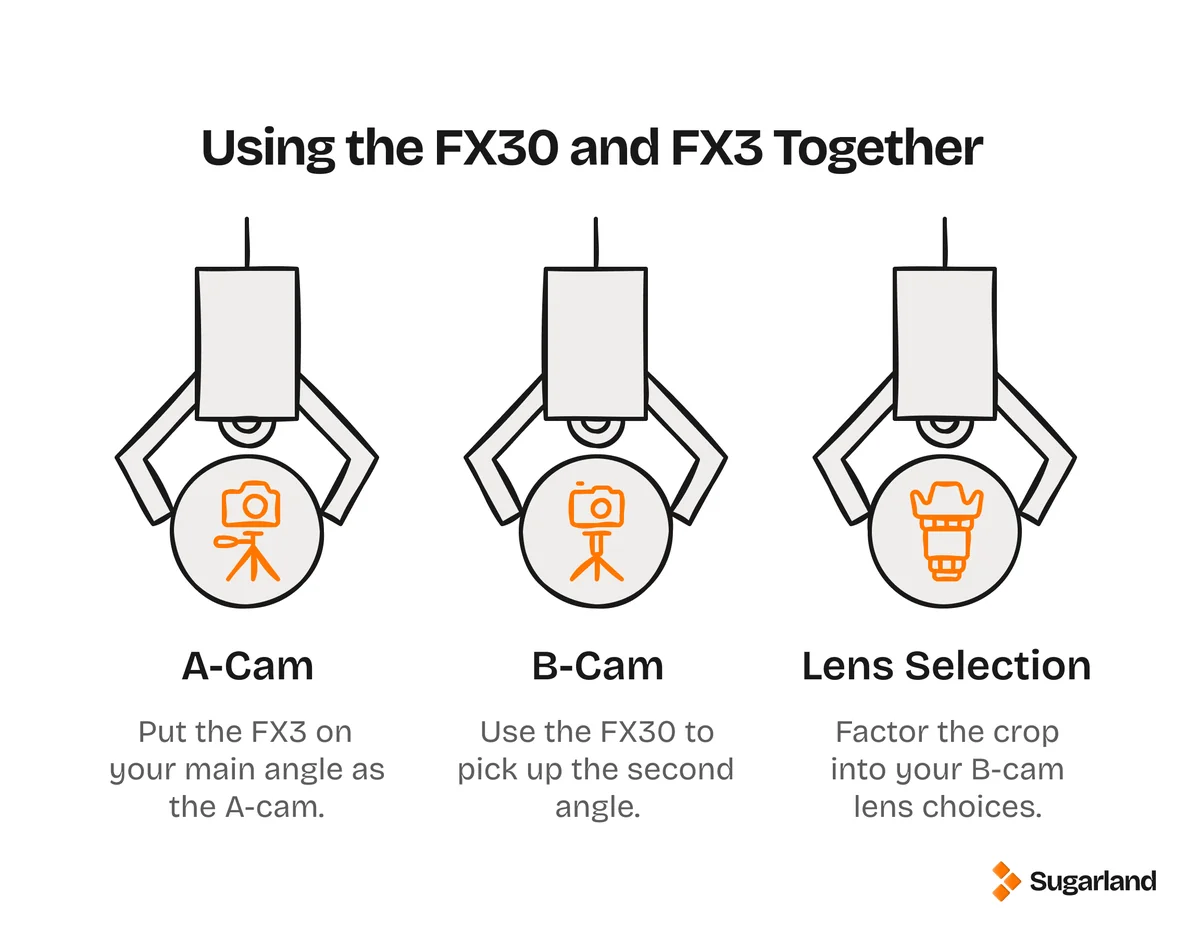
- Put the FX3 on your main angle as the A-cam.
- Use the FX30 to pick up the second angle.
- Factor the crop into your B-cam lens choices so the 2 angles cut together cleanly.
So, Should You Shoot on the FX30 or the FX3?
For most productions, I'd go with the FX3. It handles low light better, it's Netflix approved, and every full-frame lens works as intended.
Choose the FX3 if:
- You're shooting in low or unpredictable light
- Your project is heading for Netflix
- You're using full-frame lenses, including G Master glass
Choose the FX30 if:
- You need a matching B-cam for an FX3
- You specifically want the Super 35 look
Our Sony FX3 comes rigged and ready to shoot, and it pairs with our whole G Master range.
If the FX30 suits your shoot better, we can source one, usually the same day, subject to availability. You'll still deal with us as your single point of contact.
Get in touch with your shoot details and we'll help you pick the right body.
Let’s plan your next shoot
Get your equipment, studio and crew all in one place.