Which Sony Cameras Are Netflix Approved? (2026 Guide)
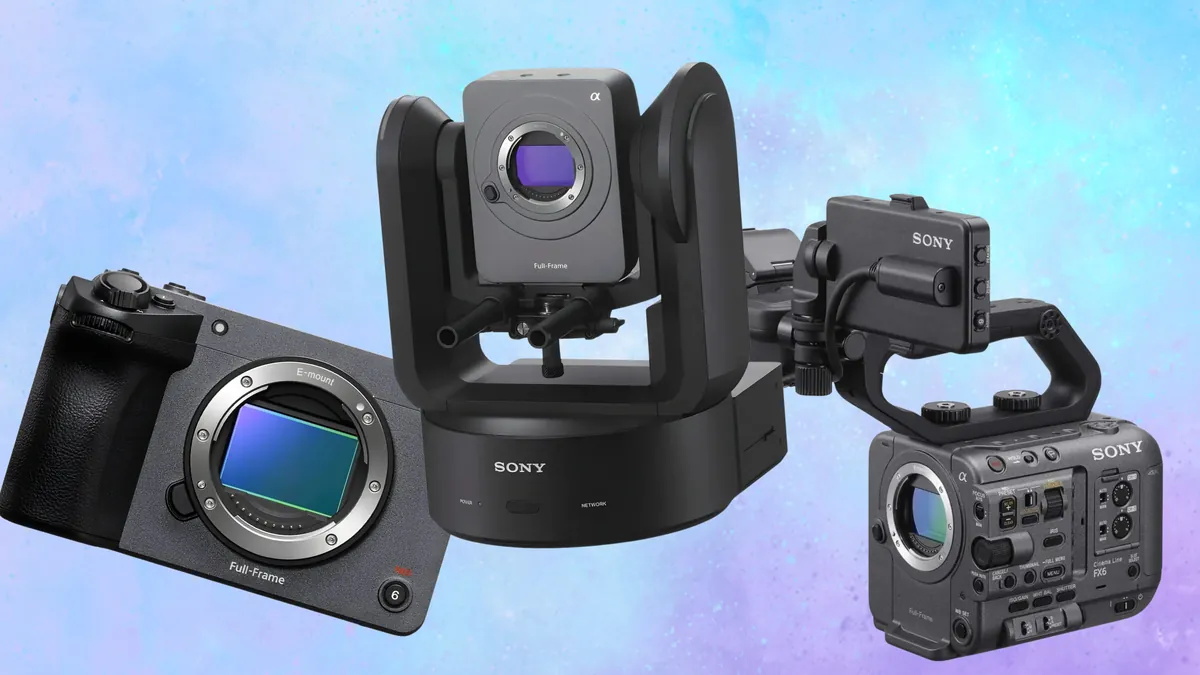
- Netflix approves cameras against fixed technical benchmarks (resolution, codec, dynamic range, colour space, timecode), not just brand reputation.
- Confirmed Sony models on the Netflix approved list: Venice, Venice 2 (6K and 8K), Burano, FX9, FX6, FX3, FR7, F55, F65, FS7 / FS7 II, F5, PXW-Z450, PXW-Z750 and HDC-F5500.
- Every Sony cinema camera we stock at Sugarland (FX9, FX6, FX3, FR7) is Netflix approved.
- Sony's mirrorless Alpha line, including the A7 III, isn't on the list, even though it's a solid camera for other jobs.
- The brand new Sony FX5 isn't Netflix approved yet. At this early stage, that's completely normal.
We use the Sony FX series on most of our jobs.
It's been on Netflix productions and delivers perfectly every time, which is exactly why we get asked this question a lot: which Sony cameras are actually Netflix approved?
The good news is you don't need to guess. Netflix publishes its own approved camera list, and it's more specific (and more current) than most of the roundups floating around online.
Here's exactly which Sony bodies make the cut, what that approval actually means, and which ones we'd recommend hiring for your shoot.
If you're weighing up other brands too, our Netflix approved cameras roundup covers ARRI, RED, Blackmagic and more alongside Sony.
What Does "Netflix Approved" Actually Mean?
Netflix approval means a camera has been tested by Netflix's own technologists against a fixed set of technical benchmarks and cleared for use as a primary camera on Netflix Originals.
It isn't a marketing badge Sony or any other manufacturer can just claim.
To be approved, a camera needs to hit specific standards for resolution, codec, bit depth, colour space, and timecode.
Netflix's own capture requirements call for a minimum of 3840 photosite capture width, 10-bit or greater colour depth, a scene-referred colour space (like Sony's S-Gamut3), and a system capable of jamming timecode to an external source.
There's also a practical rule behind the list: Netflix requires at least 90% of a program's final runtime to be captured on an approved camera, with some flexibility for nonfiction content.
Meeting the base technical spec isn't enough on its own either.
Netflix also weighs dynamic range, form factor, stability, and how well a camera fits real production workflows before it earns a spot on the list.
What Are All the Netflix-Approved Sony Cameras?
As of now, 14 Sony cameras are on Netflix's approved list. Here they are, in full:
- Sony Venice: 6K, 6048x4032. RAW, X-OCN, XAVC-I (4K).
- Sony Venice 2 6K: 6K, 6048x4032. X-OCN RAW, ProRes 422HQ (4K).
- Sony Venice 2 8K: 8.6K, 8640x5760. X-OCN RAW, ProRes 422HQ (4K).
- Sony Burano: 8.6K, 8632x4856. X-OCN RAW.
- Sony FX9: 4K, 4096x2160. XAVC-I (4K).
- Sony F55: 4K, 4096x2160. F55RAW, X-OCN, XAVC-I (4K).
- Sony F65: 4K, 4096x2160. F65RAW, F65RAW-LITE, XAVC-I (4K).
- Sony FS7 / FS7 II: 4K, 4096x2160. XAVC-I (4K).
- Sony F5: 4K, 4096x2160. XAVC-I (4K), 4K upgrade license required.
- Sony FX6: 4K, 4096x2160. XAVC-I (4K).
- Sony FR7: 4K, 4096x2160. XAVC-I (4K).
- Sony PXW-Z450: UHD, 3840x2160. XAVC-I QFHD 300 mode.
- Sony PXW-Z750: UHD, 3840x2160. XAVC-I QFHD 300 mode.
- Sony FX3: UHD, 3840x2160. XAVC S-I (4K).
- Sony HDC-F5500: UHD, 3840x2160. Baseband Video.
That's the current approved list straight from Netflix, so you can hire with confidence rather than relying on secondhand roundups.
4 of these sit in our own kit list: the Sony FX9 at £180/day, the Sony FX6 at £140/day, the Sony FX3 at £100/day, and the Sony FR7 at £230/day (all prices +VAT).
Every one of them is ready to go for a Netflix-standard shoot.
Which Sony FX Camera Should You Hire for Netflix-Standard Work?
For most productions, the FX9 suits high-end drama and commercial work, the FX6 suits documentary and run-and-gun shoots, and the FX3 suits solo shooters and tight budgets who still need Netflix-approved footage.
The FX9 carries a 6K oversampled sensor down to a 4K deliverable, with S-Cinetone colour science borrowed from the far pricier Venice.
It's the pick when image quality and dynamic range matter more than portability.
The FX6 trades some of that resolution for a smaller, lighter body built for handheld and gimbal work. Documentary shooters in particular rate it for verité-style filming, where getting close to the subject without a bulky rig makes the difference.
As one documentary cinematographer put it, the FX6 helped her achieve genuine intimacy on a recent shoot without the camera getting in the way.
The FX3 is the compact entry point. It didn't launch Netflix approved.
Its original firmware couldn't jam timecode to an external source, which is one of Netflix's core requirements, so it had to wait for a software update before it earned its spot on the list.
In our experience, the FX series covers most shoot types on its own.
We've supplied FX9, FX6 and FX3 bodies for productions that have gone on to Netflix, and they've delivered cleanly every time, no compatibility surprises, no format headaches in post.
For a full breakdown of all three current models side by side, see our full camera comparison.
One to watch: the Sony FX5. Sony only launched the FX5 on July 22nd 2026, slotting it in between the FX3 and FX6 with a new sensor and internal RAW recording.
It isn't on Netflix's approved list yet, and that's completely normal this early.
Both the FX3 and the FR7 also launched before they were Netflix approved, so this is simply how the process usually works.
We'll update this post as soon as that changes. In the meantime, feel free to check out our post on what you need to know before you hire the FX5.
The Sony FR7: Netflix's First Approved PTZ Camera
The FR7 is worth calling out on its own because it broke new ground when Netflix approved it.
It was the first PTZ camera Netflix ever approved as a primary camera, not just a secondary or B-camera option.
Under the hood, it shares most of its imaging pipeline with the FX6: a full-frame sensor, 4K capture up to 120fps, Dual ISO, and the same internal codecs.
What's different is the form factor. Instead of a traditional cinema body, the FR7 mounts remotely and can be controlled from a distance, which makes it a natural fit for live productions, multi-camera studio setups, or shots where you'd rather not risk a more expensive body in a difficult position.
That combination, cinema-grade image quality in a remotely operated body, is exactly why it earns its own line in the approved list rather than getting lumped in as "just another Sony PTZ."
We stock the Sony FR7 for productions that need that flexibility.
Which Sony Cameras Are NOT Netflix Approved?
Sony's mirrorless Alpha range, including the A7 III, isn't on Netflix's approved camera list.
That's true even though these cameras produce great footage for plenty of other jobs.
It's an easy assumption to make: if a manufacturer's cinema line is Netflix approved, surely their whole range qualifies?
It doesn't work that way.
Approval is granted camera by camera, based on that specific model meeting every one of Netflix's capture requirements, timecode included.
The Alpha range wasn't built with broadcast-style timecode jamming or the same workflow features as the Cinema Line, so it sits outside the approved list.
We stock the Sony A7 III at £60/day +VAT, and it's a genuinely good camera for content that doesn't need Netflix approval: corporate video, social content, behind-the-scenes coverage, or a second body on a shoot where the main unit is doing the Netflix-standard capture.
Just don't reach for it as your primary camera on an approved production.
How to Hire a Netflix-Approved Sony Camera in London
If you know which Sony model you need, getting it booked is straightforward.
Request a quote, confirm the details, and we'll sort the rest.
Here's how it works in practice. You request a quote for the camera (and any lenses, batteries, or monitoring you need alongside it), we send that quote back, and you confirm.
First-time customers set up an account before the hire goes ahead. Payment is typically taken before the rental starts, and then it's collection, delivery, or return as agreed.
If you're not sure which Sony body suits your shoot, that's exactly what we're here for.
Tell us the production type and we'll point you to the right camera, lens pairing, and accessories to go with it.
Let’s plan your next shoot
Get your equipment, studio and crew all in one place.