Is the Sony FX6 Good for Filmmaking?
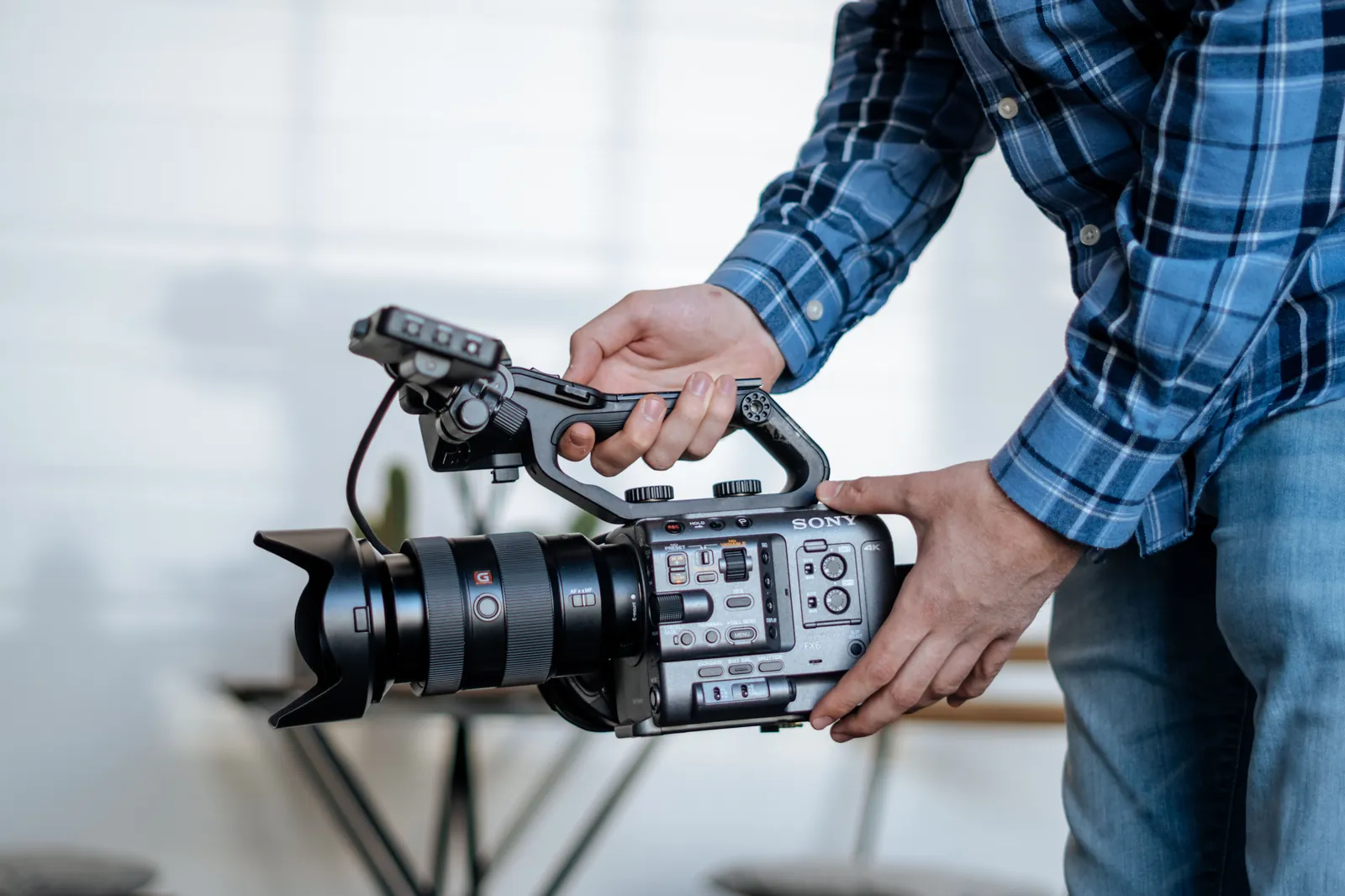
- Yes, the Sony FX6 is a genuinely strong choice for professional filmmaking. It's built for cinema work, not adapted from a stills camera.
- It sits between the FX3 and FX9 in Sony's Cinema Line, with built-in ND, XLR audio and SDI out that neither of those cameras fully match on its own.
- It's on the Netflix Approved Camera List.
- The newer Sony FX5 brings Open Gate recording and internal RAW, but drops the FX6's built-in ND filter.
- Hire one from Sugarland at £140/day +VAT.
We get asked this a lot, usually by someone deciding between the FX3, FX6 and FX9 for a shoot, or wondering whether the newer FX5 makes the FX6 redundant.
Short answer: no, it doesn't.
The FX6 is still one of the most versatile cameras in Sony's Cinema Line, and there's a reason it keeps turning up on set for such a wide range of shoot types.
Here's what it's actually good at, where it falls short, and how to know if it's the right hire for your production.
What Is the Sony FX6?
The Sony FX6 is a full-frame Cinema Line camera positioned between the compact FX3 and the larger, higher-end FX9.
It's built as a dedicated cinema tool rather than a video-capable stills camera, with professional controls, XLR audio and a body designed to survive long shoot days.
The FX6 uses a full-frame Exmor R sensor built for low-light performance and dynamic range rather than sheer resolution.
It shares its core sensor technology with the FX3, which is part of why the two cameras produce such similar footage despite looking very different on the outside.
Is the Sony FX6 Good for Filmmaking?
Yes. For the vast majority of professional filmmaking work, the FX6 is a strong, reliable choice.
Independent reviewers have consistently praised it for exactly the reasons that matter on a working set: professional controls and ergonomics, multi-channel XLR audio, built-in ND filters, no overheating issues, and a battery life that holds up across a full day of shooting.
It also handles low light better than most cameras in its class.
The FX6 uses dual native ISO settings at 800 and 12,800, which keeps noise low at both values rather than only at one baseline.
Combined with its full-frame sensor, that makes it a dependable option for interiors, evening shoots and anywhere lighting is limited or hard to control.
None of this means the FX6 is automatically the right camera for every job.
It's a strong all-rounder, not a universal answer, and the sections below cover exactly where it wins and where it doesn't.
What Makes the FX6 Different From the FX3?
The FX6 and FX3 share close to the same image, but the FX6 adds the physical features a production set actually needs.
The clearest difference is the FX6's built-in electronic variable ND filter, something the FX3 doesn't have at all.
On the FX3 you're reaching for physical ND filters every time the light changes.
On the FX6 you dial it in from inside the camera.
Audio tells a similar story. The FX6 has proper XLR inputs built into its handle as standard.
The FX3 gets XLR audio too, but only via an add-on handle, which means one more thing to mount, cable and potentially forget on a rushed call time.
The FX6 also adds SDI output and a more robust, dial-heavy handle designed for tactile control during a shoot, on top of a larger active cooling system built for longer continuous recording.
The FX3, by contrast, is built to disappear: no traditional viewfinder, a smaller footprint, and mounting points designed for gimbals and rigs rather than a tripod-and-crew setup.
If your shoot is solo, gimbal-heavy or needs to travel light, the FX3 makes sense.
If you're running a proper crew and need the camera to just work under pressure, the FX6 is built for that job.
What Makes the FX6 Different From the FX9?
The main difference is sensor resolution, and it changes how much room you have to reframe.
The FX9 uses a 6K sensor that oversamples down to a 4K image, while the FX6 records 4K natively from a lower-resolution sensor.
In practice, that gives the FX9 more punch-in room if you want to crop or reframe a shot after the fact, which is exactly why some productions choose it.
The tradeoff runs the other way for low light.
The FX9's larger, higher-resolution sensor packs more pixels into the same full-frame area, meaning each individual pixel is smaller and gathers less light than the FX6's. The FX6's fewer, larger pixels are part of why it performs so well after dark.
The FX9 is also a bigger, heavier camera built more explicitly for broadcast and high-end documentary work, with a higher day rate to match.
For a lot of productions, the FX6 delivers what's actually needed (full-frame cinema image, professional audio and connectivity, dependable low light) without stepping up to FX9-level size, weight and cost.
How Does the FX6 Compare to the New Sony FX5?
The FX5 is Sony's newest Cinema Line camera, and it's genuinely new technology rather than a straight FX3 refresh.
It brings a newly developed stacked sensor with Open Gate recording and internal 16-bit RAW, features that weren't previously available anywhere in Sony's compact Cinema Line.
But it's not a straight upgrade over the FX6. The FX5 doesn't include a built-in ND filter, the single feature that makes the FX6 so dependable for outdoor and run-and-gun shooting.
If your production leans on flexible post-production formats and internal RAW, the FX5 is worth a look.
If it leans on long shoot days, changeable light and needing the camera to just handle exposure without extra kit, the FX6 still has the edge.
Why Production Teams Choose the FX6 Specifically
We've supplied the FX6 for all sorts of productions: high-end fashion shoots, interviews, brand videos, and plenty in between.
What we hear most often from clients is that they land on the FX6 when they need features that don't come as a set on either the FX3 or the FX9 alone.
It's less a compromise pick and more a deliberate choice for a specific combination: full professional connectivity and built-in ND without the size, weight or cost of stepping up to the FX9.
That's a useful way to think about the decision.
Rather than asking "which camera is best," it's worth asking which specific features your shoot actually needs, and which camera bundles those together without paying for the ones you don't.
Is the Sony FX6 Netflix Approved?
Yes. The FX6 is on the Netflix Approved Camera List, meaning it meets Netflix's technical requirements for use on original productions.
For a production to qualify overall, 90% of the total runtime needs to be shot on approved cameras, so this matters well beyond bragging rights if you're delivering to a streaming platform.
For the full rundown of which Sony bodies made the list (and which didn't), see our guide to Netflix approved cameras.
What Shoot Types Suit the FX6 Best?
Based on what we've seen it used for, the FX6 is a strong fit for:
- Fashion and brand video: where reliable colour and low-light performance matter more than maximum resolution
- Interviews and talking-head content: where XLR audio and long, stable recording sessions count
- Documentary and run-and-gun work: where the built-in ND filter saves time when light conditions shift
- Multi-camera shoots: where matching footage from several FX6s (or pairing it with an FX9) keeps grading simple
It's less suited to solo gimbal or drone work, where the FX3's smaller footprint wins, and to shoots that need maximum reframing headroom in post, where the FX9's higher resolution has the edge.
Where the FX6 Falls Short
No camera does everything, and the FX6 is no exception.
Its lower sensor resolution means less room to crop or reframe in post compared to the FX9. If you know a shot will need heavy reframing after the edit, that's worth planning around.
It's also bulkier than the FX3, which matters if your shoot is built around a gimbal, a drone, or fitting into tight spaces.
The FX6's size is part of what makes it stable and easy to handle on longer days, but that same size works against it when the job calls for something small and quick to move.
Getting the Right Camera for Your Shoot
The FX6 earns its reputation.
It's a genuinely capable cinema camera that handles a wide range of production types well, and for many shoots it hits a sweet spot the FX3 and FX9 can't quite reach on their own.
But "is the FX6 good for filmmaking" isn't really the full question. The better one is whether it's good for your filmmaking, on your shoot, with your priorities.
If you're weighing it up against the FX3, FX9 or the newer FX5, get in touch for a quote and we'll talk through what your production actually needs.
Let’s plan your next shoot
Get your equipment, studio and crew all in one place.